Self-Storage Facility Insurance in Florida
Own, manage, buy, or refinance a storage facility? We review the buildings, wind, flood, liability, tenant-goods questions, rent roll, gates, cameras, and lender requirements to compare coverage and pricing from insurers serving Florida facilities.
The facility policy and the tenant's stored property are two different insurance conversations.
Buildings, roll-up doors, roofs, office, signs, fencing, gates, cameras, liability, and income after a covered loss.
Renters' stored property, tenant insurance, tenant protection, and legal-liability wording should not be blended together.
Wind, flood, roof age, lender requirements, storm claims, and replacement cost drive the quote conversation.
Florida Self-Storage Facility Insurance at a Glance
- Facility insurance usually starts with commercial property, general liability, business income or loss of rents, and wind/flood review.
- Tenant contents insurance, tenant protection, and customer goods legal liability are separate issues and should not be described as the same coverage.
- Quote quality improves when the facility sends unit count, rent roll, current policy, roof details, flood/lender concerns, security controls, and loss history.
- Buying, refinancing, or renewing a storage facility is the right time to review insurance before lender deadlines and flood-zone costs squeeze the deal.
What self-storage facility insurance should review in Florida
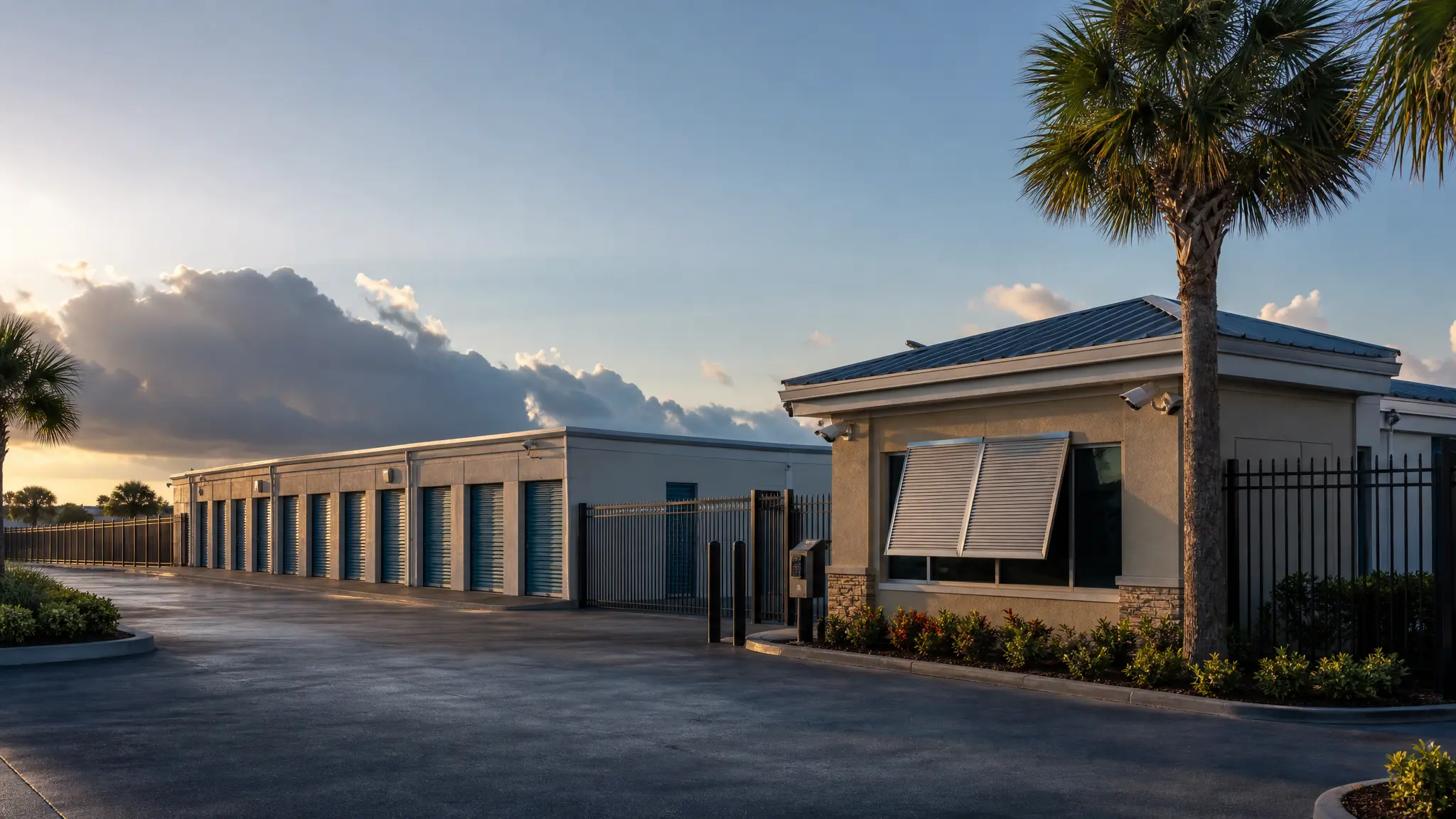
A storage facility is not just a row of metal doors. The quote needs to account for the buildings, office, gates, camera systems, tenant traffic, stored-property wording, rent roll, business income, outdoor parking, and Florida storm exposure.
Commercial property for storage buildings and site improvements
Buildings, roll-up doors, roofs, office areas, signs, fences, keypads, cameras, gates, business personal property, and business income or loss-of-rents questions.
Explore this optionGeneral liability for tenants, visitors, vendors, and premises risk
Slip-and-fall claims, common areas, lighting, vendor work, office traffic, gate areas, parking lanes, and certificates or contract requirements.
Explore this optionCustomer goods legal liability and tenant property confusion
A facility policy is not the same as tenant contents insurance. Customer goods legal liability, tenant protection, rental agreements, and stored-property assumptions need careful review.
Explore this optionWind, hurricane, flood, and lender requirements
Florida storage facilities should review wind deductibles, roof details, flood zone concerns, lender flood requirements, storm damage to doors or fences, and separate flood coverage options.
Explore this optionThe self-storage insurance questions owners want answered before renewal or purchase
These are the issues that make a storage quote weaker when they are buried until the last minute.
Facility insurance is not tenant contents insurance
The owner policy may cover the facility's buildings, business property, liability, and selected legal-liability exposures. It usually should not be described as blanket insurance for every renter's belongings.
Flood and water damage are not the same insurance question
Flood, storm surge, roof leaks, wind-driven rain, plumbing backup, and water intrusion can be handled differently by policy language. Flood usually needs separate review.
Business income needs to match the rent roll
A facility may need business income or loss-of-rents review after a covered building loss. Unit count, occupancy, rent roll, restoration time, and lender requirements all matter.
Gate, keypad, fence, camera, and lighting controls affect your options
Security details help insurers evaluate theft, vandalism, access control, and claim-documentation concerns.
Florida storage facilities need a property review built around buildings, doors, roofs, fences, gates, and flood exposure.
A hurricane claim may damage roll-up doors, roofs, security cameras, fencing, signs, and access systems. Flood may need a separate policy. We compare those exposures, deductibles, and prices for the actual facility.
Wind and hurricane deductible
Roof age, construction, metal buildings, roll-up doors, signs, fences, and storm claim history can all matter.
Flood and drainage review
Flood insurance, lender requirements, site elevation, drainage, and prior water events should be separated from ordinary property coverage.
Gate and access systems
Keypads, gates, cameras, lighting, alarms, and access logs help tell the theft, vandalism, and documentation story.
Rental agreement language
Tenant insurance, stored-property responsibility, lien-sale process, and access rules belong in the legal and policy-review conversation.
Details that help compare Florida self-storage insurance
Unit count, rent roll, roof details, flood questions, security controls, tenant insurance setup, and loss runs help us compare accurate coverage and pricing for the facility.
Facility address, ownership structure, unit count, number of buildings, square footage, construction type, roof age, and roof material
Rent roll, occupancy, climate-controlled units, outdoor boat/RV/vehicle parking, vacant buildings, and any mixed-use tenants or office exposure
Current policy, declarations page, lender requirements, requested building limits, business personal property values, and business income or loss-of-rents needs
Flood zone or lender flood questions, wind deductible concerns, roof photos, storm mitigation notes, and any prior wind, hail, flood, fire, theft, or water claims
Gate access, keypad controls, cameras, lighting, fencing, alarm details, manager-on-site procedures, and claim-document storage
Tenant insurance or tenant protection setup, rental agreement language, customer goods legal liability questions, and any stored vehicle, boat, or RV rules
Payroll, employees, site managers, maintenance work, business vehicles, hired/non-owned auto exposure, umbrella requirements, and certificate requests
Florida self-storage law affects the review, but it is not an insurance coverage promise.
Florida has specific self-storage statutes for rental agreements, liens, access, notices, and sale process. Those rules are legal process issues. Insurance still depends on the policy, agreement, facts, limits, deductibles, exclusions, and legal liability.
Not sure which property insurance page fits?
If you own, lease, manage, or insure a Florida building, start with the property path that matches the occupancy, tenant setup, building value, and contract requirements — not industry jargon.
Apartment, multifamily, condo, or HOA property
Start with the habitational hub for apartments, multifamily property, condo associations, master policies, wind, flood, and renewal documents.
Open Habitational HubCommercial property owners
Start here for office buildings, medical/dental buildings, professional offices, warehouses, retail centers, and owner-occupied business property.
Start a Building Owner QuoteLandlords and leased buildings
For strip malls, office condos, warehouses, or other buildings leased to tenants where lessors risk and lease requirements matter.
Start a Landlord QuoteHigh-value or coastal buildings
For larger schedules, custom construction, coastal wind, flood, layered property programs, or specialized Florida buildings.
Compare High-Value PropertyUseful references for storage facility insurance reviews
These sources help frame the legal, flood, workers comp, and industry-classification questions. They are not a substitute for policy review or legal advice.
Florida statutory framework for self-storage rental agreements, liens, access, notice, and sale process. Use this for legal context, not coverage guarantees.
NFIP resource explaining flood insurance availability for business buildings and contents. Flood should be reviewed separately from ordinary property coverage.
Official Florida employer guidance for workers compensation requirements and industry-specific differences.
NAICS definition for lessors of miniwarehouses and self-storage units.
Self-storage facility insurance questions in Florida
Related Commercial Property Resources
Commercial Property Insurance
Review buildings, contents, business income, wind, flood, deductibles, roof details, lenders, and property quote documents.
Commercial Property Wind/Flood Checklist
Gather roof, wind, flood, lender, deductible, and renewal documents to compare self-storage property options.
Commercial Building Owner Insurance
Compare coverage paths for owner-occupied buildings, landlords, warehouses, tenant mix, wind, flood, leases, and loss of rents.
Lessors Risk Insurance
Review landlord coverage for leased commercial buildings, tenant schedules, lease requirements, liability, property, and loss of rents.
Buying, refinancing, or renewing a Florida storage facility?
Send the facility address, current policy, rent roll, unit count, roof details, lender requirements, flood questions, security controls, and loss history. We will compare the property, wind, flood, liability, and other coverage options available for the facility.
Trusted Carriers We Represent