
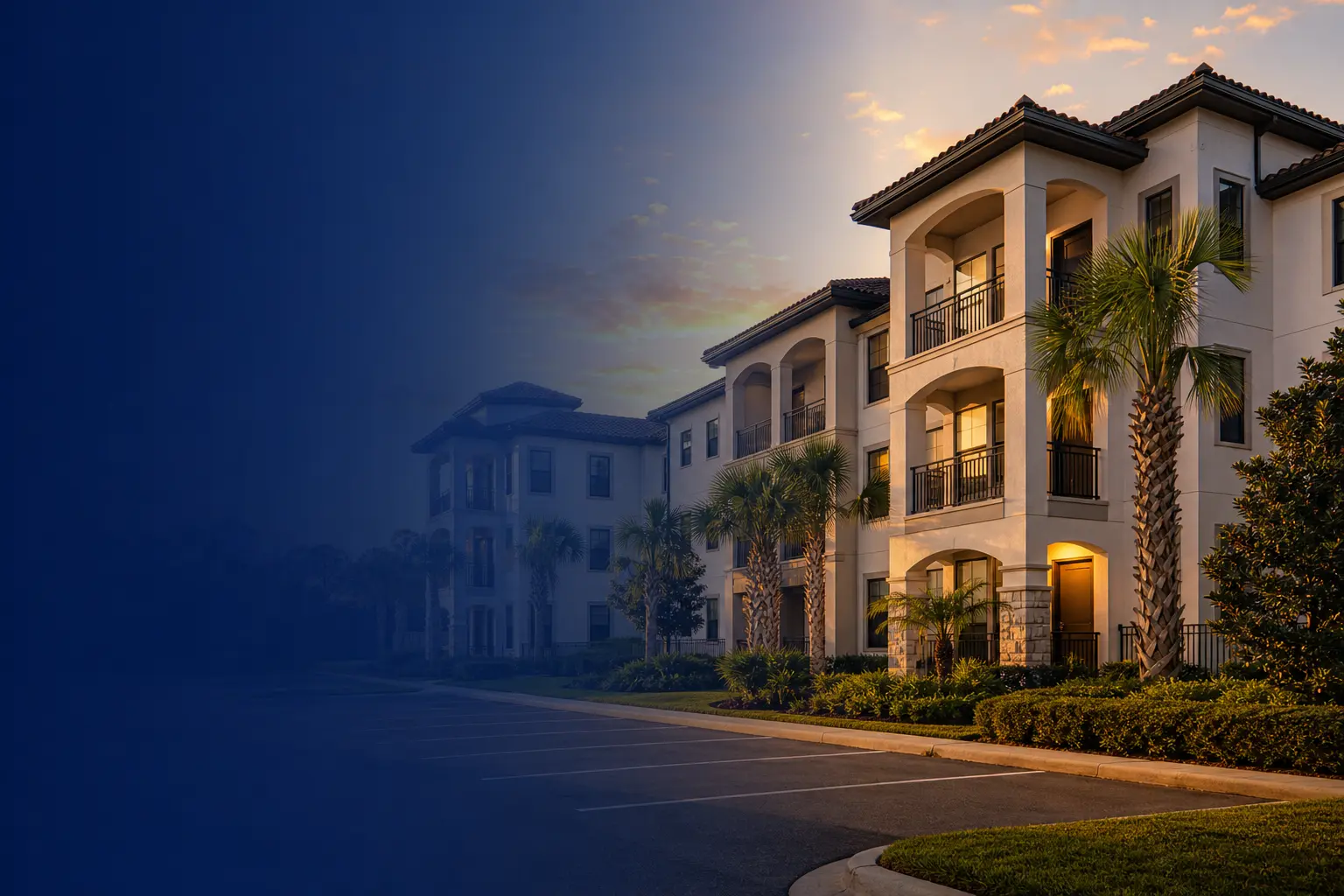
Florida Apartment Building Insurance for Multifamily Owners
Own apartments, garden-style multifamily buildings, duplexes, quadplexes, or a residential rental schedule? We help review property coverage, liability, loss of rents, wind, flood, roofs, tenant exposure, lenders, and umbrella needs before renewal pressure hits.
Start with the property address and unit count. Joe will tell you what helps next.
Apartment insurance is not just a building quote.
Building values, roofs, updates, wind, flood, equipment, ordinance or law, and valuation.
Tenants, guests, common areas, pools, stairs, balconies, parking lots, lighting, and amenities.
Loss of rents, lender requirements, vacancy, rent rolls, deductibles, and claim history.
Florida apartment building insurance should match the whole multifamily risk.
Strong apartment options start with what the property is really insuring: buildings, residents, common areas, rental income, roofs, wind, flood, amenities, management controls, and prior losses. The more complete the story, the less the account gets treated like a generic property quote.
Our office helps Florida multifamily owners compare the coverage pieces that matter before a lender deadline, nonrenewal, inspection issue, or storm-season renewal compresses the timeline.
Apartment building property coverage
Review the building limit, construction type, roof age, permanently installed fixtures, exterior structures, signs, mechanical systems, and whether replacement-cost valuation is supported by current rebuild assumptions.
Premises liability for tenants, guests, and common areas
Multifamily liability often turns on stairs, balconies, sidewalks, parking lots, lighting, pools, playgrounds, gyms, laundry rooms, security practices, maintenance response, and documented inspection routines.
Loss of rents and business income
If a covered loss makes units unusable, loss-of-rents or business-income coverage can help protect the revenue stream while repairs are completed, subject to the policy terms and waiting periods.
Florida wind, roof, and hurricane deductible review
Florida apartment schedules need a direct look at roof age, roof material, wind eligibility, named-storm deductibles, protective safeguards, inspections, and the carrier options available for older buildings.
Flood, drainage, and lower-floor exposure
Apartment owners should review flood separately from standard property coverage, especially for first-floor units, laundry rooms, electrical rooms, mechanical equipment, retention areas, and lender-required flood evidence.
Lenders, managers, vendors, and lease controls
Lender clauses, property manager agreements, vendor certificates, additional insured wording, maintenance logs, lease language, and incident response can all affect how accurately the property is presented.
Multifamily owners need a different conversation than ordinary commercial property owners.
Apartment buildings combine habitational property, premises liability, rental-income exposure, maintenance controls, and tenant density. That is why unit count, amenities, roof details, and loss history matter so much.
Small multifamily owners
Duplexes, quadplexes, and smaller apartment buildings still need commercial-style review when the property is income-producing, tenant-occupied, or lender-driven.
Garden-style apartment communities
Multiple buildings, sidewalks, parking areas, pools, laundry rooms, leasing offices, roofs, and tenant turnover make the property and liability story more detailed.
Older or harder-to-place apartments
Older roofs, prior water losses, aluminum wiring, coastal wind, flood exposure, vacancy, or deferred maintenance may require broader market access and a detailed property comparison.
Apartment building carriers look closely at roofs, water losses, tenants, and amenities.
Florida multifamily insurance can get expensive or difficult when the account has older roofs, repeated water losses, weak maintenance records, coastal wind, flood concerns, older systems, or amenities that create more visitor and tenant exposure.
That does not mean the property is hopeless. It means the quote package needs to be specific enough for the right carriers to understand the real risk instead of filling in the blanks themselves.
Details that change the apartment building quote
Property address list, unit count, building count, stories, square footage, construction type, and year built
Roof age, roof material, plumbing/electrical/HVAC updates, fire protection, alarms, sprinklers, and inspection notes
Occupancy percentage, tenant profile, rent roll, loss-of-rents needs, vacancy, and property management controls
Pools, playgrounds, gyms, laundry rooms, balconies, stairs, gates, lighting, security, and parking-lot responsibilities
Wind or hurricane deductible structure, flood zone, elevation concerns, drainage, first-floor units, and lender requirements
Current policy, loss runs, prior nonrenewal notices, inspection recommendations, vendor certificates, and umbrella requirements
What to Send for an Accurate Apartment Building Insurance Quote
You do not need a perfect package to start, but better documents help us avoid weak assumptions and push the account toward markets that actually understand Florida multifamily property.
Current declarations pages, expiring premiums, endorsements, lender requirements, and inspection recommendations
Five years of loss runs when available, especially for wind, water, fire, theft, liability, and habitability-related claims
Property schedule with addresses, building values, unit counts, stories, construction type, roof details, and updates
Rent roll or monthly rental income estimate for loss-of-rents or business-income review
Photos, roof reports, four-point or building-condition reports, wind mitigation details, and flood-zone information
Property-management agreement, vendor certificate process, maintenance procedures, pool/playground controls, and lease requirements
Have a lender deadline, renewal crunch, or nonrenewal notice?
Send what you have. We can help identify the missing pieces and compare standard landlord, habitational, and more specialized property markets for the building.
Compare apartment insurance cost with the coverage attached
Use sourced apartment cost context and a renewal calculator, then check property values, deductibles, wind, flood, rental income, liability, and lender terms before choosing an option.
Which Florida property insurance path fits your building?
You own apartments leased to tenants
Start here when the property is a residential rental building or multifamily schedule and the insurance needs to account for units, common areas, income, wind, flood, and tenant exposure.
Get Apartment QuoteYou own commercial space leased to businesses
If the tenants are offices, restaurants, retail, gyms, warehouses, or other businesses, the landlord / lessors risk path may fit better than the apartment building path.
Review Lessors RiskThe building needs coastal or high-value market options
Large schedules, coastal wind, older roofs, major losses, layered property limits, or unusual valuation questions may need specialized property coverage options.
Review Complex PropertyFlorida multifamily insurance questions apartment owners ask before renewal
Not sure which property insurance page fits?
If you own, lease, manage, or insure a Florida building, start with the property path that matches the occupancy, tenant setup, building value, and contract requirements — not industry jargon.
Apartment, multifamily, condo, or HOA property
Start with the habitational hub for apartments, multifamily property, condo associations, master policies, wind, flood, and renewal documents.
Open Habitational HubCommercial property owners
Start here for office buildings, medical/dental buildings, professional offices, warehouses, retail centers, and owner-occupied business property.
Start a Building Owner QuoteLandlords and leased buildings
For strip malls, office condos, warehouses, or other buildings leased to tenants where lessors risk and lease requirements matter.
Start a Landlord QuoteHigh-value or coastal buildings
For larger schedules, custom construction, coastal wind, flood, layered property programs, or specialized Florida buildings.
Compare High-Value PropertyTrusted Carriers We Represent



















Get Florida apartment building insurance reviewed before the renewal gets ugly.
Our Lake City office has served Florida property owners since 1995. We can review your current policy, building schedule, lender requirements, roof details, flood questions, loss history, and rental-income needs before the deadline becomes urgent.