

1-800-252-6885
Greene & Associates Insurance
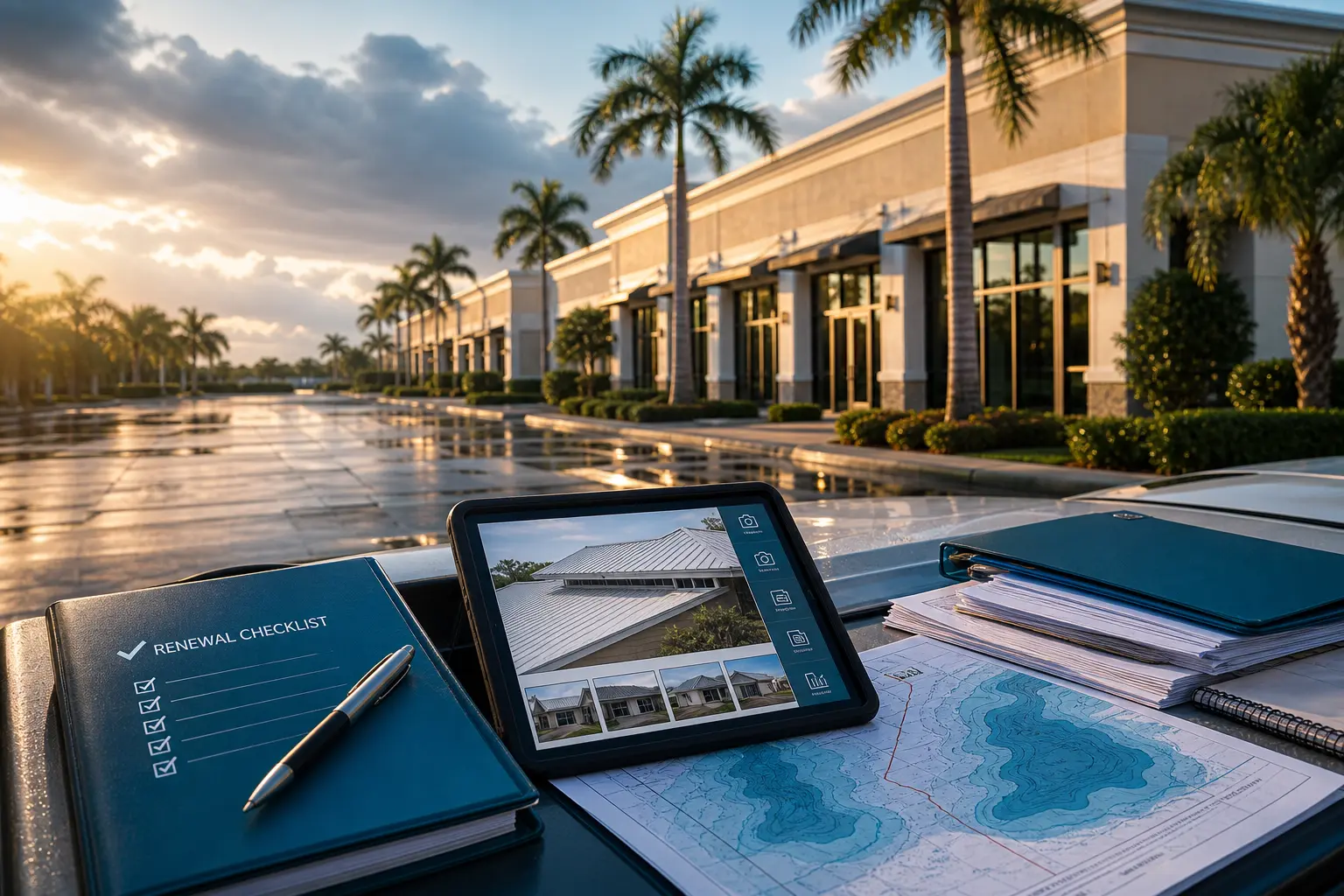
Premium Florida commercial property insurance renewal scene with building, storm-ready documents, roof inspection photo, flood map, and wet pavement suggesting wind and flood review.
Florida commercial property resource

Florida Commercial Property Wind and Flood Renewal Checklist

Published May 2026Sources reviewed May 23, 2026

Use this checklist before a Florida commercial property insurance renewal to organize wind, flood damage, roof, deductible, business income, lender, tenant, and document questions before underwriting deadlines get tight.

Quick summary

  • A Florida commercial property insurance wind and flood renewal review should separate building coverage, business personal property, wind or named-storm deductibles, roof records, flood zone status, NFIP or private flood options, business income, loss of rents, lender requirements, tenant mix, and current loss runs.
  • Gather those documents before renewal or storm season so the quote file is cleaner and coverage gaps are easier to catch.

Reviewed by

Joe Greene, Florida 2-20 General Lines insurance agent

Joe GreeneCommercial Lines ManagerFL 2-20 license #P005559

Commercial Property Wind/Flood Checklist: the short version

  • A Florida commercial property insurance wind and flood renewal review should separate building coverage, business personal property, wind or named-storm deductibles, roof records, flood zone status, NFIP or private flood options, business income, loss of rents, lender requirements, tenant mix, and current loss runs. Gather those documents before renewal or storm season so the quote file is cleaner and coverage gaps are easier to catch.
  • Best fit: florida commercial building owners, commercial landlords and lessors risk accounts, property managers preparing renewal packets, businesses with owned buildings, inventory, equipment, or business income exposure.
  • Use the web page for source links and the PDF when you need a meeting-ready checklist.

Who should use this

Built for Florida property owners and managers who need wind, flood, roof, tenant, and lender documents before renewal.

Florida commercial building ownersUse this when a building renewal needs roof, wind, flood, lender, deductible, and valuation documents in one file.
Commercial landlords and lessors risk accountsReview tenant mix, lease insurance terms, loss of rents, flood, wind deductibles, and certificates before renewal.
Property managers preparing renewal packetsBuild a board-ready or owner-ready packet with current policies, inspections, photos, flood maps, and quote notes.
Businesses with owned buildings, inventory, equipment, or business income exposureConfirm building, contents, inventory, equipment, tenant improvements, and shutdown exposure before a storm or renewal crunch.

Checklist

Florida Commercial Property Wind and Flood Renewal Checklist: documents and questions to organize

These are practical review items, not legal advice, engineering advice, claim-settlement advice, or a promise that a carrier will accept a specific risk.

Commercial property renewal snapshot: documents to collect first

Start with the facts underwriters, lenders, owners, and agents keep coming back to before wind or flood options can be reviewed cleanly.

Current policy and renewal offer

Save the declarations, forms, endorsements, deductibles, valuation basis, mortgagee or loss-payee pages, renewal terms, and any notices or subjectivities.

Property schedule and values

List every insured location with building limit, business personal property, inventory, equipment, tenant improvements, outdoor property, signs, and any loss-of-rents or business-income limits.

COPE details

Confirm construction type, occupancy, protection details, exposure, square footage, year built, updates, alarms, sprinklers, hydrant distance, and protection class if available.

Tenant mix and lease obligations

For leased buildings, document tenant operations, vacancies, lease insurance requirements, additional insured requests, waiver or subrogation wording, and who is responsible for improvements.

Lender and certificate requirements

Keep loan insurance requirements, mortgagee wording, required limits, deductible caps, flood requirements, evidence deadlines, and any certificate instructions in the same packet.

Loss runs and claim notes

Request current loss runs and summarize roof, water, wind, fire, theft, equipment, liability, or flood losses with date, cause, status, and repair documentation.

Wind, hurricane, roof, and deductible review for commercial property

Florida wind review is where roof information, deductibles, building condition, and policy wording can materially affect the renewal conversation.

Wind or named-storm deductible

Find the deductible wording and convert any percentage deductible into approximate dollars using the insured building or property limit so the owner understands the real retention.

Roof age and roof records

Collect roof age, permit records, contractor invoices, inspection reports, maintenance notes, repair photos, replacement sections, roof material, and any warranty information.

Openings, glass, and exterior protection

Document shutters, impact glass, roll-down doors, exterior signs, awnings, fences, outdoor equipment, roof-mounted equipment, and whether protection measures are required before a storm.

Ordinance, debris, and repair cost pressure

Review ordinance or law, debris removal, increased cost of construction, code upgrade exposure, and whether older building systems could create a larger repair bill after a covered loss.

Business income or loss of rents

Estimate how long operations or rental income could be interrupted after a covered wind loss and whether extra expense, loss of rents, or ordinary payroll needs review.

Vacancy, renovation, or construction changes

Flag vacant units, renovations, roof work, electrical or plumbing work, tenant build-outs, and construction activity before renewal because policy limitations can change when occupancy changes.

Flood, storm surge, and water-damage questions to separate from wind

Flood and wind are not the same insurance conversation. Separate the water question early so the renewal does not depend on assumptions.

Flood zone and map review

Use FEMA flood map tools as a starting point, then confirm lender requirements, elevation information, prior flood claims, and whether the location is near storm surge, river, lake, or drainage exposure.

NFIP, private flood, or no flood policy

Identify whether the building has NFIP, private flood, excess flood, or no flood coverage, and separate building limits from contents, inventory, tenant improvements, and equipment needs.

NFIP commercial flood limit review

FloodSmart says commercial flood insurance can protect a business building and equipment, with building coverage and contents coverage each available up to $500,000 through the NFIP. Larger buildings, lenders, inventory, equipment, and tenant improvements may still need private or excess flood review.

Commercial building flood insurance cost factors

Do not use one flat Florida price assumption. Flood cost review should look at location, flood zone or mapping, building details, selected limits, deductible, prior flooding, and whether NFIP, private flood, or excess flood is being quoted.

Business income boundary

Do not assume flood coverage pays business interruption or loss of use. Review business income and extra expense expectations separately from building and contents flood coverage.

Water backup and utility interruption

Separate flood, sewer backup, drain backup, off-premises utility interruption, spoilage, equipment shutdown, and wind-driven rain because policy forms can treat them differently.

Tenant and lender communication

For landlord accounts, confirm whether tenants, lenders, or leases require flood evidence, additional insured wording, waiver wording, or separate tenant property coverage.

Documents to send before a Florida commercial property renewal

A cleaner packet reduces back-and-forth and helps our office spot missing wind, flood, valuation, or lender details before the deadline.

Current policy package

Declarations, forms, endorsements, deductibles, wind or flood exclusions, mortgagee pages, business income forms, equipment breakdown forms, and prior renewal proposals.

Photos and inspection records

Exterior photos on all sides, roof photos if safely available, interior photos, tenant spaces, electrical panels, HVAC, roof repairs, inspection reports, and mitigation or maintenance invoices.

Statement of values or property spreadsheet

Building values, contents values, equipment, inventory, tenant improvements, signs, outdoor property, loss of rents, business income, and any scheduled property by location.

Flood documents

Flood policy, lender flood determination, elevation certificate if available, prior flood claim records, FEMA map notes, and private flood or excess flood quotes if previously reviewed.

Lease, loan, and certificate requirements

Lease insurance clauses, lender requirements, certificate instructions, additional insured requests, waiver requests, deductible restrictions, and evidence of insurance deadlines.

Operations and continuity notes

Tenant roster, business continuity plan, emergency vendors, generator or refrigeration details, seasonal inventory changes, vacancy status, and how long shutdown would create income loss.

Questions to ask our office before renewal or storm season

These questions make the review specific enough for commercial property owners, landlords, and managers to act on instead of guessing.

What deductible applies to wind or hurricane damage?

Ask which deductible applies, how it is calculated, and whether the dollar amount still fits the owner, lender, or lease requirements.

Is flood handled by a separate policy?

Confirm whether flood is excluded, insured through NFIP, insured privately, supplemented by excess flood, or required by the lender.

Are building and contents values current?

Review replacement cost, actual cash value, coinsurance, inflation guard, inventory swings, tenant improvements, equipment, and whether older values need updating.

What policy limitations matter for this building?

Discuss roof limitations, vacancy, protective safeguards, ordinance or law, outdoor property, signs, equipment breakdown, water backup, business income, and tenant operations.

What can still be changed before deadline?

Ask how much time is needed for wind, flood, inspection, lender, and quote updates before renewal, storm season, or a loan closing.

What should be reviewed after a property change?

Call after tenant changes, renovations, roof work, new equipment, ownership changes, refinance requirements, vacancy, claim activity, or major inventory changes.

Commercial Property Wind/Flood Checklist red flags to catch early

The property owner cannot find a flood policy, flood declination, or lender flood requirement.
The wind or named-storm deductible is listed as a percentage but nobody has calculated the approximate dollar amount.
Roof age, roof permits, repair invoices, or inspection photos are missing or outdated.
Tenant mix changed since the last renewal, but the policy submission still describes the old occupancy.
Business income, loss of rents, extra expense, spoilage, or shutdown exposure has not been reviewed separately from building coverage.
A lender, lease, or certificate deadline is inside two weeks and the property packet is still incomplete.

Download the commercial property wind/flood checklist PDF checklist

The PDF version is built for board packets, renewal meetings, audit prep, and field notes. The HTML page stays crawlable for search and AI systems; the PDF travels better when somebody needs the checklist in hand.

Commercial Property Wind/Flood Checklist FAQ

Does commercial property insurance cover flood damage in Florida?

Do not assume it does. Flood damage is usually reviewed separately from standard commercial property and wind coverage through NFIP, private flood, or excess flood options. The policy forms, lender requirements, flood zone, building details, and limits control the answer.

What documents are needed for a commercial property wind and flood renewal?

Start with the current policy, renewal offer, building details, roof records, photos, property values, loss runs, lender requirements, lease insurance clauses, flood policy or flood determination, and any inspection or maintenance records.

Is NFIP commercial flood coverage enough for a Florida building?

Sometimes, but not always. FloodSmart describes NFIP commercial building and contents coverage up to program limits. Larger buildings, lender requirements, inventory, equipment, tenant improvements, and income exposure may need private or excess flood review.

How much is flood insurance for a commercial building in Florida?

There is no single Florida commercial building flood price. Cost depends on location, flood zone or mapping, building characteristics, selected building and contents limits, deductible, prior flooding, and whether the quote is NFIP, private flood, or excess flood.

Does FEMA or the NFIP offer commercial flood insurance?

Yes. FloodSmart says NFIP flood insurance is available for businesses, and commercial building coverage and contents coverage are each available up to $500,000 through the NFIP. Some buildings still need private or excess flood review when values, lenders, inventory, equipment, or tenant improvements exceed the basic fit.

Why does roof age matter for Florida commercial property insurance?

Roof age, roof material, repairs, permits, inspection records, and maintenance can affect underwriting questions for wind-exposed commercial property. The impact varies by building, carrier, market, and policy form, so avoid one-size-fits-all assumptions.

Should business income be reviewed with wind and flood?

Yes, but separately. Business income and extra expense can matter after a covered property loss, while flood policies may not cover business interruption or loss of use. Review the trigger, waiting period, limit, and covered cause of loss before relying on it.

When should a commercial property owner start renewal review in Florida?

Start well before renewal or storm season, especially when wind, flood, roof records, lender requirements, inspections, or tenant changes are involved. Sixty to ninety days is a practical target for complex buildings, even when the policy itself does not require that timeline.