
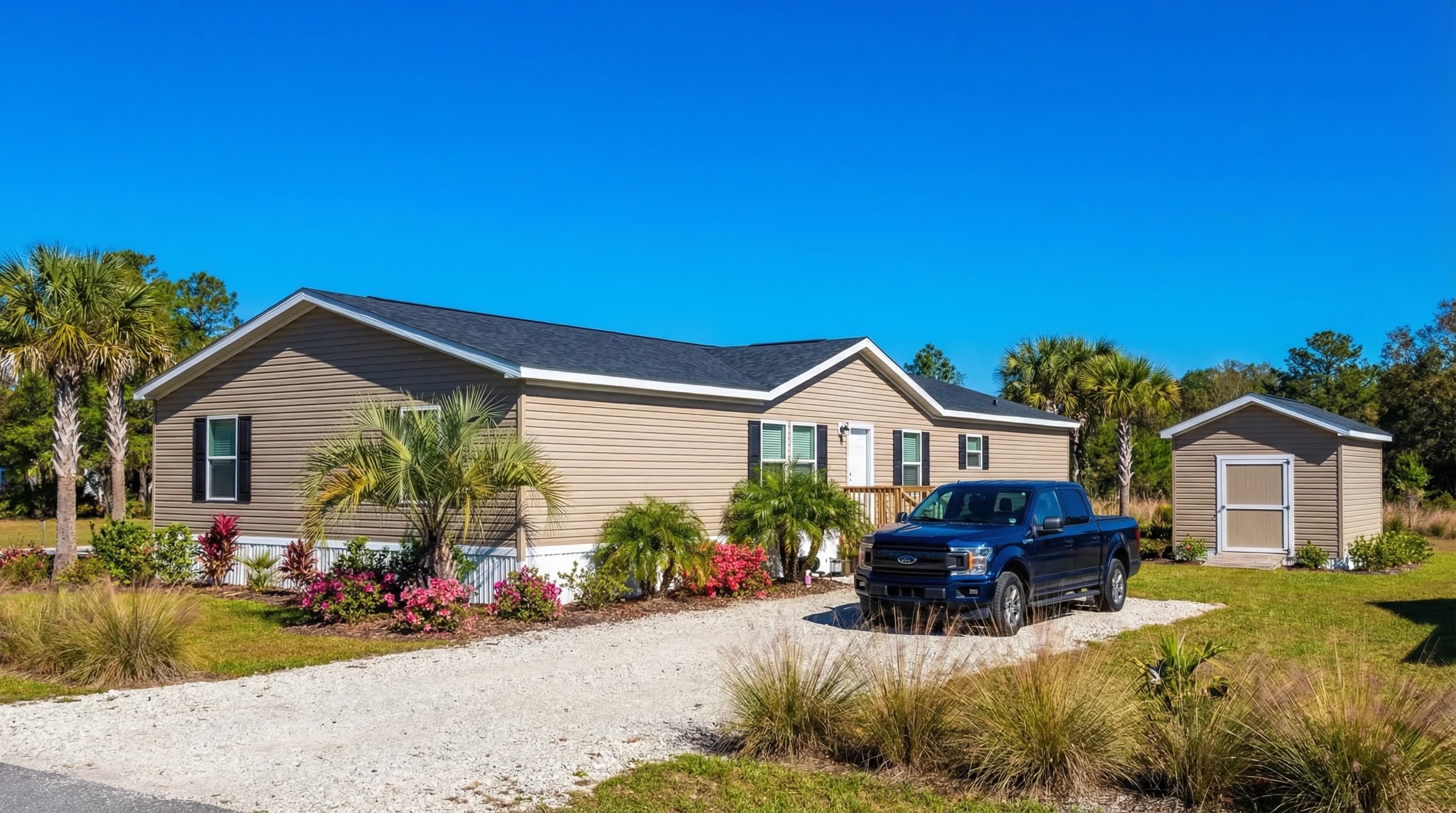
Mobile Home Insurance in Suwannee County, FL: What Manufactured Home Owners Need to Know
Suwannee County manufactured home insurance guide: coverage, older homes, flood gaps, quote prep, and what Live Oak owners should send for pricing.

Joe Greene
Licensed Insurance Agent
Mobile and manufactured homes are found throughout Suwannee County and North Central Florida, including Live Oak, Branford, Wellborn, and the rural stretches of the county. Their policy forms and eligibility questions can differ from site-built homes, so the quote should match the home's year, construction, condition, occupancy, and location.
Suwannee County mobile home owners can compare policies built for manufactured homes, add separate flood coverage when the property has river or low-lying exposure, and shop pricing based on the home's actual details.
Key Takeaway
If you want mobile home pricing, send the year, make/model if available, serial or HUD label details if you have them, single-wide or double-wide status, roof age, tie-down or anchoring details, occupancy, property address, flood zone if known, and photos of the exterior. Those details let our office compare the available manufactured-home options and prices.
Mobile Home Insurance Is Not the Same as Regular Homeowners Insurance
Mobile and manufactured homes generally use policy forms or programs designed for manufactured housing rather than a standard site-built homeowners form. The available form, valuation method, limits, and endorsements depend on the home and the carrier.
The distinction matters because mobile and manufactured homes have different construction standards, different wind resistance profiles, and different replacement cost calculations than site-built homes. Specialty manufactured-home programs build their policy forms around those differences.
If you are unsure which form you have, check the declarations and policy form number with your agent. That quick review can show how the dwelling, personal property, liability, and settlement terms apply before you compare renewal options.
What Mobile Home Insurance Covers in Florida
A manufactured home policy may offer these broad coverage categories, subject to the selected limits, exclusions, settlement terms, and endorsements:
Dwelling coverage: May address covered damage to the home itself, including the frame, roof, walls, floors, and built-in systems. Compare the dwelling limit with the applicable replacement-cost or actual-cash-value settlement terms.
Other structures: May apply to eligible detached property such as a carport, workshop, storage shed, or fence. Attached additions and detached structures can be treated differently.
Personal property: May cover eligible belongings such as furniture, appliances, clothing, and electronics. Check the limit, settlement method, special sublimits, and whether higher-value items need to be scheduled.
Liability: May address covered injury or property-damage claims for which an insured is legally responsible, along with defense costs provided by the form.
Additional living expense: May reimburse eligible increased living costs when a covered loss makes the home uninhabitable, subject to the policy limit and time period.
How Policies Treat Land and Structures
Property insurance values the scheduled home and covered structures, not the market value of the land. If you own the lot, rent a space in a mobile home park, or have shared facilities, compare the dwelling and other-structures limits with the lease, park rules, and any separate responsibility for common areas.
Have a mobile or manufactured home in Suwannee County? Send the home details and we will compare the markets that fit the year, condition, occupancy, flood exposure, and replacement-cost question.
Wind, Flood, Fire, and Theft Questions for the Quote
Wind and Storm Damage
For wind coverage and pricing, insurers may review the home's year, construction standard, roof, tie-downs or anchoring, skirting, additions, and condition. North Florida properties can face severe thunderstorms, tornadoes, and tropical-system winds even away from the coast.
Wind coverage and deductibles vary by policy. Compare whether the quote includes wind, how a hurricane or named-storm deductible applies, and whether inspections or mitigation documents affect the option.
The home's construction year can affect eligibility and price because federal manufactured-home standards have changed over time. Current carrier rules may also consider inspections, updates, roof condition, and anchoring.
Flooding
Flood is generally excluded from homeowners and manufactured-home policy forms and handled through separate NFIP or private flood coverage. River, creek, drainage, and low-lying exposure should be checked for the specific Suwannee County address.
Depending on the home and location, NFIP or private flood options may be available. A lender can also set flood-insurance requirements for the property.
For river and low-lying properties, pair this review with our Suwannee River flood insurance guide, our Florida flood insurance page, and our NFIP vs private flood comparison.
Fire and Smoke
Electrical, heating, cooking, attached additions, and overall property condition can affect fire coverage and pricing. Compare the dwelling limit and settlement method with the home's current characteristics and the cost basis used on the quote.
Theft and Vandalism
Vacancy, seasonal use, security, and location can affect theft or vandalism eligibility. Check how the policy treats personal property, appliances, HVAC equipment, vacant periods, and any protective-device credits.
How Much Does Mobile Home Insurance Cost in Suwannee County?
Manufactured Home Insurance Cost Factors in Suwannee County
Factors that drive your premium:
- Age and construction standard of the home
- Size and selected dwelling limit
- Location, fire protection, and flood exposure
- Roof age and condition
- Owned-land or rented-lot arrangement
- Your claims history
- Deductible selected
What our office needs for pricing:
- Year, make/model, and whether it is a single-wide, double-wide, or modular home
- Address, occupancy, roof age, tie-down or anchoring details, and photos
- Replacement cost target, actual cash value tolerance, and deductible preference
- Flood zone or elevation information if the property is near river, creek, or low-lying exposure
- Prior claims and any current policy declarations page
The quickest way to get a useful price is to let an independent agent compare the home across specialty manufactured-home options. The year, size, roof, tie-downs, location, occupancy, claims, deductible, and settlement basis all affect the number.
Compare Replacement Cost and Actual Cash Value
Manufactured home quotes may use different settlement methods. Two terms to compare are:
Replacement cost value (RCV): Subject to the policy limit, eligibility, terms, and documentation requirements, this method may pay covered repair or replacement costs without the same depreciation calculation used for actual cash value.
Actual cash value (ACV): This method generally accounts for depreciation when valuing covered property damage. The policy controls how depreciation, deductibles, partial losses, and total losses are calculated.
Key Takeaway
The lower-priced policy may use actual cash value settlement, which subtracts depreciation from a covered loss. Compare that price with a replacement-cost option so you can choose the settlement basis you want for the home.
Insurance Options for Older Manufactured Homes
HUD's federal manufactured-home standards took effect on June 15, 1976. Homes built before that date may have fewer insurance options, while current eligibility still depends on condition, roof, systems, tie-downs, occupancy, and location.
For homes built between 1976 and 1994, insurers may ask for the construction year and any available labels, inspection reports, updates, or anchoring details. Those facts can affect current eligibility and price.
If you have an older home, an independent agent can compare the specialty manufactured-home options currently available and explain differences in form, valuation method, deductible, and price.
Do You Need Separate Coverage for Detached Structures?
Many Suwannee County manufactured home owners have carports, workshops, storage buildings, or screen rooms attached or adjacent to their homes. Attached additions and detached structures may be classified and valued differently, and the other-structures limit may be a percentage, a scheduled amount, or unavailable under a particular form.
List each outbuilding and its use when requesting a quote. Then compare the available limit, settlement terms, exclusions, and endorsement options with what is actually on the property.
Manufactured Home Insurance for Rental Properties
If you rent the manufactured home to tenants, an owner-occupied homeowners form may not match the exposure. Ask about a landlord or dwelling policy for the structure and rental use; tenants can separately consider renters insurance for their belongings and liability.
If the home is rented to tenants, also review our lessors risk insurance page and our rental property insurance article before assuming a normal owner-occupied policy works.
If the home is older, rented, near flood exposure, or on rural land outside Live Oak, send us the details. We can compare available prices, policy forms, and settlement options.
Getting Mobile Home Insurance in Live Oak and Suwannee County
If you are a manufactured home owner in Suwannee County looking for coverage, our Live Oak insurance page explains how we help nearby homeowners from our Lake City office. You can also use our mobile home insurance page for the quote form and our mobile home quote checklist to organize details before you send them.
Our office helps North Central Florida manufactured-home owners compare prices and coverage for newer double-wides, older single-wides, homes on owned land, mobile home park lots, and rental properties.
Whether you have a newer double-wide on owned land outside Live Oak, an older single-wide in a mobile home park, or a manufactured home you use as a rental property, we can compare the options currently available for the home.
Call 1-800-252-6885 or send the manufactured-home details online. We will compare available prices and coverage using the home year, roof, tie-downs, flood exposure, occupancy, and settlement preference.
Suwannee County Mobile Home Insurance FAQ
Is mobile home insurance different from regular homeowners insurance in Florida?
Mobile and manufactured homes generally use policy forms or programs designed for manufactured housing rather than a standard site-built homeowners form. The exact form, available coverage, valuation method, and carrier options depend on the home year, construction, condition, roof, tie-downs, occupancy, and location.
What does manufactured home insurance cover in Suwannee County?
A manufactured home policy may include dwelling, other structures, personal property, liability, and additional living expense coverage, subject to the selected limits, settlement terms, exclusions, and endorsements. Flood is generally handled separately, so compare available NFIP or private flood options when the property has lender, river, drainage, or low-lying exposure.
What is the difference between replacement cost and actual cash value for a mobile home in Florida?
Replacement cost and actual cash value use different settlement methods for a covered loss. Actual cash value generally accounts for depreciation, while replacement-cost coverage is subject to the policy limits, terms, eligibility, and documentation requirements. Compare the settlement wording, deductible, limit, and premium shown on each quote.
How much does mobile home insurance cost in Suwannee County, FL?
The price depends on the home year, size, roof, tie-downs, replacement cost, fire protection, flood zone, occupancy, claims history, and whether you choose replacement cost or actual cash value settlement. Send the home details and let our office compare available specialty manufactured-home options and prices.
Can I insure an older manufactured home built before 1994 in Florida?
Coverage may be available for an older manufactured home, but eligibility varies by home year, condition, roof, electrical and plumbing updates, tie-downs, occupancy, location, and current carrier rules. Homes built before HUD's federal manufactured-home standards took effect on June 15, 1976 may have fewer options. Send the home details so the available forms, valuation methods, deductibles, and prices can be compared.

Joe Greene
Commercial Lines Manager
Joe Greene has been a licensed Florida 2-20 General Lines Insurance Agent since 2005, with a focus on commercial coverage for North Florida contractors, trucking operations, and small businesses. If your question involves a fleet, a crew, or a certificate of insurance, he's probably answered it a hundred times. FL License #P005559.
joe@greeneinsurance.comWant us to check mobile home pricing?
Give us the home address. Your dedicated agent will compare the mobile-home insurance options available for it.