
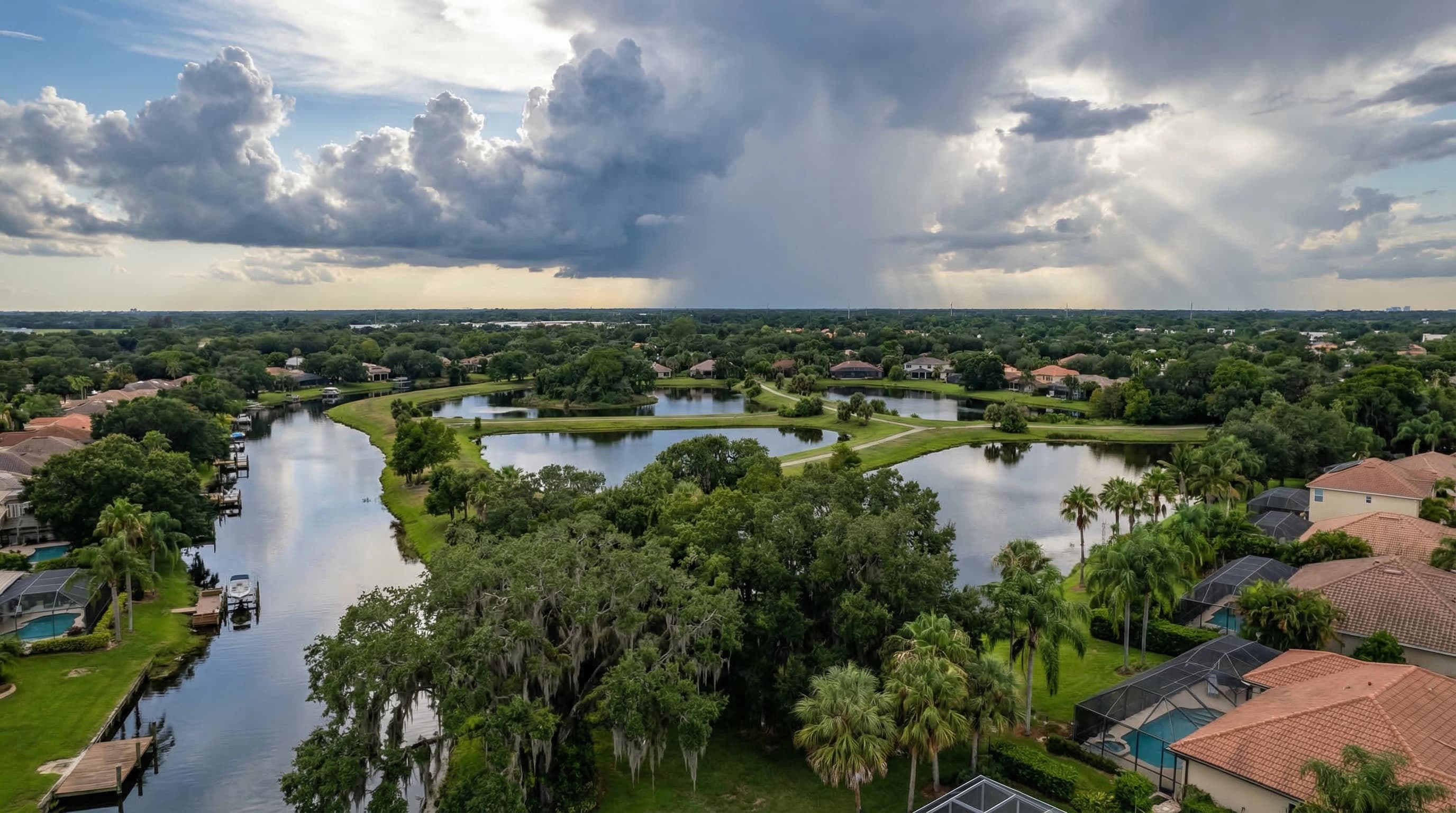
NFIP vs Private Flood Insurance in Florida
Florida homeowners can buy flood insurance through the federal NFIP or from private carriers. NFIP offers standardized federal program backing with residential building limits up to $250,000 and contents limits up to $100,000. Private flood can offer broader limits or extra features, but pricing, lender acceptance, renewal rules, and carrier availability need to be checked before switching.
Side-by-Side Comparison
| Feature | NFIP (Federal) | Private Flood |
|---|---|---|
| Dwelling Coverage Limit | $250,000 maximum | Varies by carrier and underwriting; may exceed NFIP |
| Contents Coverage Limit | $100,000 maximum | Varies by carrier, coverage form, and selected limit |
| Contents Valuation | Actual Cash Value (depreciated) | May offer replacement cost or broader valuation, depending on form |
| Loss of Use / ALE | Not included | May be available |
| Non-Renewal Risk | Standardized federal program availability | Subject to carrier availability and renewal terms |
| Program backing | U.S. federal government | Private surplus / admitted carriers |
| Rating Model | FEMA Risk Rating 2.0 | Proprietary risk models |
| Zone X (Moderate Risk) | Quote required; property-specific under Risk Rating 2.0 | Quote required; often competitive for some lower-risk properties |
| Zone AE (High Risk) | Quote required; elevation and property factors matter | Quote required; availability varies by carrier |
| Zone VE (Coastal High Risk) | Quote required; coastal high-hazard factors matter | Quote required; carrier options may be more limited |
Premiums change by property and carrier. Confirm coverage limits, deductible, contents valuation, loss of use, lender acceptance, cancellation rules, and renewal terms before replacing one flood policy with another.
Florida's Flood Insurance Market
Florida has an active private flood market, but private flood is not automatically better than NFIP. The comparison changed after FEMA implemented Risk Rating 2.0, because NFIP pricing now relies on more property-specific risk factors than the old flood-zone-only conversation.
The pricing impact varies by region. In North Florida and inland areas where flood risk is moderate, private carriers may be competitive. Along the Gulf Coast and in South Florida's high-velocity flood zones, the picture can be mixed because elevation, construction, distance to water, and prior flood claims matter.
Florida and federal flood rules make policy wording important. The Florida Office of Insurance Regulation is the state insurance regulator, and the lender still has to accept the replacement flood policy when a mortgage requires coverage.
Who Should Choose NFIP
- Homeowners in higher-risk zones who value standardized NFIP availability and familiar lender handling
- Properties with prior flood claims — compare NFIP when private options are limited
- Homes whose needed building coverage fits NFIP limitsand rate stability matters more than coverage breadth
- Owners who prioritize federal program backing — NFIP is the known baseline before testing private alternatives
Who Should Choose Private Flood
- Homes in lower- or moderate-risk areas — private carriers may price competitively for the right property
- Newer construction built above BFE — private flood models may price some modern building characteristics more favorably
- Homes needing more than NFIP limits — private flood may offer higher building or contents limits
- Owners who want loss of use reviewed — some private forms may offer coverage NFIP excludes
- Owners comparing contents valuation — private forms may treat contents differently than NFIP
“Every Florida homeowner should quote both NFIP and private flood before renewing. Some properties look better with private flood, and some should keep NFIP because the lender, limits, renewal stability, or flood history matter more than a lower premium. The best answer comes from a side-by-side comparison.”
Frequently Asked Questions
Related Resources
Flood Insurance
Florida flood insurance coverage options and carriers
Flood Insurance Cost
How much flood insurance costs by zone in Florida
Flood Zone Requirements
Which Florida flood zones usually require insurance
Zone X Flood Risk
Why low-risk areas still need flood coverage
Flood Zone AE Cost
Lender requirements and quote factors for Florida Zone AE homes
Hurricane Insurance Guide
Complete Florida hurricane coverage guide
Compare Your Flood Insurance Options
Greene & Associates compares NFIP and private flood markets where available. We'll compare the limits, lender fit, exclusions, valuation, loss of use, and renewal tradeoffs side by side.