
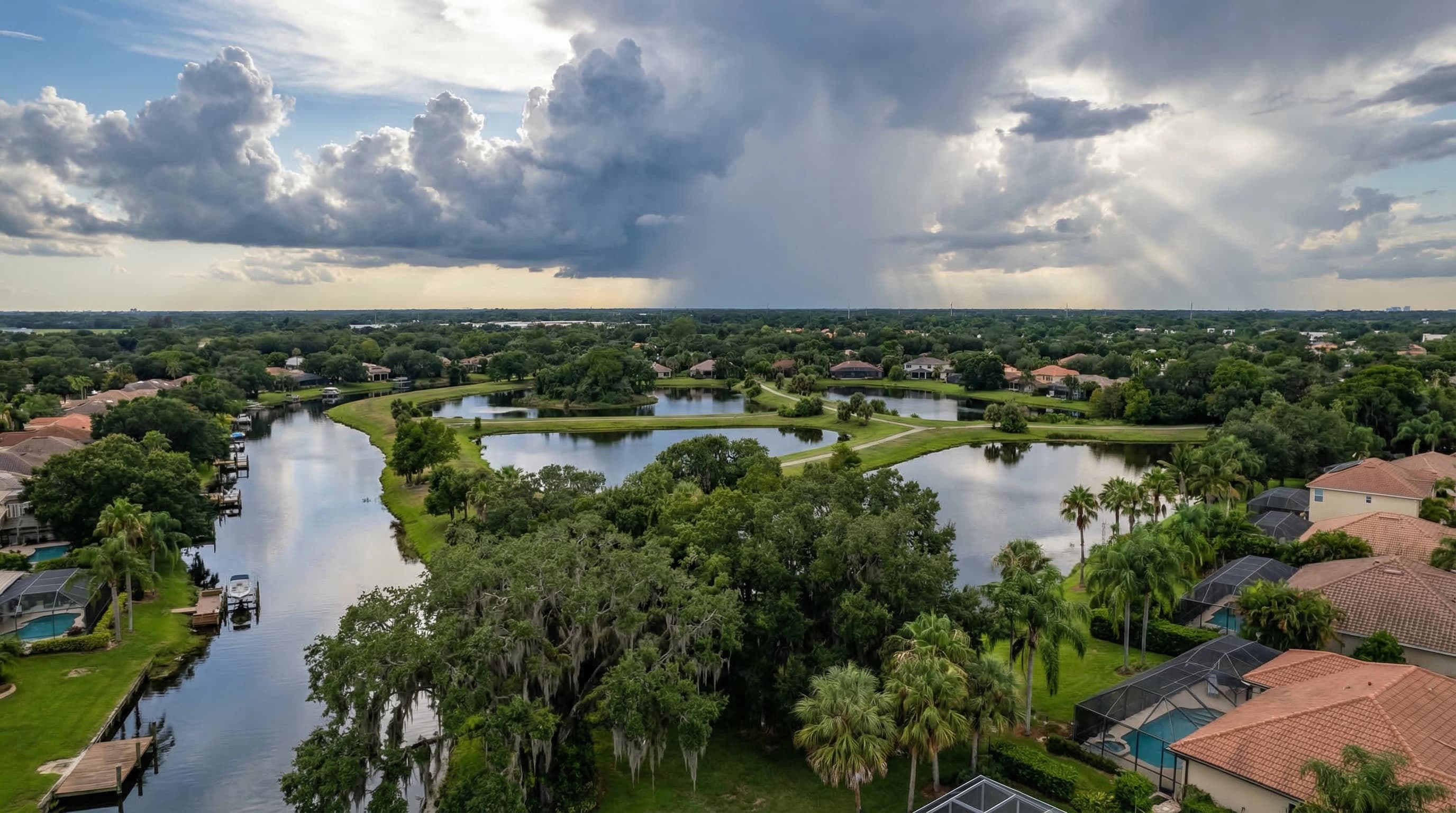
Florida Flood Insurance Quote Help
Your homeowners or mobile-home policy does not cover flood. We compare NFIP and private flood options so the home quote, lender requirement, and real monthly payment make sense together.
4.8 Google ratingSee client reviewsImportant: NFIP flood policies usually have a 30-day waiting period unless an exception applies. Don't wait for storm season — get your flood insurance quote today.
Florida Flood Insurance at a Glance
- Standard homeowners insurance does NOT cover flooding — you need a separate flood policy
- NFIP covers up to $250,000 dwelling / $100,000 contents; private flood often offers higher limits and broader coverage
- Flood claims can happen outside high-risk zones, especially after heavy rain, drainage problems, or storm surge
- NFIP usually has a 30-day waiting period unless an exception applies; some private markets may use different timing
Compare flood options with the property facts lenders and carriers actually need
A flood quote uses the address, occupancy, building value, foundation, elevation details when available, and lender timing. We compare NFIP and private flood options so you can choose the right coverage and price.
Property address, occupancy, year built, foundation, and number of floors.
Loan or closing requirement, current flood policy, and any elevation certificate details.
Building and contents limits you want reviewed, plus whether loss of use matters.
How we compare coverage and prices
NFIP versus private flood availability, limits, waiting periods, and lender fit.
Whether homeowners, mobile-home, condo, or rental coverage leaves a separate flood gap.
Whether the real payment picture changes after flood is added to the home quote.
Flood should be checked with the home quote, not after it
Compare home and flood coverage together to see the full cost of protecting the property. We can also compare mobile-home and bundle options when they apply.
Pair flood with the homeowners quote
A homeowners quote does not include flood, so compare flood options alongside the home policy, deductible, rebuild cost, and total price.
Compare Florida homeowners quotesMobile or manufactured home flood review
Mobile-home quotes and flood quotes are separate. Tie-down, park, lender, and flood-zone details should be checked together before the payment is set.
Mobile-home quote helpBundle without ignoring flood
A home-auto bundle can be a great rate play, but the bundle still needs a separate flood decision if the property has water exposure.
Compare bundle optionsZone X does not mean zero flood risk
If the home is outside a high-risk zone, review the Zone X guide before assuming flood coverage is unnecessary or expensive.
Review Zone X flood riskWhat Does Flood Insurance Cover?
Flood insurance can cover qualifying damage from rising water, storm surge, and overflow under the policy you choose.
Building Coverage
Covers damage to your home's structure, foundation, electrical and plumbing systems, HVAC, appliances, and permanently installed features like cabinets and flooring.
Contents Coverage
Protects your personal belongings including furniture, electronics, clothing, and valuables from flood damage.
Additional Living Expenses
Some private flood policies cover temporary living costs while your home is being repaired after a flood — not available under NFIP.
Basement & Below-Grade Coverage
Private flood policies often cover more below-grade areas than NFIP, including finished basement contents and improvements.
Why Florida Homeowners Compare Flood Insurance
Compare Flood Coverage Across Florida
Flood exposure can change from one address to the next. We compare the map zone, elevation details, drainage, coverage, deductible, and price for your property.
Southeast Florida
Miami, Fort Lauderdale, and West Palm Beach addresses can face heavy-rain, tidal, drainage, and storm-surge exposure. We compare NFIP and private flood options by property.
Tampa Bay Area
Tampa Bay flood questions vary by elevation, distance to water, drainage, building type, and lender requirements. We compare NFIP and private options when both are available.
Jacksonville & Northeast FL
Jacksonville and Northeast Florida properties can have river, drainage, heavy-rain, or coastal exposure. An address-based quote shows the available limits, deductibles, and prices.
Orlando & Central Florida
Central Florida flood pricing depends on the exact address, elevation and map data, drainage, foundation, coverage limits, deductible, and whether NFIP or private flood is the better value.
Gainesville & North Central FL
Lakes, rivers, low-lying areas, and drainage patterns can create different flood exposures across North Central Florida. We compare coverage and price for the exact property.
Tallahassee & Panhandle
Panhandle and Tallahassee properties can have coastal, river, heavy-rain, or drainage exposure depending on the address. We compare the available flood options without treating an entire region as one risk class.
Want to know what flood coverage costs for your address? We'll compare NFIP and private options when available, then show you the coverage and price side by side.
Read our complete guide: Do I Need Flood Insurance in Florida? →Want to learn more about flood insurance in Florida? Read our complete guide: Do I Need Flood Insurance in Florida? Complete Guide + Risk Maps →
Frequently Asked Questions
Related Coverage
Related Resources
Flood Insurance Cost in Florida
NFIP and private flood rates by zone and Risk Rating 2.0
NFIP vs Private Flood
Compare federal and private flood insurance side by side
Flood Zone Requirements
A, AE, AH, VE, and X explained for Florida homeowners
Zone X Flood Risk
Why low-risk areas still need flood coverage
Flood Zone AE Cost
Lender requirements, elevation details, and quote comparisons for Zone AE homes
Don't Wait for Storm Season
NFIP policies usually have a 30-day waiting period. Compare flood options today so the homeowners or mobile-home quote is not missing the water-risk piece.