
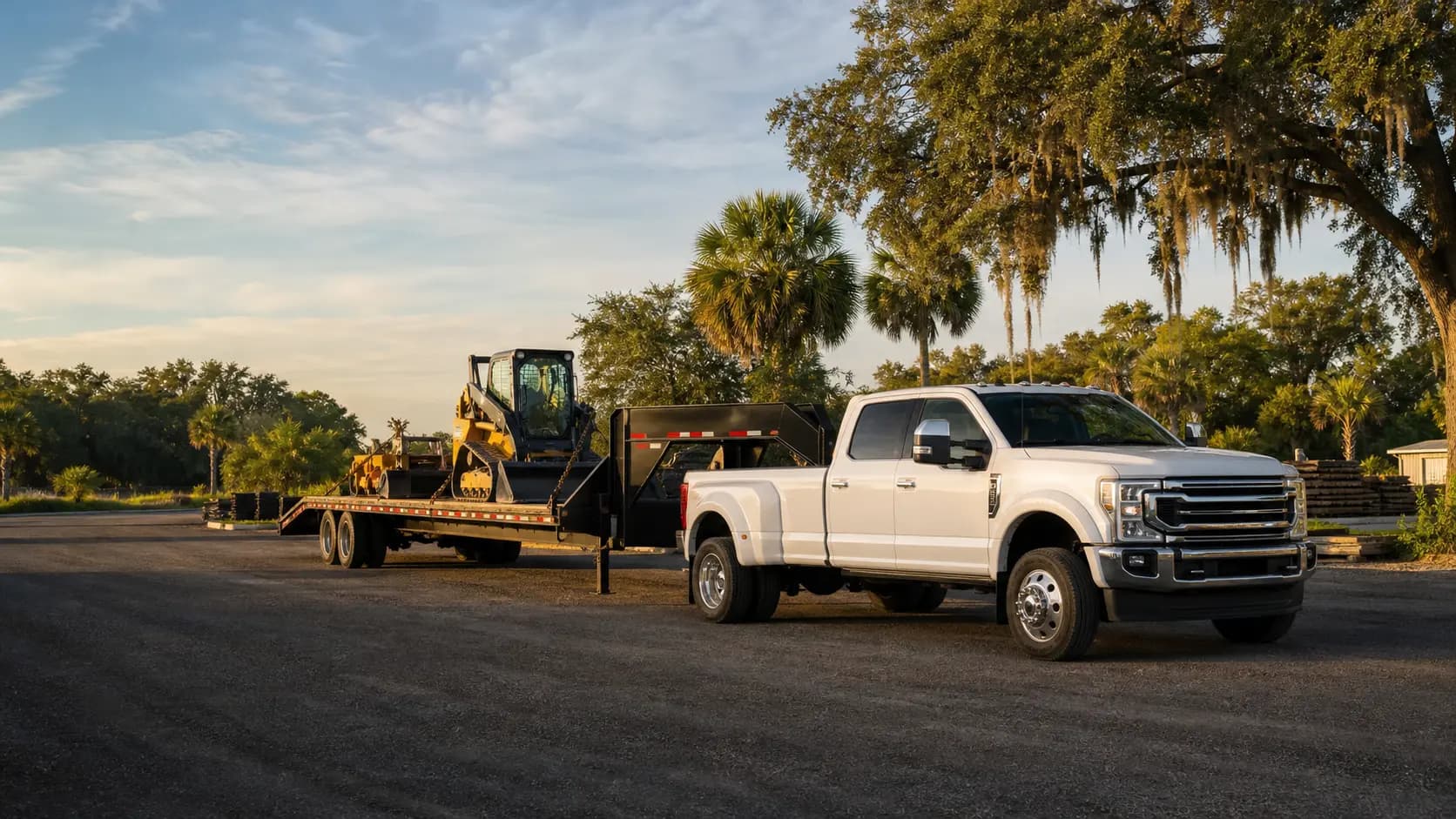
Hotshot Truck Insurance in Florida
CDL or non-CDL, dually pickup or gooseneck trailer, own authority or leased work - we shop hotshot carriers, coverage, and pricing using the truck, trailer, cargo, radius, filings, driver history, and broker requirements.
4.8 Google ratingSee client reviewsFirst question: what exactly is the setup?
Hotshot truck insurance in Florida depends on CDL status, truck and trailer setup, cargo, authority, radius, and broker requirements.
- CDL and non-CDL hotshot setups both need commercial review when a truck and trailer are hauling for hire.
- The quote should separate primary liability, physical damage, motor truck cargo, trailer exposure, filings, contracts, and certificate wording.
- A clean hotshot packet includes DOT/MC details, VINs, trailer values, driver/MVR details, cargo values, radius, broker packets, and loss runs if available.
- We can review available payment options alongside the liability, cargo, physical damage, and trailer terms offered.
Quick answer
What insurance should a Florida hotshot operator review?
A Florida hotshot operator should review trucking liability, physical damage for the truck and trailer, motor truck cargo, trailer interchange, bobtail or non-trucking liability, general liability, workers comp or occupational accident questions, umbrella or excess liability, filings, and broker or shipper certificate requirements. The right answer depends on whether the setup is CDL or non-CDL, own authority or leased, local or interstate, and what cargo is being hauled.
Check pricing with the hotshot setup detailsChoose the right trucking resource
Start here when the truck is a pickup-and-trailer hotshot setup.
Hotshot review
Best fit for dually pickups, Class 3-5 trucks, gooseneck or flatbed trailers, CDL/non-CDL setup questions, cargo, filings, broker packets, and first-load deadlines.
Owner-operator review
Better when the main question is own authority versus leased operator, motor-carrier lease wording, bobtail, non-trucking, or one-truck owner-operator coverage.
Commercial trucking hub
Use the broader hub for statewide Florida trucking, for-hire carriers, fleets, cargo, filings, driver lists, contracts, and renewal packets.
Hotshot setup
CDL, non-CDL, own authority, and leased hotshot are different insurance conversations.
The quote needs to match how the truck earns money, who controls the load, what the trailer carries, and what the broker or motor carrier expects on the certificate.
Non-CDL hotshot setup
A non-CDL setup still needs a commercial review if the truck and trailer are hauling for hire. GVWR, trailer type, cargo, radius, contracts, driver history, and authority status all matter.
CDL hotshot operator
For CDL hotshot quotes, share the license class, experience, MVR, medical card issues, prior hauling history, radius, freight, and whether anyone else may drive.
Own authority hotshot
Own-authority hotshot work can trigger filings, primary liability, cargo, broker packet, contract, certificate, and equipment-value questions before a useful quote can be built.
Leased or contract hotshot work
If another motor carrier or broker is involved, the agreement should be reviewed before assuming liability, cargo, bobtail, non-trucking, trailer, or certificate wording is handled.
Buying a truck or trailer? Check liability, cargo, physical damage, and payment options first.
Send the truck, trailer, driver, authority, cargo, and broker details before the first load or equipment pickup so coverage is ready when you need it.
Check Hotshot PricingCoverage to Compare
Hotshot insurance has to connect the truck, trailer, cargo, driver, authority, and contract.
A hotshot quote should compare liability, cargo, equipment values, route radius, trailer exposure, filings, and broker wording.
Primary trucking liability and filings
Hotshot operators should separate legal minimums, broker contract limits, state or federal filing questions, and certificate wording before relying on a generic commercial auto quote.
Physical damage for truck and trailer
A dually pickup, flatbed, gooseneck, dovetail, equipment trailer, lienholder, stated value, deductible, and downtime concern can all change the physical damage conversation.
Motor truck cargo
Cargo review should match commodity, max load value, theft exposure, tarps, chains, binders, equipment loads, broker cargo limits, and any excluded or high-value freight.
Radius, routes, and load type
Local equipment moves, regional flatbed loads, interstate freight, port or yard work, and occasional long-haul trips can produce different coverage options and prices.
Driver list and MVR review
Even a one-driver hotshot quote should include CDL status, experience, violations, accidents, medical card concerns, helper drivers, and any other person with access to the truck.
Broker packets and certificates
Brokers and shippers may ask for liability limits, cargo limits, additional insured wording, waivers, primary/noncontributory wording, filings, or fast COI turnaround.
What to send
A better hotshot quote starts with the truck, trailer, cargo, and broker packet.
Hotshot buyers often search because they are buying equipment, starting authority, comparing a renewal, trying to satisfy a broker, or wondering whether a first-year premium is normal. Complete details help us compare the available options faster.
Use this as insurance planning guidance.
CDL, filing, weight, authority, cargo, and minimum-limit questions depend on the actual operation. This page is insurance planning guidance so the quote conversation starts in the right place.
Cost factors
Why hotshot truck insurance pricing can swing so much in Florida
Hotshot pricing changes with CDL status, radius, interstate filings, equipment hauled, truck and trailer values, and broker requirements. Those details are checked across carriers.
Open the Trucking Cost GuideCDL status, driver experience, MVR quality, accidents, violations, and whether any secondary driver can operate the truck
Truck and trailer value, lienholder requirements, deductibles, physical damage needs, trailer interchange, and equipment attachments
Cargo limit, commodity, maximum load value, tarping, securement, theft exposure, broker contracts, and load-board requirements
Authority age, own-authority versus leased work, filings, radius, garaging ZIP, states traveled, and whether the operation is new or established
Loss runs, current policy, cancellation or nonrenewal history, renewal timing, certificate needs, and recent business changes
Payment-review needs, down-payment sensitivity, finance terms, and the quote details carriers need
Payment review
Need down-payment or installment options? We can compare them.
We can compare available payment plans with coverage and pricing. If cash flow timing matters, include it with the hotshot details when you request the quote.
Check Price and Payment OptionsSources
References for hotshot trucking insurance review
These sources frame public terminology, filings, CDL, cargo, and Florida commercial motor vehicle questions. The actual quote still depends on the operation, truck, trailer, driver, cargo, contracts, and policy forms.
FMCSA insurance filing requirements
Federal filing reference for motor carriers, brokers, freight forwarders, and entities that need financial responsibility filings with FMCSA.
49 CFR Part 387 financial responsibility
Official federal reference for minimum financial-responsibility rules affecting certain motor carriers, property carriers, passenger carriers, and hazmat operations.
49 CFR Part 383 CDL standards
Official federal reference for commercial driver's license standards. Use it for setup review, not as a substitute for licensing advice.
49 CFR 393.100 cargo securement rules
Official cargo-securement reference that helps explain why load type, trailer setup, securement equipment, and commodity details matter.
Florida Statute 627.7415
Florida statute addressing commercial motor vehicle liability thresholds by gross vehicle weight and federal-rule equivalents for regulated vehicles.
Common questions
Florida hotshot truck insurance questions
Hotshot Truck Insurance Resources
Florida Commercial Truck Insurance
The statewide hub for for-hire trucking, hotshot, owner-operators, fleets, cargo, filings, contracts, coverage, and pricing.
Owner-Operator Truck Insurance
Own authority, leased owner-operators, one-truck operations, bobtail/non-trucking, cargo, lease agreements, coverage, and pricing.
Bobtail and Non-Trucking Liability
Lease, dispatch, trailer, personal-use, and physical damage separation questions for leased owner-operators.
Commercial Truck Insurance Cost
Why trucking premiums change with authority, drivers, truck values, cargo, filings, radius, loss runs, and payment-review timing.
Florida Trucking Insurance Requirements
MCS-90, BMC-91/BMC-91X, Form E/Form H, Florida thresholds, broker contracts, cargo, and filing questions.
Commercial Auto Filings
DOT/MC authority, FMCSA filings, BMC forms, MCS-90, IRP, HVUT, and filing-related quote prep.
Box Truck and Delivery Van Insurance
For box trucks, straight trucks, local delivery, courier work, cargo vans, and route-based vehicle schedules.
Send the hotshot details before the load deadline gets ugly.
Upload the truck and trailer details, driver history, DOT/MC information, cargo requirements, broker packet, current policy, loss runs, filing needs, and payment-review questions. We will help compare the hotshot coverage from there.