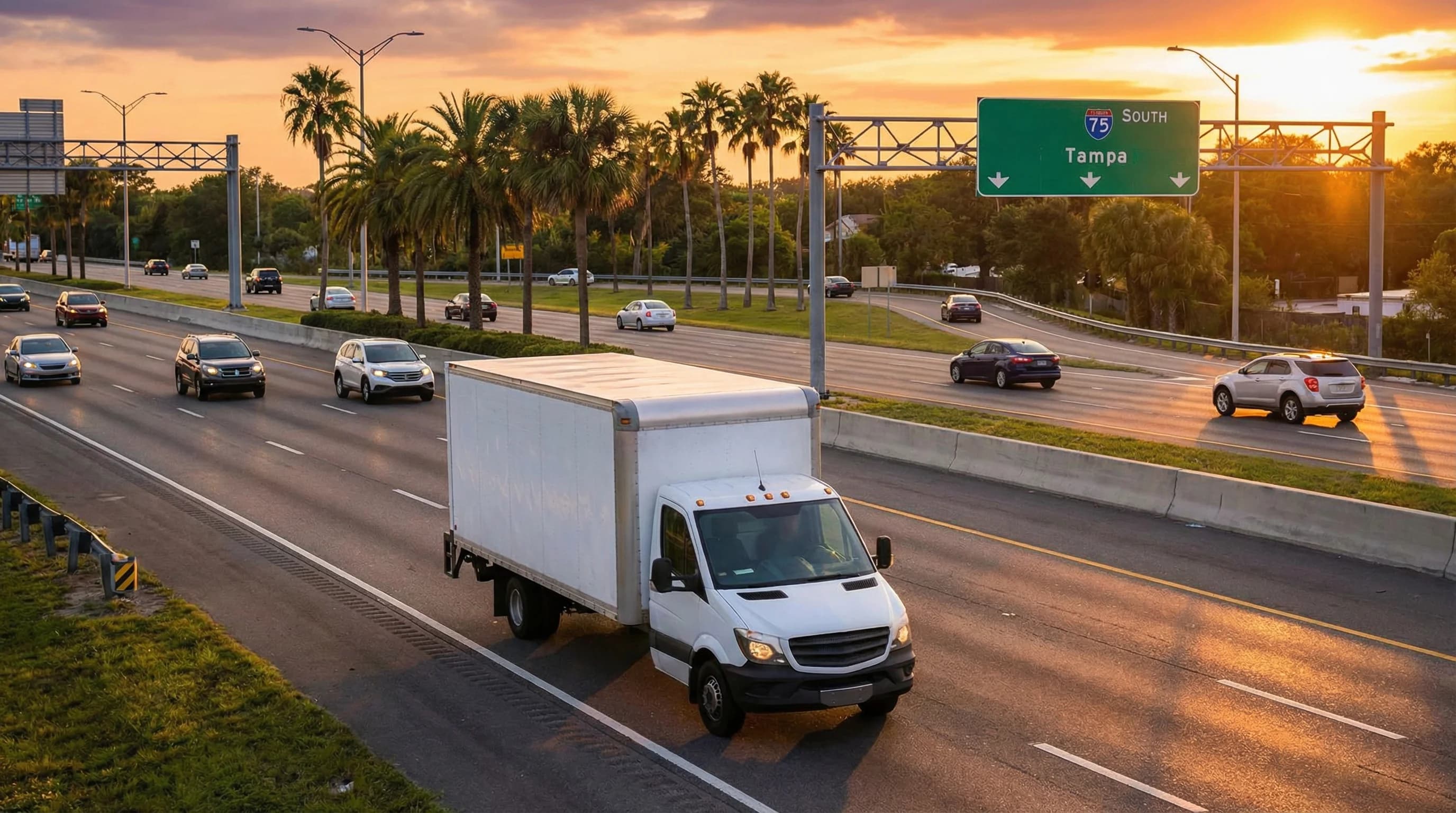
Box Truck and Delivery Van Insurance in Florida
Box trucks, cargo vans, Sprinter vans, route drivers, cargo, contracts, and rented vehicles need a commercial auto review built around what is actually moving, who drives it, and where it goes.
4.8 Google ratingSee client reviewsLet's compare the right coverage for the operation.
Box truck insurance in Florida should be built around the vehicle, route, driver, cargo, and contract story, not a generic truck label.
- Delivery vans, cargo vans, box trucks, and courier vehicles should be reviewed under commercial auto when they are used for business routes, deliveries, hauling, or customer work.
- Insurers usually compare vehicle weight and value, driver history, garaging, radius, cargo, route type, contracts, HNOA, filings, and loss history.
- Cargo, tools, customer property, refrigerated goods, or goods in transit may need coverage beyond the commercial auto policy.
- Tell us whether you deliver your own goods or haul for others so we can compare the right commercial auto, cargo, and trucking options.
Quick answer
What insurance do box trucks and delivery vans need in Florida?
A Florida box truck, cargo van, Sprinter, Transit, courier vehicle, or local delivery route usually needs commercial auto review for liability, physical damage, drivers, garaging, radius, vehicle value, and business use. Cargo, customer property, rented vehicles, employee-owned vehicles, contracts, filings, and HNOA may need separate review before the business assumes the route is covered.
Check Box Truck PricingOperation sorting
Sort the route before a box truck quote gets treated like the wrong kind of delivery work.
Local delivery or courier
Box trucks, cargo vans, route vehicles, couriers, last-mile work, rented vans, HNOA, cargo details, and schedule-ready pricing review.
Larger fleet or renewal
Bigger schedules, more drivers, loss runs, renewal timing, higher contract limits, umbrella pressure, cargo questions, and fleet management.
For-hire trucking or authority
Motor-carrier work, DOT/MC authority, interstate routes, broker packets, MCS-90, filings, cargo limits, owner-operators, and freight hauling.
Coverage and pricing
Box truck insurance can be commercial auto, cargo, trucking, or all three.
The goal is to compare carriers that understand how the vehicle is used.
Commercial auto route
Own goods, local routes, or service delivery
Built for businesses that own the products, deliver locally, run service vehicles, use cargo vans or box trucks, and need liability, physical damage, HNOA, drivers, contracts, and vehicle schedules compared together.
Cargo review
Goods, customer property, refrigeration, or load value
Use the cargo page when the question is whether the policy protects what is inside the van or truck, who owns the goods, what the max load value is, and whether refrigerated or high-value cargo changes the answer.
Trucking route
For-hire hauling, authority, filings, or broker packets
Use the trucking path when the box truck is hauling property for others, crossing state lines, dealing with DOT/MC authority, MCS-90, Form E/H, broker packets, or freight-style contract requirements.
Coverage map
Delivery commercial auto is where vehicles, routes, cargo, drivers, and contracts collide.
The quote should explain who owns the goods, who drives, what the route looks like, and whether filings or cargo coverage should be part of the quote.
Box trucks and straight trucks
16-foot, 20-foot, 24-foot, refrigerated, furniture, appliance, distributor, and route trucks need schedules that show VIN, GVWR, garaging, radius, value, lienholder, and use.
Delivery routes and courier work
A local florist route, retail delivery van, medical courier, last-mile route, and for-hire box truck can look very different to a carrier. Route, radius, cargo, and contracts matter.
Driver lists and MVRs
Delivery accounts live and die on who drives, how often drivers change, MVR quality, CDL status if needed, take-home use, training, and whether temporary drivers are disclosed.
Cargo, goods, and customer property
Commercial auto may cover the vehicle, but the load can need motor truck cargo, inland marine, bailee/customer property, refrigerated goods, or installation-property review.
Contracts, certificates, and filings
Brokers, shippers, warehouses, retailers, lenders, and customers may ask for auto limits, cargo limits, additional insured wording, HNOA, filings, or umbrella support.
Private delivery vs for-hire hauling
A business delivering its own products is not the same as a motor carrier hauling goods for others. That distinction can change filings, cargo, authority, coverage, and carrier options.
Coverage to Compare
A box truck policy can miss the problem if the cargo, rental, contract, or driver exposure is outside the auto schedule.
The quote should check what the vehicle does, what sits inside it, who drives it, and what the contract expects.
Auto liability
Responds to covered liability from scheduled business vehicles. Contract limits, covered-auto symbols, state/federal filing questions, and who is driving still matter.
Physical damage
Protects the truck itself when comp/collision is included. Vehicle value, lienholder, refrigeration, liftgate, deductible, and older-equipment questions belong here.
Motor truck cargo or inland marine
Commercial auto protects the vehicle, not automatically every good inside it. Cargo, customer property, tools, inventory, and refrigerated items need separate sorting.
Hired and non-owned auto
Rented box trucks, borrowed vans, employee personal vehicles, reimbursed mileage, and temporary drivers can create exposures outside owned scheduled vehicles.
General liability, BOP, or property
Delivery operations may still need premises, completed operations, customer injury, warehouse, stock, equipment, spoilage, or business property coverage outside auto.
Umbrella or excess
Warehouses, shippers, lenders, brokers, municipalities, and larger customers may require limits higher than the base auto policy can satisfy by itself.
Before the quote
Most delivery-auto problems start before the quote application.
Owners usually search when a truck is being bought, a route is launching, a lender needs proof, or a warehouse asks for a certificate.
Quote the right kind of box truck business.
Private delivery, local courier work, seasonal rentals, and for-hire trucking can all involve box trucks, but the filings, cargo, contracts, coverage, and carrier options can be very different.
Cost factors
Box truck insurance cost depends on the operation, not one statewide average.
Low advertised ranges often miss the details that decide eligibility: vehicle, route, cargo, driver, contract, and filing story.
Pricing reality
Public box truck averages are useful only after the account type is sorted.
Published monthly numbers can reflect a different state, vehicle size, coverage limit, driver history, deductible, cargo exposure, or business use. A first-year 26-foot box truck, a local floral van, a rented weekend delivery truck, and a for-hire freight route can each have different options.
Greene can compare the schedule, route, driver list, cargo, contracts, and current policy with insurers that serve the operation, then explain the available pricing and coverage.
Vehicle scenarios
What changes the quote for a cargo van, 16-foot truck, 26-foot truck, rented van, or new route?
These questions help us compare commercial auto, cargo, HNOA, trucking, and broader fleet options for the way you operate.
Cargo van or Sprinter/Transit route
What changes it: Often starts as commercial auto, but delivery frequency, radius, cargo, employees, rented vehicles, and HNOA can change the coverage needed.
Send: VIN, garaging ZIP, driver list, route type, cargo/customer property notes, current policy, and contract or app/platform requirements.
16- to 20-foot box truck
What changes it: Usually needs a tighter vehicle-value, physical-damage, cargo, route, driver, and contract review than a normal service van.
Send: GVWR, body type, stated value, lienholder, radius, driver/MVR details, goods carried, max load value, and proof deadline.
24- to 26-foot box truck
What changes it: Can drift into heavier commercial-truck territory depending on GVWR, for-hire use, interstate work, filings, CDL questions, and cargo values.
Send: GVWR, DOT/MC status if any, route states, cargo details, driver experience, current declarations, loss runs, and broker or warehouse requirements.
Rented or temporary delivery vehicle
What changes it: Rental-counter coverage, personal auto, and a business policy can leave gaps if hired auto, physical damage, cargo, and driver permission are not reviewed.
Send: Rental agreement, who drives, trip purpose, cargo ownership/value, dates used, current policy, and any customer or vendor certificate request.
Courier, parcel, or last-mile operation
What changes it: High stop counts, dense routes, temporary drivers, independent contractors, medical or refrigerated items, and app/platform contracts can change which insurers will offer coverage.
Send: Average stops, driver model, vehicles used, radius, contracts, cargo type, employee-owned vehicle use, and whether goods are owned by you or others.
New venture or first-year box truck business
What changes it: A first-year operation can have fewer insurers willing to offer coverage, so we use driver experience, prior coverage, authority, contracts, cargo, and route controls to compare what is available.
Send: Business plan, driver experience, truck purchase details, desired effective date, first contract, financing/lienholder details, and any prior commercial driving proof.
Fleet Quote Details
Send the delivery operation story, not just a VIN list.
A carrier needs to understand the vehicle, driver, cargo, route, customer contract, and whether the business is delivering its own goods or hauling for someone else.
Check Delivery PricingGood fit
Good fit for Florida delivery businesses that need the auto story cleaned up before quote time.
Strongest fit: local delivery, courier, box truck, cargo, and route exposure that needs sorting before quote time.
Retail stores delivering their own products
Local courier and last-mile delivery businesses
Furniture, appliance, and equipment delivery
Florists, caterers, bakeries, and restaurant delivery vehicles
Medical, lab, or pharmacy courier routes that need careful review
Distributors with box trucks, cargo vans, or refrigerated units
Moving and delivery operators that are not full long-haul trucking businesses
Seasonal delivery fleets adding rented vans or temporary drivers
References
Sources for Florida box truck and delivery commercial auto review
These sources frame public requirements and terminology. The actual insurance answer still depends on vehicle ownership, use, drivers, cargo, contracts, policy forms, and operation-specific rules.
FLHSMV business customers
Florida guidance for business vehicle insurance verification, proof issues, registration holds, canceled coverage letters, and tag surrender questions.
Florida Statute 627.7415
Florida statute addressing liability insurance requirements for certain commercial motor vehicles, with important vehicle-weight and federal-rule qualifiers.
Florida commercial vehicle enforcement
Florida Highway Patrol commercial vehicle enforcement information for businesses operating trucks and commercial vehicles on Florida roads.
FMCSA insurance filing requirements
Federal filing guidance for entities applying for or holding operating authority, including operation-specific financial-responsibility requirements.
FMCSA commercial motor vehicle definition
Federal reference for commercial motor vehicle and CDL-related thresholds that can affect heavier delivery and box-truck operations.
IRMI covered auto symbols
Insurance reference explaining how covered auto symbols affect scheduled autos, hired autos, non-owned autos, and certificate review.
Common questions
Florida box truck and delivery insurance questions
Check box truck pricing before the route goes sideways.
Send the schedule, drivers, current policy, route notes, cargo details, contracts, loss runs, HNOA questions, and any DOT or filing details. Our office can help sort the commercial auto path with the rest of the account.
Related resources
Box truck pricing questions usually need more than one page.
Commercial Auto Quote Checklist
Download vehicle schedule and driver roster templates to organize box truck or delivery fleet quote details.
Commercial Auto Insurance
The main Florida business auto hub for company vehicles, employee driving, HNOA, symbols, contracts, and certificates.
Commercial Auto Cost Guide
Use this for pricing factors before comparing box truck, delivery van, courier, or fleet commercial auto options.
Motor Truck Cargo Insurance
Review cargo limits, commodities, refrigerated goods, theft, exclusions, bills of lading, and broker or customer property questions.
Driver List and MVR Review
Organize driver rosters, MVR notes, excluded-driver questions, CDL status, and driver changes so we can compare the available options.
Hired and Non-Owned Auto
Review rented vans, borrowed trucks, employee personal vehicles, reimbursed mileage, and symbols 8/9.
Fleet Transportation
Use this when the delivery operation has a larger schedule, more drivers, cargo, filings, or broader transportation exposure.
Florida Trucking Requirements
Use this when box truck work starts looking like for-hire hauling, DOT/MC authority, filings, MCS-90, or broker-packet compliance.
Trusted Carriers We Represent