Florida Commercial Auto Insurance for Business Vehicles
Commercial auto insurance in Florida needs to match more than the vehicle list. If a vehicle helps your business make money, the policy needs to match how it is owned, driven, garaged, titled, used, and required by contracts. We help Florida businesses shop commercial auto coverage through the insurance carriers we work with.
4.8 Google ratingSee client reviewsWe compare commercial auto options around your vehicles, drivers, contracts, and real-world use.
Sales calls, deliveries, job sites, towing, errands, take-home vehicles, and radius all matter.
MVRs, excluded drivers, employees using personal cars, young drivers, and CDL questions help determine the available options.
Certificates may ask for higher limits, symbols, additional insured wording, waivers, or umbrella coverage.
Florida commercial auto at a glance
- Commercial auto is the starting point for company cars, contractor trucks, work vans, delivery vehicles, trailers, and employees driving for business.
- We compare insurers, limits, deductibles, and pricing based on vehicle use, drivers, garaging, contracts, claims, and filings.
- Hired and non-owned auto matters when employees use personal, rented, or borrowed vehicles for work errands or customer visits.
- A certificate showing a high limit is not enough if covered auto symbols, drivers, vehicle use, or contract requirements are wrong.
- Fleets and trucking businesses often need deeper reviews, but smaller businesses still need the commercial auto basics set up correctly.
We compare commercial auto options for the way your business actually drives.
Whether you have one work truck or a growing fleet, we help match your vehicles, drivers, contracts, and coverage needs with competitive carrier options.
Service, contractor, and delivery fleets
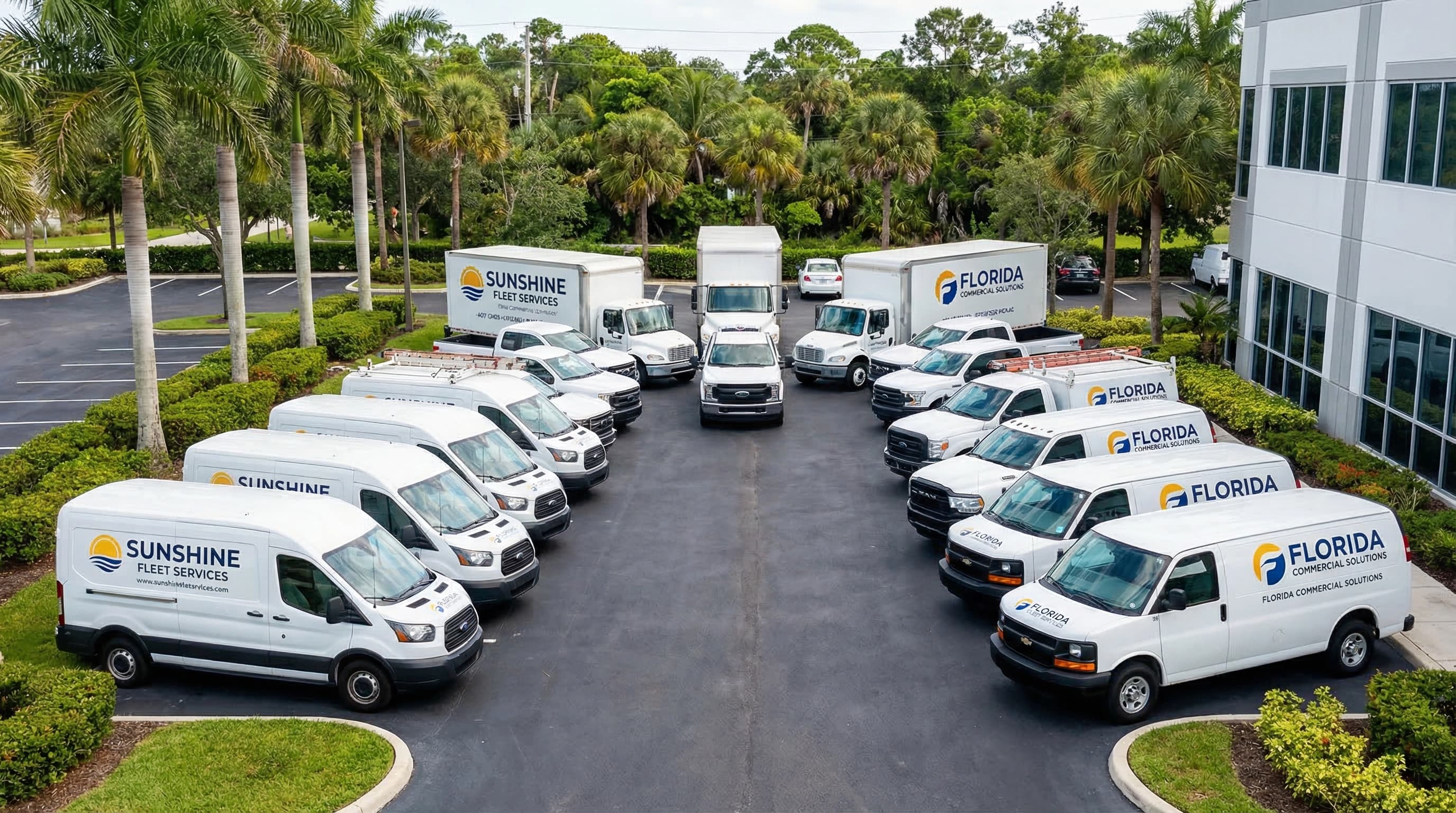
Strong fit when the business has pickups, vans, box trucks, trailers, route vehicles, or a small schedule that is starting to outgrow a personal-auto mindset.
Business-owned or LLC-titled vehicles
If the title, registration, lease, or loan sits in the company name, the policy needs to be built around business ownership and actual vehicle use.
Employees driving for work
Errands, customer visits, deliveries, reimbursed mileage, take-home vehicles, and employees using their own cars can create HNOA and driver-list questions.
Contracts asking for $1M limits or symbols
Compare the certificate limit with the covered auto symbols, additional insured wording, and contract requirements to confirm the policy matches the vehicle use.
Already have a schedule or renewal documents?
Upload the vehicle schedule, driver list, current policy, loss runs, or contract requirements in the commercial auto quote flow. We will compare the right commercial auto, fleet, or trucking options for the way your business operates.
Business auto coverage should follow the actual vehicle use, not a one-line quote form.
A landscaping pickup, HVAC van, sales car, food delivery vehicle, courier route, box truck, and employee-owned car used for errands can all point toward commercial auto — but they do not all belong with the same carrier or coverage setup.
We are an independent Florida agency. Our job is to understand how the vehicles are used, compare the right carriers, and explain where commercial auto ends and other coverage may need to begin.
“The fastest way to get a useful commercial auto answer is a clean vehicle schedule, driver list, and contract requirements up front. The policy has to match how the vehicles are actually used, not just what the certificate says.”
Contractor trucks and vans
Service vans, pickup trucks, trailers, job-site travel, employees driving between homes or projects, and certificates for general contractors, vendors, or commercial customers.
Company cars and sales vehicles
Vehicles titled to the business, LLC-owned cars, sales reps on the road, managers visiting customers, and employees using company vehicles outside a normal commute.
Delivery, courier, and box trucks
Local delivery, route work, small box trucks, cargo vans, restaurant delivery, distributors, florists, retailers, and mixed business-use vehicles.
Employee-owned vehicles used for work
Hired and non-owned auto questions when employees use personal cars, rented vehicles, borrowed trucks, or reimbursed mileage for business errands.
What commercial auto insurance should review before a claim or certificate problem
The limit is only one part of the policy. Vehicle ownership, covered auto symbols, use, drivers, garaging, and contracts can decide whether the policy actually fits the business.
Commercial auto liability
Bodily injury and property damage liability for covered business vehicles, including limit review, covered auto symbols, driver eligibility, and contract requirements.
Physical damage for business vehicles
Comprehensive and collision for owned vehicles, pickups, vans, trucks, trailers, lienholder requirements, deductibles, stated values, theft, vandalism, and weather losses.
Hired and non-owned auto
Coverage questions for rented vehicles, borrowed vehicles, employee-owned vehicles used for work, mileage reimbursement, and errands that pull the business into an auto claim.
Certificates and additional insured wording
Customer, landlord, contractor, vendor, and lease requirements may ask for specific limits, additional insured wording, waivers, primary/noncontributory wording, or proof of coverage.
Trailers, tools, equipment, and cargo questions
Commercial auto may cover the vehicle, but tools, installation materials, customer property, cargo, and mobile equipment may need inland marine, cargo, or separate coverage review.
Driver lists, MVRs, and loss history
Driver age, violations, accidents, suspended licenses, excluded drivers, claims frequency, and hiring controls help determine which carriers and prices are available.
Commercial auto, fleet insurance, and trucking insurance are related — not identical.
Use commercial auto for everyday business vehicles, fleet insurance for larger schedules, and trucking insurance for for-hire hauling, filings, cargo, and transportation contracts.
Commercial auto insurance
The starting point for most Florida businesses with cars, pickups, vans, work trucks, trailers, employee driving, hired/non-owned auto, and certificate needs.
Start Commercial Auto QuoteFleet insurance
A deeper review when the business has a larger vehicle schedule, more drivers, more contracts, MVR concerns, and renewal questions.
Review Fleet InsuranceTrucking insurance
For for-hire freight, owner-operators, motor carriers, DOT/MC details, cargo, primary liability, physical damage, bobtail/non-trucking liability, filings, and broker packets.
Review Trucking InsuranceUse the right commercial auto page for the actual question
Choose the path that matches your vehicles and goals, from a fast quote to renewal help, filings, fleet coverage, or trucking insurance.
Box truck and delivery van insurance
Use this for Florida box trucks, cargo vans, Sprinter/Transit vans, local delivery, courier routes, cargo, HNOA, filings, and complete vehicle schedules.
Commercial auto for contractor fleets
Use this for Florida contractors with work trucks, service vans, trailers, tools, employees driving, jobsite routes, HNOA, and GC contract auto requirements.
Fleet schedule and driver toolkit
Use the toolkit for vehicle schedule templates, driver rosters, MVR notes, garaging, contracts, filings, HNOA, and loss-run details that help us compare coverage and prices.
Commercial auto cost guide
Use this for Florida commercial auto pricing questions: average cost, cheapest carrier claims, renewal increases, driver lists, MVRs, garaging, radius, contracts, and fleet quote prep.
Renewal increase review
Use this when a commercial auto renewal jumped and you want us to compare the vehicles, drivers, MVRs, claims, garaging, contracts, filings, coverage, and carrier options.
Contract and COI requirements
Use this when a contract, vendor portal, broker packet, or certificate request needs commercial auto limits, symbols, HNOA, additional insured, waiver, umbrella, or filing review.
Florida commercial auto requirements
Use this when the question is what a business vehicle may need: PIP/PDL baseline, commercial motor vehicle liability, contracts, leases, federal rules, and why no single limit fits every vehicle.
Driver list and MVR review
Use this for current driver roster data, MVR context, permission-aware record handling, CDL status, excluded-driver questions, and quote prep.
Fleet renewal documents
Use this for the paperwork that gets carrier answers: vehicle schedules, driver lists, MVRs, garaging, loss runs, contracts, filings, HNOA, and safety controls.
Commercial auto filings
Use this for DOT/MC authority, FMCSA insurance filings, BMC-91/BMC-91X, BMC-34, MCS-90, IRP/HVUT, passenger, hazmat, cargo, broker, and freight-forwarder questions without assuming every fleet needs filings.
Commercial auto & fleet outlook
Use the 2026 report for Florida fleet renewal trends, driver controls, repair costs, filings, contracts, and a practical renewal checklist.
Send the details once. We compare commercial auto coverage and prices.
Share who owns the vehicles, who drives them, where they go, what they carry, what contracts require, and what changed since last year. We will use that information to compare policy options and pricing.
Our approach
We make the process easier by gathering the important details up front, then shopping the carriers currently available for your business vehicles.
What to gather before quoting commercial auto
Business name, entity type, FEIN if available, address, garaging locations, and a plain-English description of what the business does
Vehicle schedule with year, make, model, VIN, vehicle use, radius, garaging, stated value, lienholder, trailers, and any special equipment
Driver list with names, dates of birth, license states, CDL status when applicable, job duties, MVR concerns, and excluded-driver questions
Current policy declarations, expiration date, current limits, deductibles, covered auto symbols, certificate requirements, and any lender or lease requirements
Claims or loss runs for the last three to five years, including auto liability, physical damage, cargo, towing, or umbrella losses if available
How vehicles are used: job-site travel, deliveries, sales calls, take-home vehicles, personal use, towing, hauling, passenger exposure, or crossing state lines
Whether employees use personal vehicles, rented vehicles, borrowed vehicles, or reimbursed mileage for business errands or customer visits
Contracts, customer insurance requirements, additional insured requests, waiver wording, primary/noncontributory wording, and umbrella limit requirements
References for business vehicle insurance decisions
These are useful starting points for Florida auto insurance, commercial vehicle enforcement, federal financial-responsibility questions, and our covered-auto-symbols guide. Policy forms and insurer terms still control the actual result.
FLHSMV — insurance requirements
Florida Highway Safety and Motor Vehicles insurance information, useful for grounding basic auto insurance and financial-responsibility conversations.
FLHSMV — business customers
Florida business-customer insurance verification information for cancellations, registration holds, tag surrender, and proof-of-coverage issues.
Florida Statute § 627.7415
Florida statute addressing additional liability requirements for certain commercial motor vehicles, with important weight and federal-rule qualifiers.
Florida commercial vehicle enforcement
Florida Highway Patrol commercial vehicle enforcement information for businesses operating trucks and commercial vehicles on Florida roads.
FMCSA — insurance filing requirements
Federal Motor Carrier Safety Administration filing guidance for entities applying for or holding operating authority.
Covered auto symbols guide
Our guide explaining why the symbol on a business auto policy can matter as much as the limit shown on the certificate.
Florida commercial auto insurance questions business owners ask
Commercial Auto Resources
Florida Commercial Auto Requirements
PIP/PDL baseline, commercial motor vehicle liability, contracts, leases, federal rules, and why requirements depend on the operation.
Commercial Auto Renewal Increase
Renewal checklist for price increases: expiring policy, renewal offer, vehicles, drivers, MVRs, claims, garaging, contracts, filings, and what changed.
Fleet Renewal Documents
Vehicle schedules, drivers, MVRs, garaging, loss runs, filings, contracts, HNOA, and safety controls before renewal.
Hired and Non-Owned Auto
Employee personal cars, rentals, borrowed vehicles, reimbursed mileage, contracts, certificates, and symbols 8/9.
Driver List and MVR Review
Driver roster fields, MVR issue notes, privacy-aware record handling, CDL status, and excluded-driver questions before a quote.
Commercial Auto Filings
DOT/MC authority, FMCSA filings, BMC-91/BMC-91X, BMC-34, MCS-90, IRP/HVUT, cargo, passenger, and hazmat questions.
Commercial Auto & Fleet Outlook 2026
Source-backed report for Florida fleet renewals, driver lists, filings, contracts, loss runs, and market pressure.
Commercial vs Personal Auto
How business vehicle use can break assumptions in a personal auto policy.
Covered Auto Symbols in Florida
Why the symbol on the policy can matter as much as the liability limit.
Box Truck Insurance in Florida
Delivery vans, box trucks, GVWR, cargo, drivers, HNOA, routes, and commercial auto quote prep.
Commercial Auto for Contractors
Work pickups, service vans, trailers, tools, employee errands, contract limits, and contractor auto options.
Fleet Insurance for Larger Vehicle Schedules
For larger schedules, driver rosters, MVRs, contracts, cargo, and umbrella review.
Trucking Insurance
For owner-operators, motor carriers, freight, filings, cargo, and broker packets.
Need business vehicle coverage that actually matches how the vehicles are used?
Send us the vehicle schedule, driver list, current policy, contracts, and what changed. We will compare commercial auto, HNOA, fleet, trucking, cargo, and umbrella options for the business.
Trusted Carriers We Represent