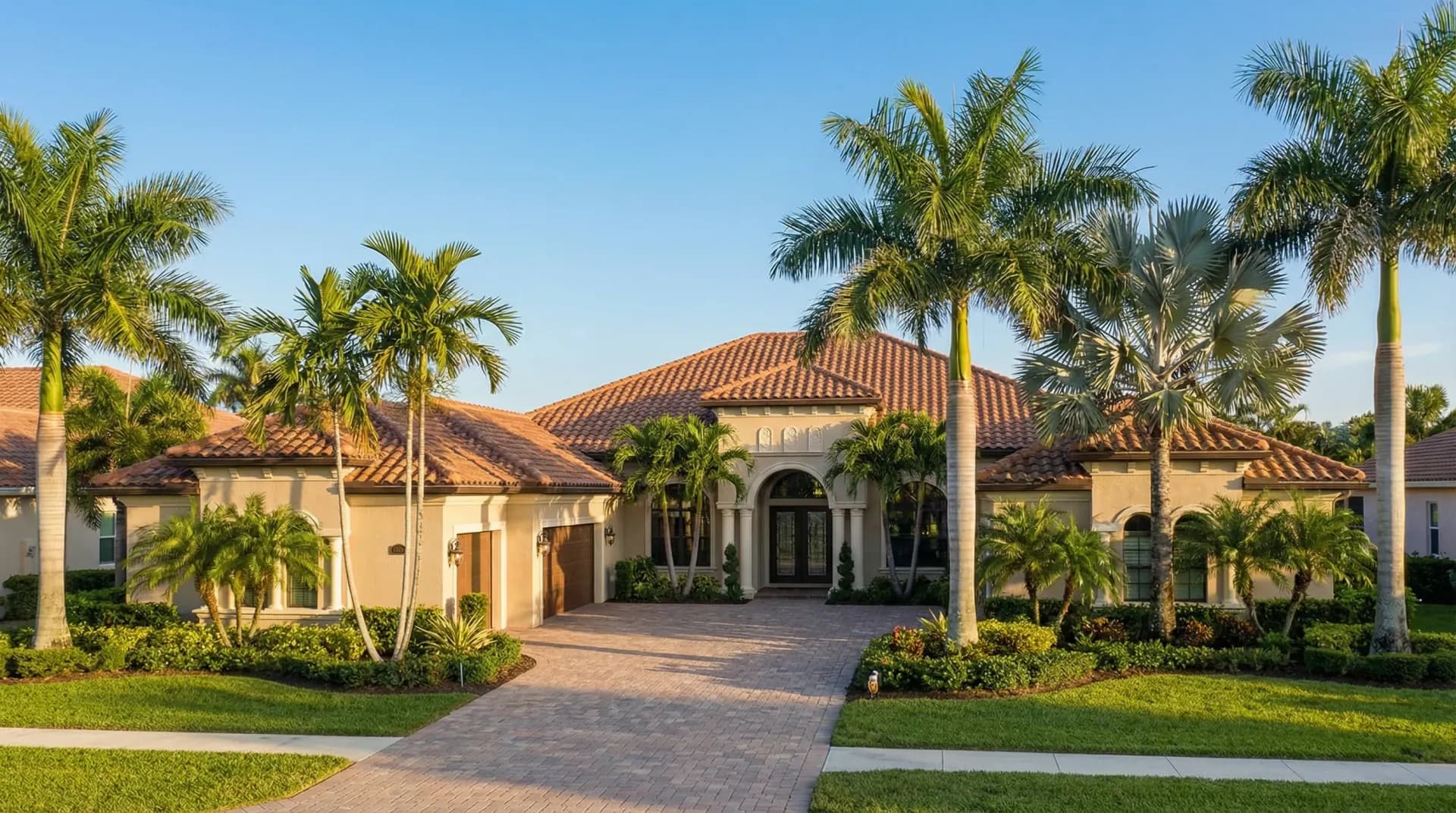
Florida Home Insurance Rates by County
Where you live in Florida has a bigger impact on your home insurance premium than almost any other factor. Here's what homeowners actually pay across the state in 2026.
Florida Home Insurance by County: Key Takeaways
- Florida home insurance averages $3,815/year statewide, but ranges from under $1,700 in northern inland counties to over $7,000 in the Keys and coastal South Florida.
- The biggest cost driver is proximity to the coast. Inland homes in the same county can pay 40-60% less than waterfront properties.
- South Florida is seeing the largest 2026 decreases: Broward 14.1%, Miami-Dade 14.0%, Palm Beach 11.9%, Monroe 11.3%.
- North central Florida (Baker, Marion, Columbia, Alachua counties) consistently has the lowest rates in the state.
- Wind mitigation discounts of 15-50% are available statewide but have the biggest dollar impact in high-premium coastal counties.
Understanding the Numbers
The “average” Florida home insurance premium of $3,815/year is misleading if taken at face value. It masks enormous variation — a homeowner in Baker County might pay under $1,700/year while a homeowner in Monroe County pays over $7,000 for similar coverage limits. Your county, your distance from the coast, the age of your roof, your home's construction type, and your wind mitigation features all play significant roles.
The data below organizes Florida into seven regions based on geographic risk profile and typical rate ranges. These figures represent approximate averages for standard homeowners policies (HO-3) including wind coverage. Your actual rate will depend on your specific home characteristics, claims history, and chosen coverage limits.
Rates by Florida Region
South Florida (Coastal)
Monroe, Miami-Dade, Broward, Palm Beach
The most expensive region in Florida for home insurance. Monroe County (the Keys) leads the state with averages exceeding $7,000/year. High premiums are driven by extreme hurricane wind exposure, coastal flood risk, and the cost of reinsurance for this zone. The good news: South Florida is seeing the largest rate decreases in the state for 2026.
Key Rate Factors
•Maximum hurricane wind exposure
•Coastal flood and storm surge risk
•High property values increase replacement costs
•Some of the highest litigation rates historically
Southwest Florida
Lee, Collier, Charlotte, Sarasota, Manatee
Southwest Florida saw significant Hurricane Ian impact in 2022, which temporarily spiked rates. The market is now recovering, with carriers returning to the region and rates beginning to decrease. Lee County averages around $3,600/year, but coastal properties within the county can be significantly higher.
Key Rate Factors
•Hurricane Ian recovery still affecting some carriers
•Mix of coastal and inland risk profiles
•Rapid population growth increasing carrier competition
•Wind mitigation especially impactful in this region
Tampa Bay & Central West
Hillsborough, Pinellas, Pasco, Hernando, Citrus
The Tampa Bay area represents a middle ground — coastal exposure on the Gulf side with more affordable inland options just miles away. Pinellas County (essentially a barrier island) runs higher than Hillsborough. Homes with wind mitigation features in this region can see significant savings.
Key Rate Factors
•Wide range between coastal Pinellas and inland Pasco
•Growing carrier competition in the metro area
•Sinkhole coverage adds cost in some ZIP codes
•Newer construction with hip roofs sees best rates
Central Florida (Inland)
Orange, Seminole, Osceola, Polk, Lake, Volusia
Central Florida benefits from being inland, which significantly reduces windstorm exposure. Orlando and surrounding counties typically see premiums closer to the statewide average. The strong population growth has attracted more carriers to the region, keeping competition healthy.
Key Rate Factors
•Lower wind exposure than coastal areas
•Sinkhole risk in some central Florida ZIP codes
•Strong carrier competition in the Orlando metro
•Newer housing stock in many suburbs
Northeast Florida
Duval (Jacksonville), St. Johns, Clay, Nassau, Flagler
Jacksonville and surrounding counties benefit from a strong mix of carriers and moderate hurricane risk relative to South Florida. Coastal properties in areas like Jacksonville Beach, Ponte Vedra, and St. Augustine face higher premiums, but inland Duval and Clay counties are among the more affordable metro areas in Florida.
Key Rate Factors
•Moderate wind exposure compared to South Florida
•Strong carrier availability in the Jacksonville metro
•Coastal vs. inland spread within the same county
•Growing market attracting new carriers
North Central Florida (Inland)
Alachua (Gainesville), Columbia (Lake City), Marion (Ocala), Baker, Bradford, Suwannee, Gilchrist, Levy
North central Florida consistently has the lowest home insurance rates in the state. Baker County and Marion County are among the most affordable in all of Florida, with averages under $2,000/year. The region benefits from being well inland, having lower property values, lower litigation rates, and less hurricane exposure.
Key Rate Factors
•Farthest from coastal windstorm exposure
•Lower property values reduce replacement cost
•Historically lower claims frequency and litigation
•Limited flood risk in many areas (except river corridors)
Panhandle (Northwest Florida)
Escambia (Pensacola), Santa Rosa, Okaloosa, Walton, Bay (Panama City)
The Panhandle saw severe impacts from Hurricane Michael in 2018, which drove up rates for years. The market has largely recovered, though Bay County still feels some residual effects. Coastal Panhandle properties face significant wind exposure, while inland areas are considerably more affordable.
Key Rate Factors
•Hurricane Michael recovery largely complete
•Significant coastal vs. inland premium gap
•Military presence (Pensacola, Fort Walton Beach) drives carrier availability
•Newer construction to updated building codes sees best rates
Beyond County: What Else Drives Your Rate
Your county sets the baseline, but several other factors determine where you fall within your county's range:
Wind Mitigation
A wind mitigation inspection documenting hurricane-resistant features can save 15-50% on your windstorm premium. This is the single most impactful discount for most Florida homeowners.
Wind mitigation guide →Roof Age & Type
Roof age is one of the biggest rate factors. A roof over 15 years old can significantly increase your premium or limit carrier options. Hip roofs (sloped on all four sides) get better rates than gable roofs due to superior wind resistance.
Construction Year
Homes built after the 2002 Florida Building Code update generally qualify for significantly lower rates. The updated code requires stronger roof-to-wall connections, impact-resistant openings, and other hurricane-hardening features.
Flood Zone
While flood insurance is separate from homeowners insurance, your flood zone can affect carrier availability and pricing for your homeowners policy. Some carriers won't write in high-risk flood zones.
NFIP vs private flood →Claims History
Both your personal claims history and the claims history of your property (via CLUE reports) affect your premium. Multiple claims in the past 3-5 years can significantly increase rates or limit carrier options.
Distance from Coast
Even within the same county, being 5 miles inland vs. on the waterfront can make a 30-50% difference in premium. Carriers use precise geolocation to assess wind and storm surge exposure.
Check Your County's Rates
The Florida Office of Insurance Regulation provides a free rate comparison tool called CHOICES that shows sample homeowners rates by county from multiple carriers. It compares three home profiles: a pre-2001 home without wind mitigation, a pre-2001 home with wind mitigation, and a new construction home valued at $300,000.
The CHOICES tool gives you a general idea of the market, but for an accurate quote based on your specific home — including your actual roof age, wind mitigation features, construction type, and desired coverage limits — you need to work with an agent who can run your profile through multiple carriers.
Rate data on this page comes from Florida OIR filings, the CHOICES rate comparison system, official press releases, and our agency's experience quoting across all 67 Florida counties. Data reflects approximate averages as of early 2026 — individual rates vary significantly based on property characteristics.
Frequently Asked Questions
Related Guides
Florida Insurance Market Report 2026
The big picture: rate trends for home, auto, and flood across the state
Home Insurance Cost in Florida
Detailed cost breakdown with savings tips, deductible strategies, and discount stacking
Wind Mitigation Discounts
How a wind mitigation inspection can save 15-50% on your Florida windstorm premium
Why Use an Independent Agent
How independent agents compare rates across carriers to find the best fit for your county and risk profile
Get a Quote for Your County
Tell us about your home and we'll compare rates from multiple carriers to find the best price available in your area.