
FDACS Class B CGL filing
The state licensing filing verifies commercial general liability coverage for the agency license. It should not be stretched into a full insurance-program answer.
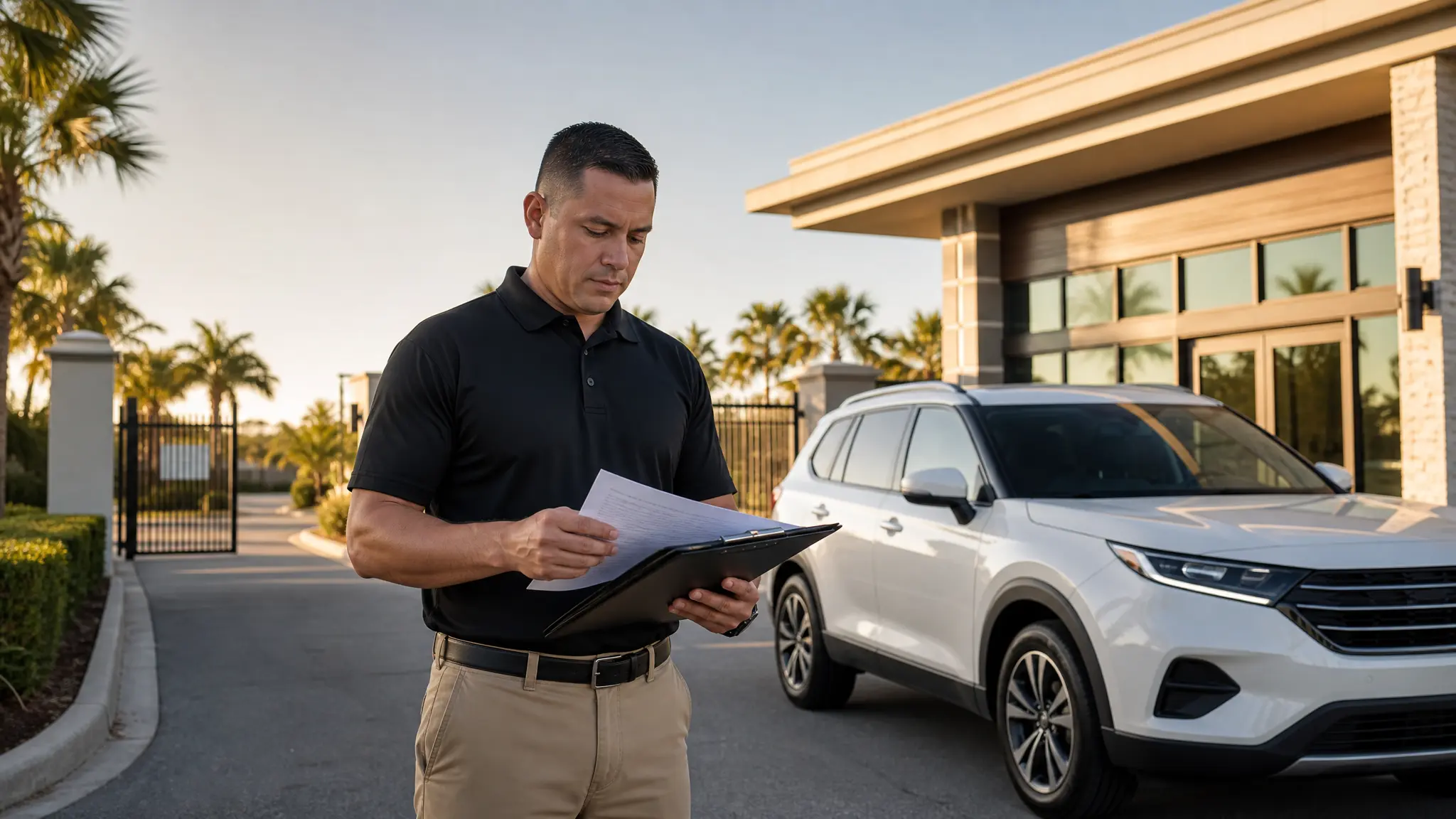
Start with Florida's Class B licensing filing, then compare general liability, contracts, certificates, workers compensation, commercial auto, professional liability, armed services, and price for the agency.
Upload the contract, current policy, FDACS filing, loss runs, payroll, armed and unarmed split, patrol-vehicle details, and COI instructions. We'll compare the available carriers, coverage, and price for the security operation.
Quick answer
A Florida Class B security agency must file proof of commercial general liability before the license is issued, using the FDACS Certification of Insurance process. The statutory minimum is at least $300,000 combined single limit for death, bodily injury, property damage, and personal injury, and the coverage must apply to licensed agency employees while acting in the course of employment. Client contracts and insurer terms may require more.
Compare security guard company coverage and pricingCommercial auto coverage and pricing
The state licensing filing verifies commercial general liability coverage for the agency license. It should not be stretched into a full insurance-program answer.
Property managers, HOAs, schools, warehouses, and commercial clients may ask for higher limits, additional insured wording, waiver language, umbrella, auto, or workers comp evidence.
Class G armed exposure, firearm procedures, use-of-force controls, post orders, and prior incidents can change carrier availability quickly.
Guard duties, venues, patrol vehicles, employee count, payroll, contracts, claims, and higher-hazard work help us compare insurers and pricing for the agency.
Compare your options
Upload the FDACS filing, contract, current policy, payroll, guard count, armed split, vehicle details, and certificate instructions. We'll compare the available coverage and prices for the operation.
Document checklist
A complete security quote compares the state licensing filing with the limits, contracts, operations, and coverage the agency needs.
The FDACS filing is a licensing requirement for commercial general liability. It does not automatically solve workers comp, auto, umbrella, professional liability, assault and battery wording, false arrest or wrongful detention wording, crime, cyber, or a client's contract wording.
Send the contract, certificate instructions, policy pages, or filing requirements so we can compare the right coverage and prices.
Check Security Guard PricingIndustry and public references
These official sources frame Florida licensing and workers comp requirements. Actual coverage decisions still depend on the agency's operations, contracts, payroll, vehicles, armed exposure, claims history, and policy forms.
Official statute for the Class B agency commercial general liability certification, $300,000 combined single limit, employee liability language, notices, and cancellation suspension.
FDACS insurance certification form used for the Class B security agency CGL filing under Chapter 493.
FDACS agency application instructions explaining that Class B applicants submit proof of CGL coverage on FDACS-16004 before license issuance.
Official Florida workers compensation employer guidance by industry, employee count, construction status, and business structure.
FDACS licensing context for individual security officers, separate from the agency's Class B insurance filing.
FDACS firearm-license context for armed security work, which insurers review separately from unarmed guard operations.
Common questions
Upload the contract, current policy, FDACS filing, loss runs, payroll, armed and unarmed split, patrol-vehicle details, and COI instructions. We'll compare the available carriers, coverage, and price for the security operation.
Primary Florida security guard insurance page for GL, E&O, workers comp, patrol vehicles, contracts, COIs, and quote help.
Send security agency details, armed percentage, contracts, loss runs, payroll, vehicles, and COI needs for review.
Core CGL coverage for bodily injury, property damage, personal injury, certificates, and contract requirements.
E&O review for service-related allegations, missed patrol, failure-to-perform, and security-services liability questions.
Florida workers comp coverage questions for guards, patrol staff, payroll, employee count, and contract evidence.
Coverage review for patrol vehicles, supervisor vehicles, hired/non-owned auto, employee driving, and driver lists.