
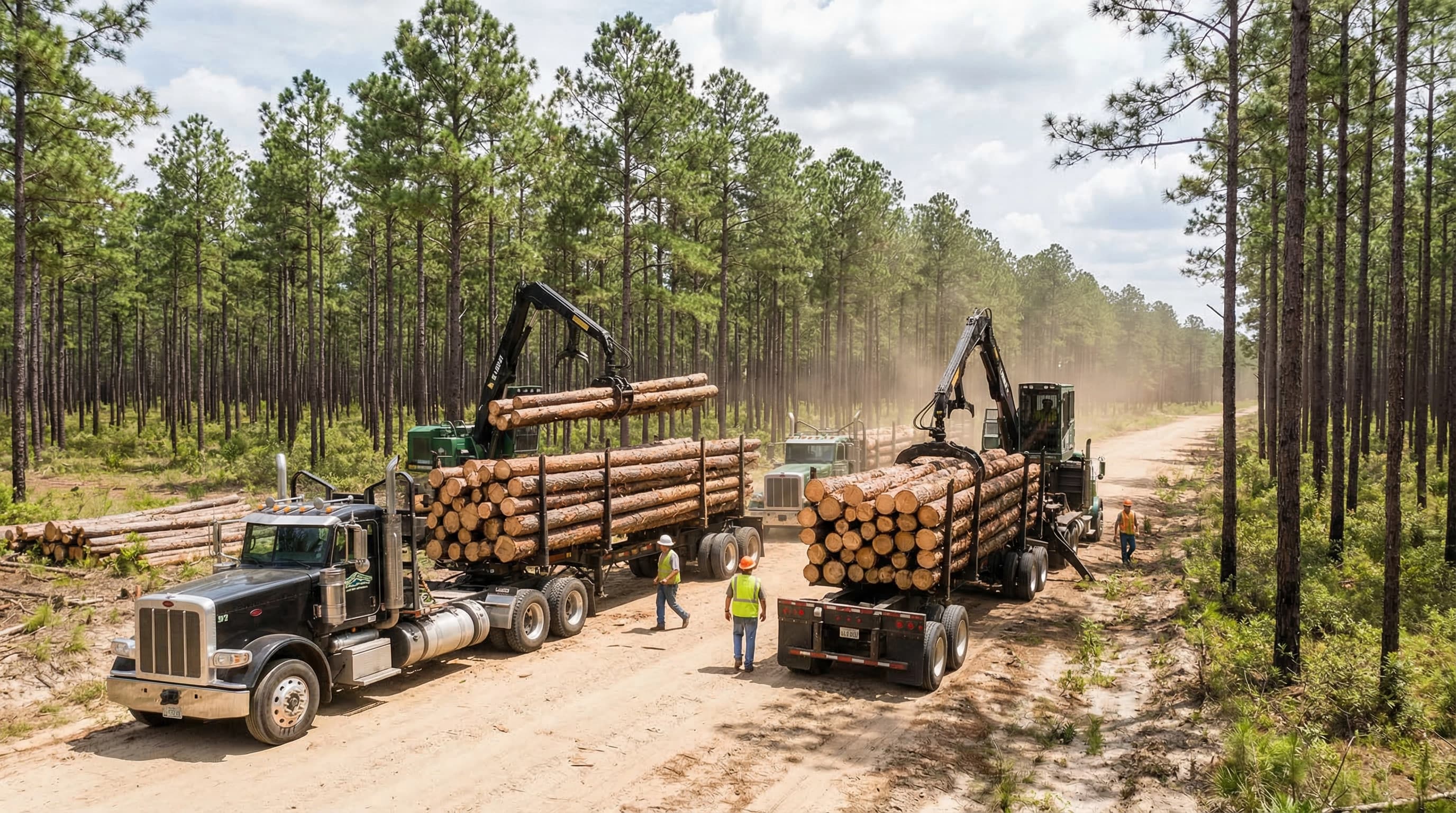
Timber & Forestry Insurance in North Florida: Logging, Trucks, Equipment, and Contracts
North Florida timber and forestry insurance guide for logging contractors, log trucks, equipment, workers comp, landowner contracts, COIs, and quote prep.
Al Greene
Licensed Insurance Agent
Timber work is part of the North Florida economy, especially around Suwannee County, Columbia County, Live Oak, Lake City, Branford, Fort White, and the rural roads between them.
Timber operations need specialized coverage because logging crews, log trucks, harvesting equipment, landowner contracts, mills, subcontractors, and remote job sites create needs a generic small-business policy may not address.
Here is the short version: a timber insurance review should separate the woods exposure, the trucks, the equipment, the payroll, the contracts, and the certificates before anyone talks about price.
Key Takeaway
For a timber or forestry quote, send the current policies, loss runs, landowner or mill contract, certificate requirements, equipment schedule, truck and trailer schedule, driver list, payroll by job duty, subcontractor COIs, and a short note on what work you actually perform.
Timber Insurance Is Not Generic Business Insurance
Logging and forestry work does not fit neatly into a standard business insurance quote.
The work may involve timber harvesting, site access roads, loading, skidding, hauling, equipment transport, subcontracted crews, and work on land owned by someone else. Those details matter because a standard commercial general liability policy may not be designed for active logging operations.
OSHA's logging topic page documents the hazards in the industry. A clear description of the woods, road, equipment, payroll, and contract exposure helps our office compare timber insurance options and pricing.
Do Not Trust a Generic GL Certificate
A certificate of insurance only proves a policy exists. It does not prove logging operations, loading, hauling, subcontractors, additional insured wording, waiver wording, completed operations, or equipment exposures are covered the way the contract expects.
What Affects Timber Insurance Pricing and Options
Timber insurance prices depend on what happens in the woods and on the road. Describe the harvesting, hauling, equipment, land clearing, road building, payroll, and subcontracted work.
Common pressure points include:
- Active timber harvesting versus consulting, cruising, or land management
- Log trucks, trailers, radius of operation, cargo, and driver history
- Feller bunchers, skidders, loaders, processors, chippers, trailers, and mobile equipment
- Landowner contracts, mill requirements, additional insured wording, and waiver requests
- Payroll by job duty, subcontractors, exemption records, and safety controls
- Prior losses involving equipment, rollover, fire, cargo, water, or injury claims
Clear details about the operation help insurers compare the right coverage and price instead of making assumptions.
Core Coverage for North Florida Timber Operations
Timber-Specific General Liability
General liability should be reviewed around the actual operations: timber harvesting, loading, land access, job site liability, property damage, completed operations, and the contract wording required by the landowner or mill.
If a landowner asks to be added as an additional insured, the endorsement needs to match the contract. If the contract requires waiver of subrogation, primary and noncontributory wording, or specific limits, those details should be sent before the certificate is issued.
Start with our general liability insurance page for the coverage basics, but timber work needs a more specialized review than a typical storefront or office.
Commercial Auto and Log Truck Coverage
Log trucks are a separate insurance conversation. A timber general liability policy does not replace commercial auto liability, truck physical damage, cargo review, filings, or driver review.
For log trucks and service vehicles, send:
- Truck, trailer, and VIN schedule
- Garaging ZIPs and operating radius
- Driver list, CDL status, and MVR concerns
- Cargo details and any broker or mill requirements
- Current policy, loss runs, and requested limits
Use our commercial auto insurance page, trucking insurance page, and fleet renewal checklist if the vehicle schedule is not organized yet.
Have log trucks, equipment, or landowner contract wording? Send the policy, schedule, drivers, contracts, and loss runs so our office can compare insurers, coverage, and pricing.
Equipment Floater or Inland Marine Coverage
Timber equipment is often away from a fixed premises. That makes a normal property policy the wrong starting point for many machines.
An equipment floater or inland marine policy can review scheduled equipment, theft, fire, rollover, transit, loading, unloading, and field damage. The quote should include year, make, model, serial number, value basis, attachments, lienholder, and whether equipment moves between sites.
Do not guess at values. If a machine is financed, recently purchased, rebuilt, or heavily modified, send the invoice, loan document, or valuation support.
Workers Compensation and Subcontractors
Workers comp is one of the most sensitive parts of a timber account. Class codes, payroll split, officer status, subcontractor documents, employee leasing, and safety controls all affect the final result.
If you use subcontractors, do not wait until audit time to collect certificates and exemption records. A missing COI can turn into a payroll charge or a contract problem later.
Pair this review with our workers compensation page, workers comp audit checklist, and Suwannee County workers comp guide.
Pollution and Cleanup Exposure
Logging equipment can leak fuel, oil, or hydraulic fluid. A spill near a river, wetland, spring run, or drainage area can create cleanup and third-party claim questions that a standard policy may not handle the way the owner expects.
This is especially worth discussing near the Suwannee River, Santa Fe River, Ichetucknee area, and low rural land. Pollution coverage may be a separate policy or endorsement depending on the account and market.
Contract and COI Questions to Review Before the Job Starts
Landowner, mill, timber buyer, and general contractor agreements often include insurance requirements.
Common contract requests include:
- General liability limits and aggregate requirements
- Auto liability limits for owned, hired, and non-owned vehicles
- Workers comp and employers liability limits
- Additional insured status for landowner or project parties
- Waiver of subrogation
- Primary and noncontributory wording
- Thirty-day notice language where available
- Certificate holder details and job-specific wording
Pro Tip
Send the contract before the certificate is due. It is much easier to fix coverage or wording before work starts than after a landowner rejects the COI or a loss occurs.
Sawmills, Chipping, and Wood Products Operations
Not every forestry account is a logging crew. Sawmills, chipping operations, pallet shops, wood products businesses, and fixed-site yards have different insurance questions.
These accounts may need commercial property, equipment breakdown, stock or inventory review, business income, general liability, workers comp, commercial auto, cyber, crime, and umbrella coverage. The property details, dust control, fire protection, equipment maintenance, and loss history matter.
If the business owns a building or leases yard space, use our commercial property insurance page and commercial property document checklist to organize the property side.
North Florida Timber Quote Prep Checklist
Before you ask for timber or forestry pricing, gather:
- Current policies and renewal offers
- Five years of loss runs if available
- Equipment schedule with values and serial numbers
- Truck and trailer schedule with VINs
- Driver list and CDL details
- Payroll by job duty
- Subcontractor COIs and exemption records
- Landowner, mill, or project contracts
- Required certificate wording
- Safety program, training, and claim-control notes
Those documents give insurers the details needed to compare coverage and price. They also help our office determine whether the business needs general liability, commercial auto, equipment, workers comp, property, or contract-related coverage.
Getting Timber and Forestry Insurance in North Florida
Our office is based in Lake City and works with businesses across Columbia County, Suwannee County, Live Oak, Branford, Fort White, and the surrounding North Florida timber market.
Timber insurance starts with the operation details. Send contracts, equipment, trucks, payroll, and loss history early so we can compare coverage and pricing before your deadline.
Call 1-800-252-6885 or send your timber insurance details online. We will compare coverage and pricing using the operation, contracts, equipment, trucks, payroll, loss runs, and COI wording.
North Florida Timber and Forestry Insurance FAQ
What insurance should a logging contractor carry in North Florida?
A logging contractor usually needs timber-specific general liability, workers compensation, commercial auto or log truck coverage, equipment floater or inland marine coverage, and sometimes pollution, cargo, umbrella, or contract-specific endorsements. The right package depends on the work performed, landowner contracts, truck ownership, payroll, subcontractors, equipment values, and loss history.
Does a standard general liability policy cover logging work?
Do not assume it does. Timber harvesting, land clearing, loading, road building, and hauling exposures can be limited or excluded on generic general liability policies. A logging operation should have the policy form, operations description, additional insured wording, and exclusions reviewed before work starts.
What documents help quote timber or forestry insurance?
Useful quote documents include current policies, loss runs, landowner or mill contracts, certificate requirements, equipment schedules, truck and trailer schedules, driver list, payroll by job duty, subcontractor COIs, safety program notes, and any prior claim details.
Is log truck insurance separate from timber general liability?
Yes. General liability is not the same as commercial auto. Log trucks normally need their own commercial auto liability, physical damage, motor truck cargo or log cargo review, filings when required, driver details, garaging, radius, and loss history.
Why is workers comp important for logging crews?
Logging is a high-hazard operation, and OSHA describes logging as one of the most dangerous occupations by many measures. Workers comp requirements, class codes, payroll, subcontractors, officer status, and safety controls need careful review before a carrier prices the account.
Al Greene
Founder
Al Greene founded Greene & Associates in 1995 and has been a licensed Florida 2-20 General Lines Insurance Agent since 1983 — over 40 years in the industry. A U.S. Military Veteran and longtime FAIA member, he's seen the Florida market through every storm season and rate cycle since Hurricane Andrew. FL License #A103686.
al@greeneinsurance.comReady to Get Covered?
Send current policies, loss runs, contracts, equipment schedules, truck details, drivers, payroll, and COI wording so our office can compare timber coverage and prices.