
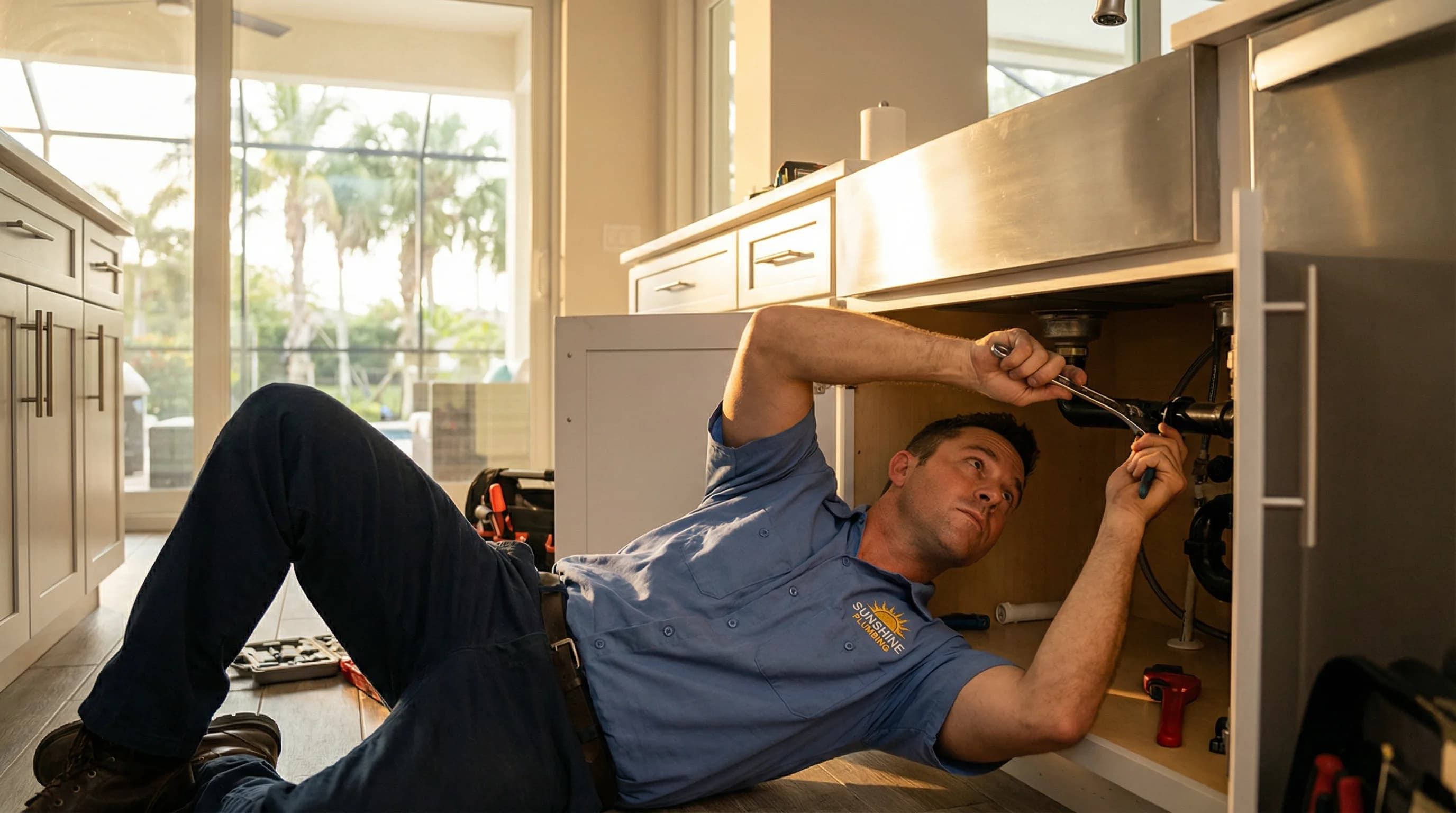
Plumbing Contractor Insurance in Florida: GL, Workers Comp, Trucks, Tools, and COIs
Florida plumbing contractor insurance guide for GL, workers comp, commercial auto, tools, sewer or gas line work, pollution concerns, completed operations, COIs, and quote prep.

Joe Greene
Licensed Insurance Agent
Plumbing claims are rarely gentle. A failed fitting, slow leak, sewer backup, gas line mistake, drain cleaning incident, or water heater problem can turn into a property damage claim fast.
That is why Florida plumbing contractor insurance should not be reduced to "get a bare-bones GL policy." The quote needs to match the work: residential service, commercial plumbing, repipes, drain cleaning, sewer work, gas lines, new construction, service vans, helpers, subcontractors, and certificate requirements.
Compare core coverage on our Florida plumbing contractor insurance page, then use this checklist to gather the details insurers need and identify coverage gaps.
Need plumbing contractor coverage reviewed? Send current policies, payroll, vehicles, tools, contracts, COI wording, sewer or gas line work details, and loss runs.
Florida Plumbing Contractor Insurance Requirements Need Careful Review
Florida plumbing contractor insurance requirements need careful review because licensing rules, public liability requirements, workers compensation, contracts, commercial auto, and jobsite certificate wording can all apply at once. The right answer depends on the license, work type, employees, vehicles, contracts, and whether the account uses subcontractors.
Florida contractor licensing and public liability rules can vary by license category and board rule. The Florida Administrative Code rule page for CILB public liability insurance is 61G4-15.003, and plumbing contractors should confirm license-specific requirements instead of relying on a generic online number.
Workers compensation is more direct for construction employers. The Florida CFO employer coverage guidance says construction industry employers with one or more employees, including certain owners, corporate officers, or LLC members, must have workers compensation coverage.
Contracts can require more than the licensing minimum. General contractors, property managers, commercial clients, municipalities, and lenders may require:
- $1M/$2M general liability or higher
- Additional insured wording
- Waiver of subrogation
- Primary and noncontributory wording
- Per-project aggregate wording
- Workers comp proof
- Commercial auto limits
- Umbrella or excess liability
A license minimum is not a jobsite pass
Even if a policy satisfies a licensing requirement, it may still fail a commercial contract or certificate request. Send the contract or COI wording before you bind coverage.
General Liability for Plumbing Contractors
General liability is the foundation for most plumbing contractors because water damage, customer injury, completed operations, and certificate requirements often start there. It can address covered third-party bodily injury and property damage claims, but exclusions, workmanship limits, subcontractor terms, and completed-operations wording still matter.
For plumbers, the key GL questions are:
- Is completed operations included?
- Are residential and commercial jobs both acceptable?
- Does the policy treat water damage claims narrowly?
- Are subcontractors allowed?
- Will the insurers being compared cover hot work, gas line, sewer, drain cleaning, or excavation operations?
- Does the policy exclude certain work types?
- Can certificates be issued quickly with required wording?
Completed Operations Matters
Plumbing problems often show up after the job is done: a fitting leaks behind a cabinet, a water heater connection fails, or a repipe issue appears weeks later.
Completed operations coverage is the part of GL that can matter after the job is finished, subject to the policy. Plumbers should not assume every low-cost GL quote handles completed operations the same way.
Plumbing completed-operations scenario
A plumber finishes a kitchen sink installation. A supply connection slowly leaks behind the cabinet and damages flooring and cabinets over several weeks. The property owner makes a claim after the job is complete.
That is why the completed-operations wording, exclusions, deductible, and policy limits matter before the job begins.
Workers Compensation for Florida Plumbing Contractors
Workers compensation for Florida plumbing contractors should be reviewed early because plumbing is generally treated as construction work for coverage requirements. Employees, helpers, owner exemptions, subcontractors, payroll class codes, and job descriptions can all affect compliance, premium, audits, and contract acceptance.
The quote needs:
- Payroll by class
- Owner/officer inclusion or exemption status
- Employee vs subcontractor details
- Loss runs
- Job descriptions
- Residential vs commercial work mix
- New construction vs service/repair mix
Exemptions can reduce premium, but they also remove coverage for the exempt person. They do not magically solve subcontractor liability or contract requirements.
Pro Tip
If you hire subs, collect their workers comp certificates and exemption records before the job. Waiting until audit season is how uninsured or undocumented labor becomes a premium surprise.
Commercial Auto for Plumbing Vans and Trucks
Commercial auto for plumbing vans and trucks matters because service vehicles carry tools, parts, equipment, ladders, drain machines, and employees to jobs. A personal auto policy is not designed for that business use, certificate wording, hired and non-owned auto, trailers, or employee driving exposure.
Review:
- Vehicle schedule and VINs
- Drivers and MVR concerns
- Garaging ZIPs
- Business use and radius
- Trailer use
- Hired and non-owned auto
- Employee personal vehicle use
- Certificate requirements
If a helper drives a personal truck for errands or parts pickup, ask about hired and non-owned auto. Do not assume a personal auto policy will solve business use.
Tools, Equipment, and Inland Marine
Tools, equipment, and inland marine coverage should be reviewed because general liability covers damage you cause to others, not your own gear. Plumbing contractors often move expensive tools between vans, shops, jobsites, and storage locations, where theft and damage can create a business interruption.
Plumbing contractors often need tools and equipment coverage for:
- Drain cameras
- Jetters and drain machines
- Pipe threaders
- Press tools
- Water leak detection equipment
- Test equipment
- Power tools
- Materials staged for a job
Schedule high-value equipment separately when needed. Tool theft from vans, trailers, and jobsites is a real contractor exposure.
Sewer, Septic, Drain, and Pollution Concerns
Sewer, septic, drain, and pollution concerns matter because some plumbing work can cross from ordinary property damage into contamination or environmental exposure. Sewer lines, septic work, grease traps, drain cleaning chemicals, fuel, and contaminated water can trigger exclusions in a standard GL policy.
If your plumbing business handles these exposures, review contractors pollution liability or endorsements before assuming coverage exists.
Key Takeaway
For plumbing contractors, compare completed operations, workers comp and subcontractor records, commercial auto, tools, and pollution exclusions alongside the headline price of the GL quote.
What to Gather Before a Plumbing Contractor Quote
Gather the current policies, payroll, revenue by work type, vehicles, drivers, tools, contracts, subcontractors, loss runs, and sewer or gas line exposure. Those details help the office compare the options available for the plumbing business.
- Current general liability, workers comp, and auto policies
- Payroll by job type
- Revenue by residential, commercial, service, repair, and new construction
- Vehicle schedule and drivers
- Tool and equipment values
- Contracts or COI wording
- Subcontractor certificates
- Loss runs
- Details about sewer, drain, septic, gas line, excavation, or environmental work
- Lease or shop property details, if applicable
Related Greene Resources
Use these related resources to compare plumbing contractor coverage, commercial auto, workers comp, and certificate requirements.
- Florida plumbing contractor insurance
- Florida contractor insurance hub
- General liability insurance
- Workers compensation insurance
- Commercial auto insurance
- Certificate of insurance request
Florida Plumbing Contractor Insurance FAQ
Florida plumbing contractor insurance FAQs should answer the coverage-stack, workers comp, water damage, vehicle, and sewer or pollution questions before a quote starts. These are the issues that usually decide whether a plumber's policy fits the work or only looks acceptable on a certificate.
Florida plumbing contractor insurance FAQs
Quick answers for plumbers comparing GL, workers comp, commercial auto, tools, completed operations, and sewer or pollution exposure.
What insurance does a Florida plumbing contractor need?
Most Florida plumbing contractors should review general liability, workers compensation, commercial auto, tools and equipment coverage, property coverage if they have a shop or inventory, umbrella or excess liability when contracts require higher limits, and pollution or environmental coverage when sewer, drain, septic, chemical, or contamination exposure is meaningful.
Is workers compensation required for Florida plumbing contractors?
Florida construction employers with one or more employees generally must carry workers compensation coverage. The Florida CFO's coverage requirements page says construction employers with one or more employees, including corporate officers or LLC members, must have workers compensation coverage. Exemptions and officer treatment should be reviewed carefully.
Does general liability cover water damage caused by plumbing work?
General liability may respond to covered third-party property damage, including certain water damage claims, subject to exclusions, completed-operations wording, workmanship limitations, and policy terms. It does not cover every failed-work or repair-cost scenario, so plumbers should review completed operations and exclusions.
Does a plumbing contractor need commercial auto insurance?
Yes, if the business uses vans, trucks, trailers, or employee vehicles for plumbing work. Personal auto policies are not designed for service vehicles, tools, jobsite driving, employee errands, or commercial certificate requirements.
Does standard plumbing insurance cover sewer, septic, or pollution claims?
Not always. Sewer, septic, drain, chemical, or contamination work can trigger pollution or environmental exclusions. Plumbing contractors with those exposures should review contractors pollution liability or endorsements instead of assuming a standard GL policy is enough.
Need help comparing pollution, commercial auto, or other plumbing contractor coverage? Contact Greene & Associates and our office can help.
Send the work mix, payroll, vehicles, tools, sewer or gas line exposure, contracts, COI wording, and current policies. We can compare plumbing contractor coverage and prices using the actual work details.

Commercial Insurance Team Leader
Joe Greene began his Florida insurance career in 2004 and holds an active Florida 2-20 General Lines license. He leads commercial insurance work at Greene & Associates, with depth in commercial property, fleets, contractors, workers compensation, general liability, habitational risks, and contract requirements. FL License #P005559.
joe@greeneinsurance.comReady to Get Covered?
Our licensed agents compare carrier options, coverage, and price, then help you choose.