
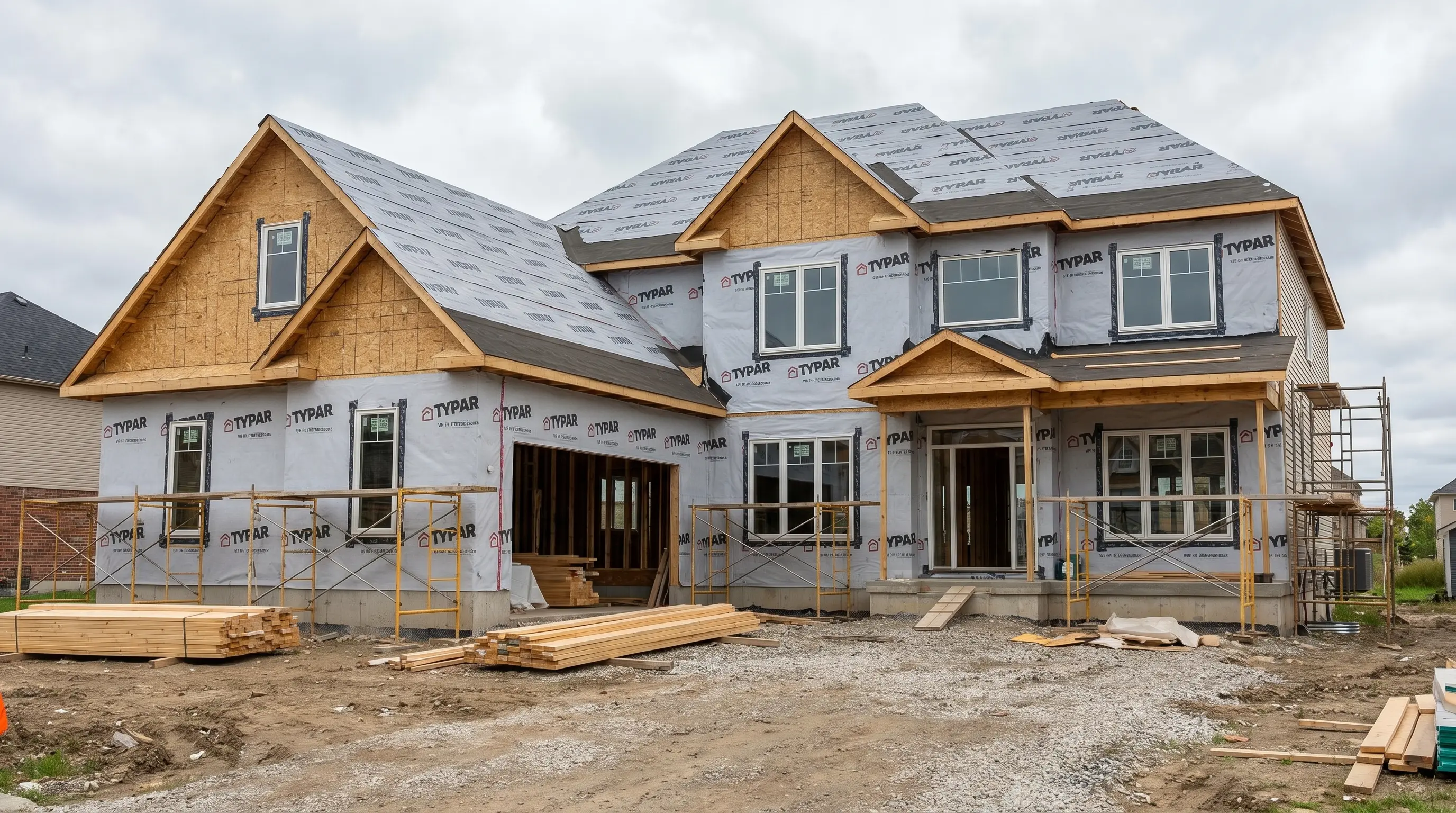
Builder’s Risk vs Homeowners Insurance While Building in Florida: What New-Home Buyers Should Know
Building a home in Florida? Compare builder’s risk with our dwelling-under-construction homeowners option.

Joe Greene
Licensed Insurance Agent
If you are building a new home in Florida, there is a good chance somebody has already told you to “get builder’s risk.” It may have been the lender, the builder, the mortgage broker, or a closing coordinator trying to keep the construction loan file moving.
Builder's risk is one option. For qualifying Florida new-home builds, our dwelling-under-construction homeowners option can insure the project while the house is being built, provide proof for lender review, include liability coverage, and transition toward homeowners coverage after completion.
This guide explains builder’s risk vs homeowners insurance while building in Florida, how the dwelling-under-construction option works, and what we need for pricing.
Key Takeaway
- Builder’s risk is not the only insurance path for eligible Florida new-home builds.
- Our dwelling-under-construction homeowners option may be accepted for lender review when the evidence, limits, deductible, mortgagee wording, insured name, and policy form meet the lender's requirements.
- It includes liability coverage not typically provided with standalone builder’s risk.
- In one anonymized Lake City-area comparison, the DUC homeowners option was $533.55 lower than the standalone builder’s risk quote; your project still needs its own quote.
- Many standalone builder’s risk policies are written for 12 months and fully earned, so if the home is finished in 8 months, unused premium may not be refundable.
- Check both options before defaulting to a temporary standalone builder’s risk policy.
What builder’s risk usually does during a new home build
Builder’s risk is temporary course-of-construction property insurance for a building project. For a new home, it usually protects the structure and covered building materials while the house is being built. It is commonly used for construction loans, but it is not the same as a completed homeowners policy.
Most buyers hear “builder’s risk” and assume it is construction-period homeowners insurance. It is not. It is a separate policy built around property exposure during construction.
A standalone builder’s risk policy is often written for 12 months and fully earned. If the home is finished in 8 months, the coverage may end when the certificate of occupancy is issued, but the buyer may not get a refund for the unused 4 months. That possible unused-cost issue is one of the biggest reasons to check the dwelling-under-construction homeowners option first.
What builder’s risk is usually built to handle
Course-of-construction property coverage
The main purpose is to insure the home while it is being built, including the partially completed structure and covered building materials.
Temporary construction timeline
The policy is usually tied to the build period. Once the project is complete, the buyer generally needs a separate homeowners policy.
Lender proof during construction
Construction lenders ask for proof that the project is insured. Builder’s risk is the traditional answer, but it is not the only acceptable insurance structure.
Builder’s risk is familiar, not automatic
Builder’s risk still has a legitimate place in Florida construction insurance. Qualifying owner-occupied new builds also have another option worth pricing before buying a temporary standalone policy.
According to the National Association of Home Builders’ analysis of U.S. Census Bureau Survey of Construction data, 2023 single-family homes took about 8.6 months to finish construction after authorization. That timeline is one reason a 12-month fully earned temporary policy deserves a second look when the home may be completed before the term runs out.
How our dwelling-under-construction homeowners option works
Our dwelling-under-construction homeowners option is an HO3 homeowners policy with a dwelling-under-construction endorsement for eligible ground-up residential builds. It starts while the eligible home is under construction, can help prepare lender-ready proof for eligible new home builds, and transitions toward homeowners coverage after completion.
Think of it as a construction-to-completion homeowners path. The policy is designed around the future completed home, but it recognizes that the home is still being built.
For eligible projects, this option includes wind and hurricane coverage during construction, subject to the policy terms and carrier guidelines. It also includes liability coverage not typically provided with standalone builder’s risk.
What makes this option different
It starts before the home is finished
You do not have to wait for the certificate of occupancy. The policy can begin during eligible construction.
It can help prepare lender-ready proof
For eligible new home builds, this option may be accepted when the lender approves the evidence, limits, deductible, mortgagee wording, insured name, and policy form. If your lender, broker, or builder has an insurance request sheet, we can review it, but that sheet is not required before we can start pricing.
It can continue into your homeowners policy
Standalone builder’s risk usually means one temporary policy now and homeowners insurance later. The dwelling-under-construction homeowners option is designed to continue toward the ongoing homeowners policy after completion.
Pro Tip
If your lender says “builder’s risk,” ask whether they need a specific policy type or proof that the project is properly insured. Those are not always the same thing. We can help review the insurance requirement and explain which option fits the project.
"The best time to compare coverage is when we have the construction details well before closing," says Joe Greene, a licensed Florida insurance agent with Greene & Associates Insurance. "If the home qualifies, the dwelling-under-construction homeowners option can solve the lender proof question and make the move into homeowners coverage smoother."
Building a home in Florida? We can check the dwelling-under-construction homeowners option before you default to standalone builder’s risk.
Builder’s risk vs dwelling-under-construction homeowners: the practical comparison
Builder’s risk and dwelling-under-construction homeowners insurance both address construction-period risk, but they are structured differently. Builder’s risk is usually a temporary property policy. The dwelling-under-construction homeowners option starts during eligible construction, includes liability coverage, and transitions toward regular homeowners coverage after completion.
Here is the practical comparison most Florida new-home buyers, mortgage brokers, and builders care about.
| Question | Standalone builder’s risk | Dwelling-under-construction homeowners option | |---|---|---| | Lender requirement use | Traditional construction-loan proof | May be accepted when the lender approves the evidence, limits, deductible, mortgagee wording, insured name, and policy form | | Property coverage during construction | Designed for course-of-construction property | Covers the dwelling in course of construction under the endorsed HO3 path | | Liability coverage | Not typically included as homeowners liability | Includes liability coverage not typically provided with standalone builder’s risk | | Wind and hurricane | Depends on policy and location | Included for eligible builds, subject to policy terms and carrier guidelines | | Theft of building materials | Depends on form and sublimits | Limited theft of building materials is part of the program structure | | Policy handoff after completion | Separate homeowners policy usually needed | Transitions toward homeowners coverage after completion | | Pricing structure | Often temporary and fully earned | Designed as a construction-to-completion homeowners path | | Best fit | Renovations, builder-owned projects, investor builds, unusual projects | Eligible owner-occupied ground-up Florida homes |
How to read this comparison
The biggest practical difference is structure. A standalone builder’s risk policy usually creates one temporary policy now and a separate homeowners policy later.
If your project fits the dwelling-under-construction homeowners option, the insurance path can be simpler. It starts during construction and is already pointed toward the homeowners policy you need after completion.
Eligibility still matters
This option is for eligible owner-occupied new-home builds that fit carrier guidelines. Renovations, builder-owned projects, investor builds, commercial projects, owner-builder situations, Miami-Dade locations, and unusual construction may need a different coverage option.
For deeper side-by-side detail, see our full guide to compare builders risk vs homeowners insurance while building in Florida. If you want the main product overview, start with builders risk insurance for Florida homeowners. Commercial, renovation, investor, or builder-owned projects can start with commercial builders risk insurance in Florida.
Why liability coverage matters while the house is being built
Liability is one of the biggest differences buyers miss. Standalone builder’s risk is mainly property coverage for the project. Our dwelling-under-construction homeowners option includes liability coverage not typically provided with standalone builder’s risk, which gives eligible buyers a broader insurance path during construction.
A construction site has more moving parts than a finished home: deliveries, inspections, subcontractors, lender visits, family visits, and people walking the property before the home is livable.
Your builder should carry their own commercial general liability coverage. That does not mean your personal exposure disappears as the property owner.
Liability questions buyers should ask
Who owns the property during construction?
If you own the lot and the project, you need to know what insurance protects your interest as the future homeowner.
What does the builder’s policy actually cover?
A builder’s general liability policy protects the builder’s business. It is not a substitute for understanding your own premises exposure.
Does the construction-period policy include homeowners liability?
Standalone builder’s risk usually does not. The dwelling-under-construction homeowners option includes liability coverage not typically provided with standalone builder’s risk.
Real-world construction site question
A family building near Lake City may have the lender focused on property limits, the builder focused on the contract, and the buyer focused on closing. If nobody asks about liability, the buyer may not realize the standalone builder’s risk quote is mainly property coverage.
Florida also has unusually expensive homeowners insurance pressure compared with most states. The Insurance Information Institute has reported Florida homeowners pay among the highest average premiums in the country, driven by storm exposure, litigation, construction costs, and reinsurance. When the permanent homeowners market is already difficult, it makes sense to plan the construction-to-completion path early instead of treating it as a last-minute closing item.
How a 12-month builder’s risk policy affects total cost
A 12-month standalone builder’s risk policy can create an unused-premium concern when the home is completed before the policy term is over. If the policy is fully earned and the certificate of occupancy is issued at 8 months, the buyer may lose the unused months instead of getting that premium back.
That is a big deal for Florida buyers because many residential builds do not take a full year. According to the National Association of Home Builders’ analysis of U.S. Census Bureau Survey of Construction data, 2023 single-family homes took about 8.6 months to finish construction after authorization.
Why this matters for new-home buyers
If you buy a 12-month temporary policy and the home is done in roughly 8 months, the remaining months may not help you. The construction-period coverage has served its purpose, but the unused premium may stay with the standalone policy.
Our dwelling-under-construction homeowners option is different because it is built as a construction-to-completion path. Instead of buying a temporary policy and then starting over with homeowners coverage, the policy is designed to move toward the homeowners coverage you need after completion.
The unused-premium question
A buyer pays for a 12-month standalone builder’s risk policy because the construction loan file needs proof of insurance. The home is completed in about 8 months, the certificate of occupancy is issued, and the buyer still has roughly 4 months of unused policy term. If that policy is fully earned, those unused months may not be refunded.
This is where the new option shines
Compare the up-front price, how a fully earned 12-month term works if the home finishes sooner, liability coverage, and the transition into homeowners coverage after completion.
What we are seeing on pricing in Florida
We compare actual project pricing using the address, replacement cost, deductible, construction details, and available carrier terms. That lets a homeowner see the dwelling-under-construction and temporary standalone options side by side.
The savings angle deserves attention, especially for higher-value custom homes in Lake City, Jacksonville, Gainesville, Tallahassee, Orlando, Tampa Bay, the Gulf Coast, and other Florida markets.
Recent comparison example
In one Lake City-area new build we reviewed, the project carried about $801,000 of Coverage A. After matching the all-other-peril deductible for a side-by-side comparison, the standalone builder’s risk quote was roughly $2,589.64, while the dwelling-under-construction HO3 option was roughly $2,056.09.
That is about $533.55 lower, or roughly 20.6% savings, for that project. Send your build details and we can check how the available options compare for your address, construction cost, deductible, and territory.
Why we price the actual build
Online averages cannot see your construction cost, wind territory, deductible, builder details, or lender requirements. We check the actual project instead of guessing.
If price is your main question, our builders risk insurance cost in Florida page explains the major cost drivers. You can also check builders risk options for your new build when you are ready for numbers.
When standalone builder’s risk can still be the right market
Standalone builder’s risk can still be the right answer when the project does not fit a dwelling-under-construction homeowners path. Renovations, builder-owned projects, investor builds, commercial construction, owner-builder situations, unusual construction, and projects outside carrier guidelines often need a different structure.
We compare the product built for the actual project.
Projects that may need standalone builder’s risk
Renovations and remodels
The dwelling-under-construction homeowners option is designed for eligible ground-up new construction, not every renovation or addition.
Builder-owned or investor projects
If the named insured is not the intended owner-occupant, the project may belong in a builder’s risk or other specialty market.
Unusual construction or territory issues
Some coastal, territory, or construction details can change which insurers offer coverage. Miami-Dade is excluded for this option, and other territory guidelines are handled by address review.
Pro Tip
If you are building in Northeast Florida, Central Florida, Southwest Florida, Tampa Bay, or along the I-75 and I-10 corridors, send the project details early so we can compare options with plenty of time for lender proof.
We also remind buyers that flood insurance is separate from homeowners and builder’s risk. If the property is near the Suwannee River, a retention area, coastal water, or any FEMA flood zone concern, review flood insurance in Florida alongside the construction policy.
What we need to check pricing
To check pricing, send the property location, completed value, construction timeline, and basic build details. A lender sheet is helpful if available, especially for brokers and builders, but homeowners can start a quote without it.
The goal is simple: give our office enough detail to compare the dwelling-under-construction homeowners option against standalone builder’s risk where appropriate.
Homeowner or borrower details
Basic project information
- Build address, city, or county if the final address is not assigned yet
- Completed replacement cost or total construction cost
- Square footage
- Construction type and exterior materials
- Estimated construction start date
- Estimated completion date or rough build timeline
Helpful documents if available
- Builder or general contractor name
- Builder contact information
- Lender insurance request sheet
- Plans, specs, builder packet, or construction loan details
- Any notes your lender or builder has already given you
Mortgage broker or builder referral details
Mortgage brokers and builders do not need to collect every homeowner detail before they send something over. Send the lender sheet, borrower contact information, build location, construction cost, builder packet, or whatever you already have.
We can help collect missing information from the client.
Have a lender sheet, builder packet, or construction loan file? Send it to our office and we’ll tell you what is needed for the insurance proof.
Our office is based in Lake City, and we work with new-home buyers statewide, including Jacksonville, Gainesville, Live Oak, Tallahassee, Orlando, Tampa, and surrounding Florida markets.
Compare construction-to-completion coverage with builder’s risk
Builder’s risk is familiar, but it is not the only path for new-home buyers in Florida. For eligible owner-occupied builds, our dwelling-under-construction homeowners option can help prepare lender-ready proof, includes liability coverage not typically provided with standalone builder’s risk, and may be more efficient than a temporary standalone policy when the project qualifies.
If you are building a home, it is usually worth checking both options before you pay for a temporary 12-month policy. That is especially true if your lender is moving quickly, your builder wants insurance handled before the next step, or you want to understand any unused-premium concern and the transition into homeowners coverage after completion.
First option to check
For eligible owner-occupied new builds, start with the dwelling-under-construction homeowners option. Use standalone builder’s risk when the project type, ownership, construction status, or carrier guidelines call for it.
Frequently asked questions about builder’s risk vs homeowners insurance while building in Florida
Florida buyers usually ask whether homeowners insurance can work during construction, whether the lender will accept it, and whether it costs less than builder’s risk. For eligible owner-occupied builds, our answer is practical: check the dwelling-under-construction homeowners option before defaulting to a temporary standalone policy.
New construction insurance FAQ
Quick answers for Florida homeowners, mortgage brokers, and builders comparing standalone builder’s risk with a dwelling-under-construction homeowners option.
Can homeowners insurance cover a house while it is being built in Florida?
For some owner-occupied new builds, a dwelling-under-construction homeowners policy can start during construction and move into homeowners coverage after completion. Availability depends on the address, project, contractor information, and policy terms.
Can dwelling-under-construction homeowners insurance meet construction loan insurance requirements?
It may, if the lender accepts the policy form, limits, deductible, insured name, mortgagee wording, and evidence of insurance. Send Greene the lender's insurance requirements when available so we can compare them with the quote.
What is the biggest difference between builder’s risk and dwelling-under-construction homeowners insurance?
Builder’s risk is course-of-construction property coverage. A dwelling-under-construction homeowners option may combine construction-period property protection with personal liability and a path toward homeowners coverage after completion, subject to its terms.
Is dwelling-under-construction homeowners insurance cheaper than builder’s risk in Florida?
Either option can cost less depending on the address, completed value, deductible, construction details, and available policy terms. Greene can compare current prices for the actual project.
What happens if my builder’s risk policy is 12 months but the home is finished sooner?
Refunds depend on the policy's cancellation and earned-premium terms. If construction may finish before the policy term ends, ask how completion affects coverage and any unused premium before you buy.
When does standalone builder’s risk still make sense?
Standalone builder’s risk can suit renovations, builder-owned projects, investor or non-owner-occupied builds, commercial construction, owner-builder situations, and unusual projects. The right path depends on the property, the work, and the options available.
What information do I need to get a new construction home insurance quote in Florida?
Start with the build address, completed replacement cost, square footage, construction type, estimated start and completion dates, and homeowner contact information. Builder details, lender requirements, plans, and loan documents can help when they are available.
Get new construction home insurance in Florida
Greene & Associates Insurance has been based in Lake City since 1995, and we help Florida homeowners compare coverage across multiple markets. For new construction, that means reviewing the project, the lender requirement, the build details, and the best available path before you bind coverage.
If you already know the build details, start a quote and we will check pricing. If you are a mortgage broker, builder, or homeowner with a lender sheet or document question, contact our office or call 1-800-252-6885 and ask us to review it first.
Building a home in Florida? Check pricing for the dwelling-under-construction homeowners option, or call 1-800-252-6885 if you want us to review the lender sheet before you move forward.

Commercial Insurance Team Leader
Joe Greene began his Florida insurance career in 2004 and holds an active Florida 2-20 General Lines license. He leads commercial insurance work at Greene & Associates, with depth in commercial property, fleets, contractors, workers compensation, general liability, habitational risks, and contract requirements. FL License #P005559.
joe@greeneinsurance.comGive us the address. We'll check the price.
Your dedicated home insurance agent will compare the options available through our network of 15 homeowners insurance companies and programs.