
Get proof before the job starts
Florida DFS says the contractor should obtain the subcontractor's workers comp proof before the subcontractor begins work. Collect that proof before work starts and keep it with the job records for the audit.
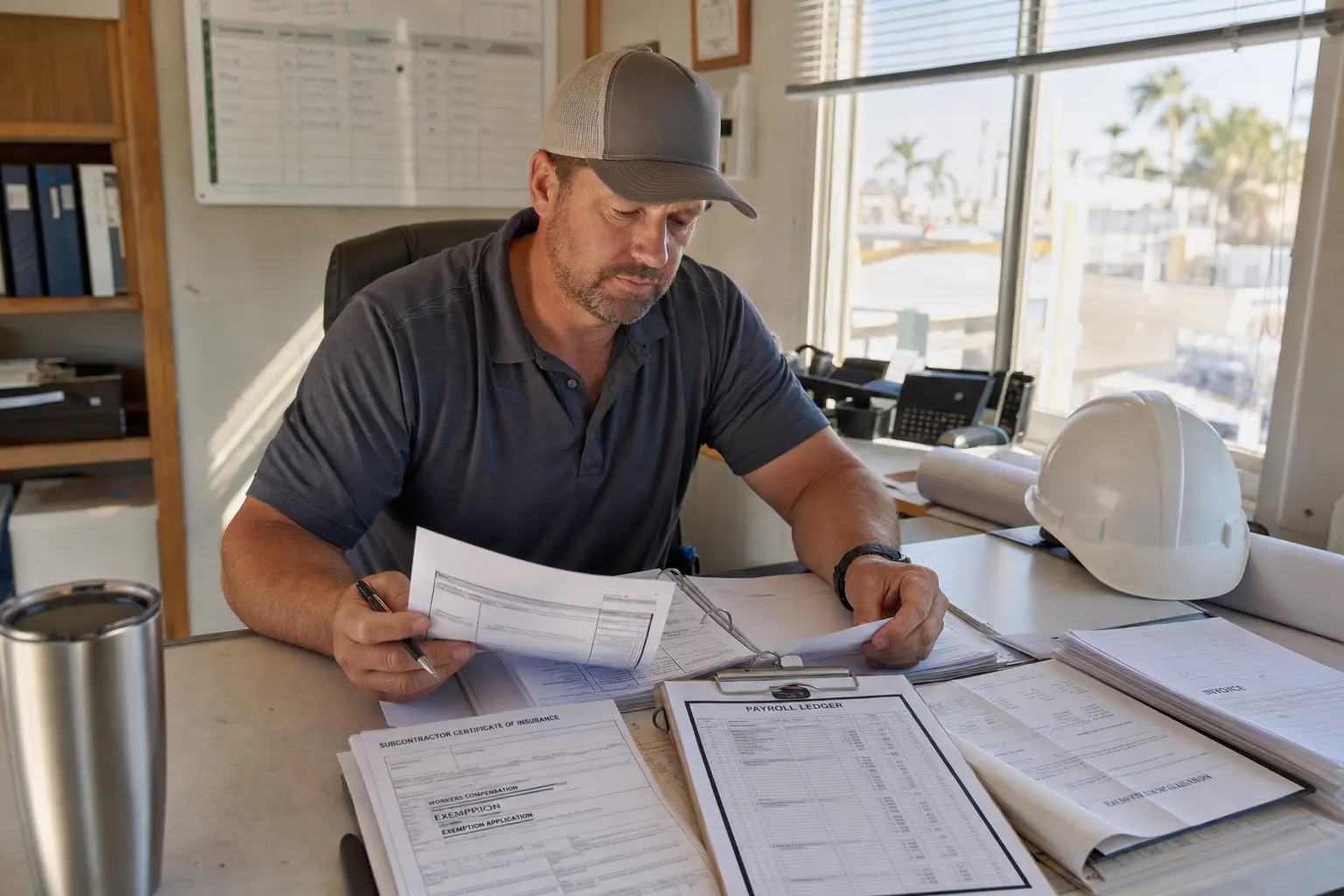
If a Florida contractor cannot prove a subcontractor's workers comp coverage or valid exemption support for the dates worked, the risk can shift back to the contractor. The safest file starts before work begins.
Reviewed for Florida contractors
Joe Greene • Commercial Insurance Team Leader
Florida 2-20 General Lines License P005559
Last reviewed May 23, 2026 • Based on Florida DFS guidance, Sections 440.10 and 440.05, and Rule 69L-6.032.
Start with DFS proof requirements, then keep records that support dates, entities, and labor details if the insurer audits the job later.
Start here
Florida DFS provides the clearest public starting point. It is practical guidance worth following before project records turn into audit disputes.
Florida DFS says the contractor should obtain the subcontractor's workers comp proof before the subcontractor begins work. Collect that proof before work starts and keep it with the job records for the audit.
DFS lists three standard proof paths when the subcontractor has coverage: a policy page, a proof-of-coverage screen print, or a COI with written confirmation that workers comp is active.
If the subcontractor uses an employee leasing company, DFS says the contractor should obtain the COI and the list of employees leased to that subcontractor when work began.
Florida DFS says exemptions are issued to qualifying corporate officers and LLC members, not to the business itself. The exempt person is not entitled to workers comp benefits.
Audit-ready file
Florida DFS tells contractors what they should obtain to verify coverage. Carrier audits usually need more structure so the labor story is supported by dated proof, clear entity matches, and separated invoice detail.
Collect certificates, agreements, invoices, and work descriptions as each subcontractor is hired. Current records make the audit easier to complete.
Common failure points
Most audit surprises come from ordinary recordkeeping gaps: weak dates, weak entity matches, mixed invoices, and overconfidence in 1099 language.
A subcontractor file breaks down quickly when the COI, proof-of-coverage screenshot, or exemption was not valid for the actual work period. Audit disputes often start with date gaps, not dramatic fraud.
A certificate or exemption for the wrong corporation, wrong LLC member, or wrong named insured leaves the contractor explaining labor that no longer appears properly supported.
When invoices blend labor, materials, hauling, and equipment, add supporting detail that separates each amount for the audit.
DFS states that Florida workers comp law does not allow independent contractors in the construction industry the way many owners assume. Calling a crew 1099 does not replace proof of coverage or valid exemption support.
Separate the tests
Contractors run into trouble when these standards get blended into one conversation. They overlap, but they are not the same test.
State law and DFS guidance control who must carry coverage, what proof should be collected, and when the contractor can become responsible for an uninsured subcontractor injury.
A project owner or GC can require broader insurance evidence than the state minimum. That is a contract requirement, not a change to Florida law.
The audit file is where weak dates, weak entity matching, mixed invoices, and undocumented labor create premium trouble. The state minimum is the floor, not the full audit-defense packet.
If the state-required records exist but the audit records still have date gaps, vague invoices, or the wrong named entity, the contractor may still need to explain the labor and dates. That is why subcontractor recordkeeping should cover both state requirements and the workers comp audit.
When the audit notice hits
A rushed answer can make a complete vendor record look incomplete. Organize the documents first, then answer with dated, labeled support.
Need broader workers comp background first? Start with our workers compensation coverage page. Need the exemption and threshold answer? Use the Florida workers comp requirements and exemptions guide. Need the pure document list? Jump to the workers comp audit document checklist.
Build one file per subcontractor with proof of coverage, exemption support, contracts, invoices, and ledger detail so the records are easy to review.
The question is not whether a subcontractor was ever insured. The question is whether the proof lines up with the dates they worked on your job.
If the invoice mixes labor with materials or equipment, add an explanation and supporting detail for the audit.
The best time to fix a weak file is before the final audit result becomes the starting point for the next renewal. Our office usually reviews the vendor list first, then the entity match, then the date match.
Official sources used here
Florida Department of Financial Services page explaining construction coverage thresholds, contractor responsibility, and exemption routing.
View sourceDFS FAQ with the clearest public explanation of what contractors should obtain from subcontractors before work starts.
View sourceState page clarifying that exemptions are for qualifying officers or LLC members, not for the business as a whole.
View sourceFlorida statute covering contractor liability, subcontractor evidence of workers comp insurance, and recovery rights if coverage was not secured.
View sourceFlorida statute covering elections of exemption and the limits and consequences of exemption status.
View sourceFlorida administrative rule page for contractor requirements when obtaining evidence that subcontractors possess workers comp insurance or otherwise comply with Chapter 440.
View sourceUse the threshold guide when you need the state-law rule, owner exemption basics, or the quick answer on who must carry workers comp before the audit details begin.
Use the HTML-first checklist and PDF companion when you need the document list without the longer explanation.
Read the blog version if you want the narrative explanation of how 1099 crews and weak subcontractor files turn into unexpected audit charges.
Read the contractor report for the broader 2026 picture on workers comp audits, certificates, autos, tools, and renewals.
Compare Florida employee thresholds, contractor requirements, payroll, class-code questions, coverage, and pricing.
Ready to compare workers comp pricing and organize the records for the next audit? Start here.
We help Florida contractors review workers comp paperwork, subcontractor COIs, exemption support, and renewal structure before weak records create avoidable premium or audit disputes.