
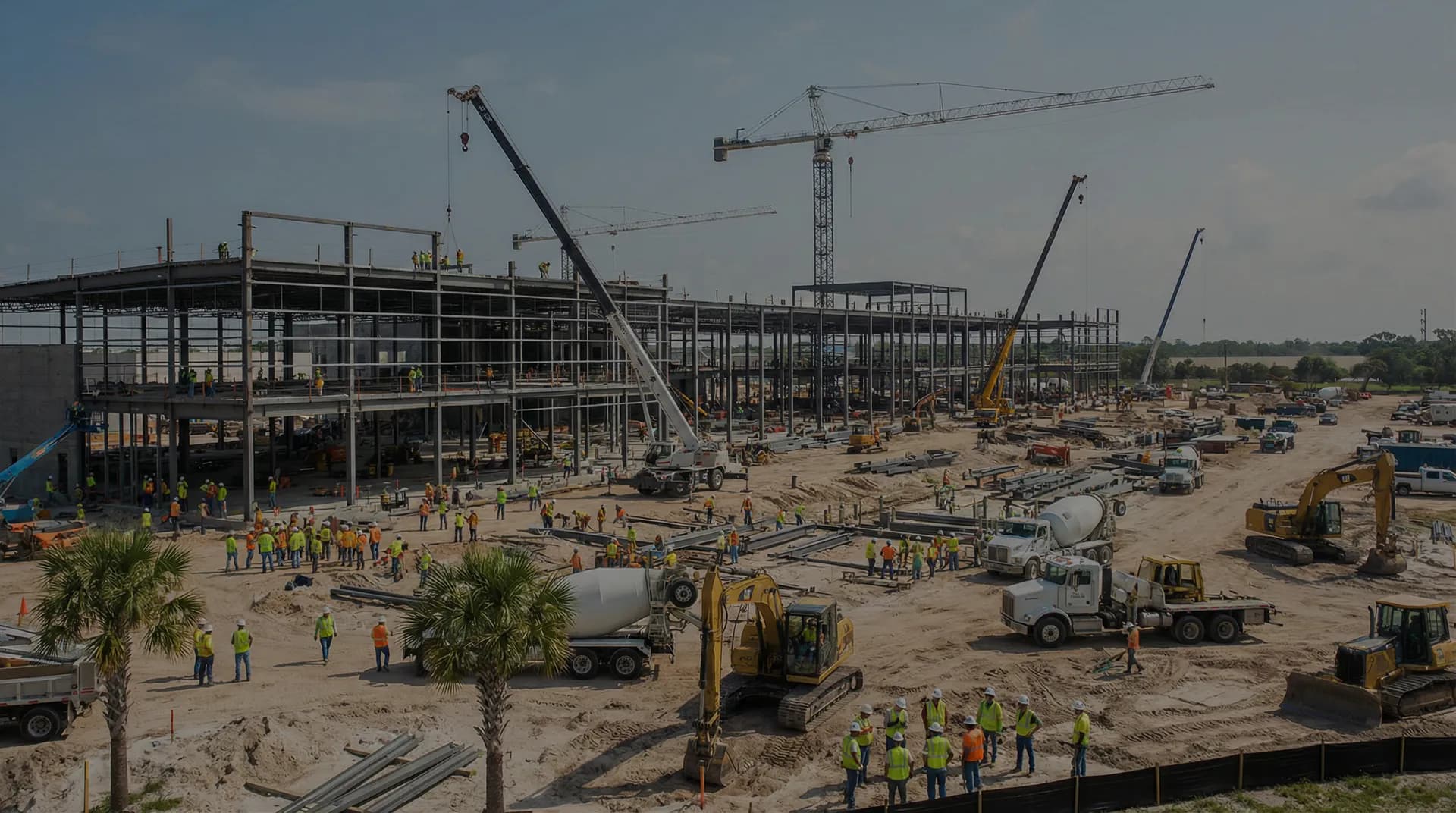
Builders Risk Insurance in Florida
We shop builders risk options for commercial projects, renovations, investor builds, builder-owned work, and new homes. If you plan to live in the finished home, we can also compare our dwelling-under-construction homeowners path.
4.8 Google ratingSee client reviewsTell us about the project. We will compare the right options.
We review the project ownership, intended use, lender requirements, and construction details to help you choose the coverage that works for the build.
Call 1-800-252-6885Florida Builders Risk Insurance: Fast Answer
- Traditional builders risk usually fits commercial projects, renovations, investor builds, builder-owned work, or projects with a business entity as named insured.
- Owner-occupied ground-up homes should start with our homeowner dwelling-under-construction page before buying standalone builders risk.
- The lender requirement sheet matters because the phrase builders risk may mean proof of construction-phase property coverage, not one exact product form.
- We can compare options using the ownership, named insured, project type, timeline, lender wording, and documents.
Choose the Right Builders Risk Lane
A contractor, developer, investor, and homeowner building a primary residence may need different coverage. Start with the project owner, intended use, and construction details.
Homeowner building a primary or secondary home
Start with the personal new-construction page when the owner will live in the home after completion and needs construction loan proof.
Use the homeowner DUC pageBuilder, contractor, developer, or investor project
Use this commercial lane when the project is builder-owned, investor-owned, commercial, renovation-heavy, or not intended as the owner's home.
Start a commercial quoteLender or contract requirement is unclear
Send the requirement sheet before guessing. The phrase builders risk may be shorthand for insured-property proof during construction.
Compare the two pathsTraditional builders risk may fit when...
- Commercial buildings, tenant build-outs, and business-owned construction projects
- Spec homes, flips, investor-owned builds, or properties not intended as the owner's residence
- Renovations, additions, remodels, or projects already under construction
- Projects where the builder, contractor, developer, or business entity needs to be the named insured
- Files with contract wording, lender wording, or ownership structure that does not fit a homeowners DUC policy
Use the homeowner DUC page when...
- You are the borrower or homeowner, not the general contractor
- The home is ground-up residential construction
- You plan to occupy the home after completion
- Your lender asked for builders risk, but really needs proof the home under construction is insured
- You want to compare standalone builders risk against a construction-to-completion homeowners path
What to gather before asking for builders risk
Send enough detail for our office to see who owns the project, what is being built, and what proof the lender or contract requires. We will compare the available paths from there.
Project address, parcel, lot, subdivision, or closest usable location
Named insured and ownership structure
Project type: commercial, renovation, builder-owned, investor-owned, or owner-occupied home
Completed value, construction budget, square footage, and construction type
Estimated start date, completion date, and current project stage
Lender requirement sheet, contract insurance requirements, plans, or builder packet
Builders Risk Insurance FAQs
Straight routing answers for homeowners, builders, lenders, contractors, and project owners.
Who usually buys builders risk insurance in Florida?
It depends on the project. Contractors, developers, investors, commercial property owners, and some homeowners may be involved. For owner-occupied home builds, our dwelling-under-construction homeowners page is often the better first stop than a generic commercial builders risk quote.
Is builders risk insurance commercial or personal insurance?
Traditional builders risk is often treated as a commercial or inland marine course-of-construction product. A Florida homeowner building a personal residence may instead need construction-phase dwelling coverage that satisfies the lender or builder. This page compares those two situations.
When should a homeowner use the dwelling under construction page instead?
Use the homeowner DUC page when the project is a ground-up residential home that the buyer plans to occupy after completion. We can review whether a homeowners policy with a Dwelling Under Construction endorsement is available before defaulting to standalone builders risk.
When is traditional builders risk still the better fit?
Traditional builders risk is usually the better starting point for renovations, flips, investor builds, builder-owned projects, commercial construction, multi-family projects, or files where the contractor or business entity needs to be the named insured.
Can builders risk meet a construction lender's insurance requirements?
It may, but the lender controls what it will accept. The policy evidence, insured name, mortgagee wording, limits, deductible, project address, and completion timeline all need to line up with the lender's requirement sheet.
Can you help if I am not sure which route fits?
Yes. Send the project basics, lender requirement sheet, named insured, ownership structure, and project type. We can compare the homeowner DUC path, commercial builders risk, and other available options for the project.
Compare builders risk options for your project
Send the requirement sheet and project basics. We can compare the commercial builders risk and homeowner new-build paths and help you move the project forward.
Related Builders Risk and New Construction Resources
Florida Builder's Risk for Homeowners
The primary homeowner page for owner-occupied new builds and dwelling-under-construction review.
Builder's Risk vs New Construction Home Insurance
A side-by-side comparison of traditional builders risk and the homeowner DUC policy path.
New Construction Home Insurance Cost
Cost drivers and one anonymized comparison between standalone builders risk and HO3 DUC.
Commercial Property Insurance
For completed commercial buildings, business property, wind, flood, and lender property questions.