
Strip Mall Insurance in Florida: What Retail Center Owners Need Before Renewal
Florida strip mall insurance guide for retail center owners. Review property, liability, roof, flood, and rent loss coverage before renewal.

Joe Greene
Licensed Insurance Agent
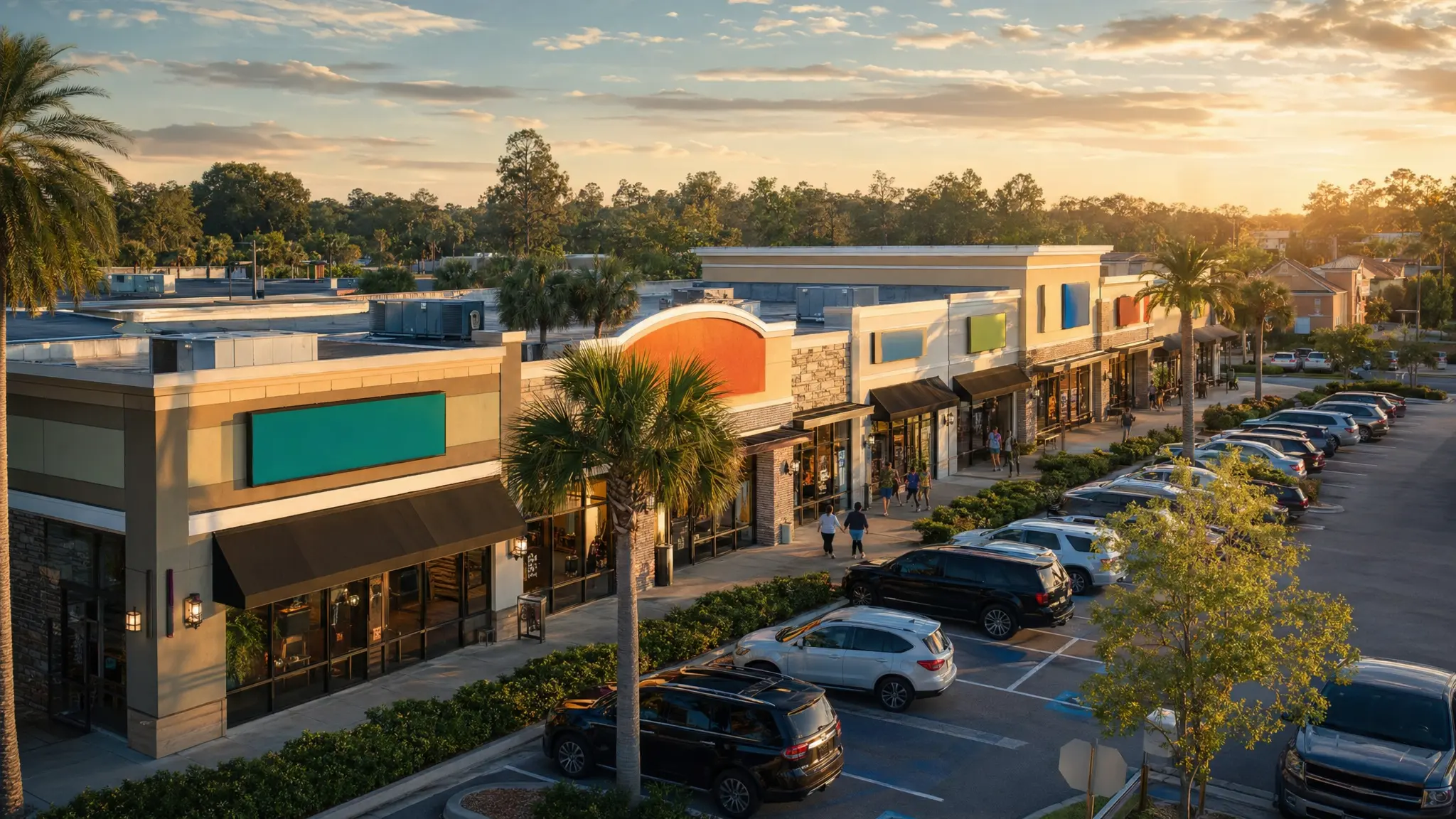
Florida strip mall insurance is not just one policy with a neat label on it. For a retail center owner in Lake City, Jacksonville, Gainesville, Tampa, or anywhere along the I-75 and I-10 corridors, the real question is whether the building, rents, common areas, roof, and tenant exposure are all protected before renewal day arrives.
A retail center can look simple from the road: storefronts, parking spaces, signs, and steady rent checks. Insurers also compare the roof, construction, tenant mix, cooking exposure, vacancy, flood zone, claims history, parking lot lighting, and tenant insurance requirements.
This guide explains what strip mall and shopping center owners in Florida should review before renewal, especially if the property includes multiple tenants, older construction, restaurant space, vacant bays, or a lender asking for updated evidence of coverage.
Compare core coverage on our shopping center insurance in Florida page, then use this checklist to prepare the property for renewal.
Key Takeaway
- Strip mall insurance usually combines commercial property, premises liability, loss of rents, and key endorsements, not just basic building coverage.
- Florida renewal pressure often comes from wind exposure, roof age, replacement cost, tenant mix, flood risk, and vacancy.
- Every lease should require tenant insurance, but the property owner still needs strong coverage for common areas and landlord-controlled exposures.
- Start renewal work 60 to 90 days early so your agent can compare insurers, resolve missing information, and meet lender deadlines.
What strip mall insurance covers for Florida retail center owners
Strip mall insurance protects the building owner from property damage, rent loss, and liability tied to the retail center itself. A strong Florida program usually includes building coverage, general liability, loss of rents, ordinance or law, equipment breakdown, and separate flood coverage when the location needs it.
Building and landlord property coverage
Commercial property insurance covers the retail center building, attached structures, permanently installed fixtures, exterior glass where scheduled, HVAC units, signs when included, and other landlord-owned property. For a shopping center, the building limit should be based on replacement cost, not the county tax value or what you paid for the property.
That distinction matters in Florida. Construction, roofing, labor, debris removal, and code upgrades can change the real cost to rebuild after a major loss.
Tax value is not your insurance value
A retail center assessed at $1.4 million may cost much more to rebuild after a hurricane, fire, or major roof loss. Insurance limits should be based on replacement cost estimates, construction type, square footage, roof system, and current Florida labor and material conditions, not the tax roll.
Loss of rents and business income
For landlords, business income coverage is usually written as loss of rents. If a covered fire or wind loss makes several bays unusable, this coverage can replace lost rental income while repairs are underway.
Review the time limit carefully. A serious Florida property claim can take months once mitigation, permitting, contractor scheduling, inspections, and tenant build-outs are involved. A short restoration period can leave the owner carrying mortgage payments and taxes after the policy stops paying.
"The biggest mistake I see with retail center owners is treating rent loss like an afterthought," says Joe Greene of Greene & Associates. "If three tenants are closed for six months after a covered loss, the building damage is only part of the problem. The income stream is damaged too."
Why Florida retail center renewal prices and options change
Florida retail center renewal prices and options can change with wind exposure, older roofs, higher replacement costs, prior claims, vacant units, restaurant tenants, and maintenance records. Current roof, construction, tenant, loss, and deductible information helps insurers compare the property accurately.
Roof age, wind deductibles, and storm exposure
In Florida, the roof often drives the renewal. Carriers want to know age, material, condition, prior repairs, and whether wind mitigation documentation exists. A flat or low-slope commercial roof with deferred maintenance will raise more questions than a newer roof with inspection records.
Wind and named-storm deductibles deserve special attention. A 3% wind deductible on a $2 million building is not a $3,000 deductible. It is $60,000 before the policy responds to a covered wind claim.
Why the wind deductible changes the real risk
A Gainesville-area retail center has a $2.5 million building limit and a 5% named-storm deductible. After a covered hurricane loss, the owner's out-of-pocket deductible could be $125,000 before insurance pays.
That may be acceptable for a well-capitalized owner. It may be a serious cash-flow problem for an owner who assumed the deductible worked like a normal property deductible.
Replacement cost and ordinance or law
Older centers may also need ordinance or law coverage. If a covered loss triggers required code upgrades, standard property coverage may not automatically pay the full cost of bringing damaged portions up to current code.
That matters for electrical systems, accessibility changes, roofing, fire protection, and other building elements. It matters even more when only part of the center is damaged but local code affects the repair plan.
Pro Tip
Ask your agent to review replacement cost, coinsurance, valuation, and ordinance or law together. Those four items decide whether the policy is built for the real cost of rebuilding in Florida, not just the lowest renewal premium.
Ready to compare commercial property options for your Florida retail center? Greene & Associates shops multiple carriers and can help you review building limits, deductibles, and rent loss before renewal.
Tenant mix, vacancy, and liability risks carriers notice
Tenant mix affects strip mall insurance because different businesses create different property and liability hazards. Restaurants, bars, convenience stores, salons, fitness studios, medical tenants, and vacant bays may all change pricing, current carrier choices, or the details needed for a quote.
A center full of professional offices is priced differently from one with commercial cooking, late-night foot traffic, or high customer turnover. Insurers also look at whether tenants have their own insurance and whether the landlord is named as an additional insured where appropriate.
Common tenant details that affect coverage and price
Restaurants bring cooking, grease, fire suppression, and slip exposure. Salons may bring chemical and water damage concerns. Fitness tenants can increase foot traffic and injury allegations. Vacant spaces can create security, vandalism, and maintenance concerns.
Those details help insurers understand the property and compare coverage and pricing accurately.
Your rent roll helps insurers price the property
A current rent roll shows occupancy, tenant types, square footage, and vacancy. Pair it with tenant certificates, lease insurance requirements, roof records, and photos to reduce follow-up questions during renewal.
Parking lots, sidewalks, lighting, and common areas
Landlords can be pulled into claims that start outside a tenant's front door. A customer trips over broken pavement. A delivery driver slips on algae near a walkway. Poor lighting contributes to an injury allegation. Those are premises liability issues, and they belong in the renewal conversation.
General liability for a retail center should be coordinated with lease language and tenant insurance requirements. The landlord's policy protects the owner for landlord-controlled areas and premises claims. The tenant's policy should protect the tenant's own operations.
If the center has heavier traffic, larger parking fields, or higher contractual requirements from lenders or national tenants, a commercial umbrella may also be worth reviewing. Learn more about general liability and commercial umbrella coverage if your limits need to stack above the base policy.
Flood, water, and drainage exposures are separate conversations
Flood is excluded from standard commercial property insurance, including policies for Florida strip malls and shopping centers. FEMA says one inch of floodwater can cause up to $25,000 in damage to a building, and commercial centers can face even larger losses when multiple tenant bays, flooring, electrical systems, and inventory are involved.
This is where owners often get surprised. Wind-driven rain from a covered roof opening may be handled one way. Rising water, storm surge, overflowing drainage, or runoff entering the building is a flood issue and needs a separate flood policy.
Flood maps are a starting point, not the whole answer
FEMA flood maps matter for lender requirements and rating, but they are not the only measure of risk. In Florida, heavy rain, clogged drainage, nearby retention ponds, road elevation, and parking lot grading can all affect whether water enters a retail center.
The flood gap at renewal
A Jacksonville strip center is outside the highest-risk flood zone, so the lender does not require flood insurance. The parking lot still holds water after heavy summer storms, and two tenant bays sit lower than the rest of the center.
The standard property policy may look complete, but rising water entering those bays would still be excluded without separate flood coverage.
Water damage wording matters
Ask your agent to separate the water exposures. Flood, sewer backup, drain backup, roof leakage, wind-driven rain, and plumbing leaks can be treated differently by the policy.
Do not rely on the phrase "water damage" in casual conversation. The cause of the water determines whether the claim is covered, excluded, or covered only by endorsement.
Ready to compare your retail center coverage before renewal? Send us your declarations page, rent roll, and lender requirements, and our office will help you compare the options and identify missing coverage.
What to review 60 to 90 days before renewal
Start the renewal review early enough to compare terms before the current policy expires. Send the property schedule, values, roof details, tenant list, losses, lender requirements, and current renewal offer so we can compare insurers, deductibles, limits, conditions, and price.
Waiting until the week before renewal usually leaves fewer choices.
Organize the renewal documents
Gather the current policy, property address, year built, square footage, construction type, roof age, roof updates, photos, rent roll, tenant list, vacancy status, claims history, mortgagee requirements, and any recent improvements.
If the center has restaurants, include fire suppression information and hood cleaning documentation where relevant. If there are vacancies, explain how the space is secured and maintained.
Renewal document checklist
Bring your current declarations page, rent roll, tenant certificates, roof documentation, lender insurance requirements, loss runs if available, and any recent inspection or improvement records. Complete details help your agent compare the building more accurately.
Review leases and certificates before renewal
Insurance and leases need to work together. Tenant leases should require appropriate liability limits, property coverage for tenant improvements and business personal property, waiver of subrogation where appropriate, and additional insured status for the landlord when required.
Certificates should be current, but they are only evidence of insurance. The lease controls what the tenant is supposed to carry.
For broader commercial coverage context, review Greene's commercial property insurance page, business insurance overview, and local service pages for Lake City, Jacksonville, and Gainesville.
Frequently asked questions about strip mall insurance in Florida
Florida strip mall owners usually ask what coverage they need, why pricing changed, whether tenant claims are covered, and what documents insurers want before renewal.
Retail center renewal FAQ
Quick answers for Florida strip mall and shopping center owners reviewing property, liability, rent loss, and flood coverage.
What insurance does a Florida strip mall owner need?
A strip mall insurance review can include commercial property, general liability, loss of rents, equipment breakdown, ordinance or law, flood, and umbrella coverage. The right policies and limits depend on the building, tenant mix, roof, leases, lender requirements, and location.
Does strip mall insurance cover tenant lawsuits in Florida?
The landlord's liability policy may respond to covered claims involving landlord-controlled areas, subject to its terms and exclusions. It does not replace a tenant's policy, so the lease and certificates should show each party's insurance responsibilities.
Why did my retail center insurance premium go up in Florida?
The renewal can change with wind exposure, roof condition, replacement cost, claims, vacancy, tenant operations, deductibles, and the insurers available for the property. Updated building and tenant details help your agent compare current prices.
Is flood insurance included in Florida commercial property insurance for a shopping center?
Flood coverage is not automatically included in a commercial property policy. Review the policy wording, FEMA flood information, site drainage, and separate flood options to see what protection the shopping center has for rising water or storm surge.
What should I review before renewing strip mall insurance?
Review replacement cost, roof age and documentation, wind and named-storm deductibles, tenant certificates, vacancy, rent roll, loss-of-rents limits, parking lot condition, flood exposure, and lease requirements. Start when renewal terms are available so your agent has time to compare prices and resolve questions.
Get strip mall insurance help before your Florida renewal
Strip mall insurance in Florida is a renewal strategy, not a checkbox. The right program protects the building, the rent stream, the common areas, and the owner from gaps that do not show up until a storm, fire, injury claim, or lender review puts pressure on the policy.
Greene & Associates Insurance has helped North Florida business owners protect commercial property for more than 30 years. From Lake City and Columbia County to Jacksonville, Gainesville, Tallahassee, Orlando, and Tampa, our office shops multiple carriers and helps owners understand the tradeoffs before they sign the renewal.
If you need a practical renewal review before quoting, contact our office or call 1-800-252-6885 and we will help you sort through the current policy, leases, and lender requirements.
Want real commercial property quotes for your Florida strip mall or retail center? Greene & Associates can shop the market, review your building limits, and help you compare renewal options before you commit to another term.

Commercial Insurance Team Leader
Joe Greene began his Florida insurance career in 2004 and holds an active Florida 2-20 General Lines license. He leads commercial insurance work at Greene & Associates, with depth in commercial property, fleets, contractors, workers compensation, general liability, habitational risks, and contract requirements. FL License #P005559.
joe@greeneinsurance.comReady to Get Covered?
Our licensed agents compare carrier options, coverage, and price, then help you choose.