
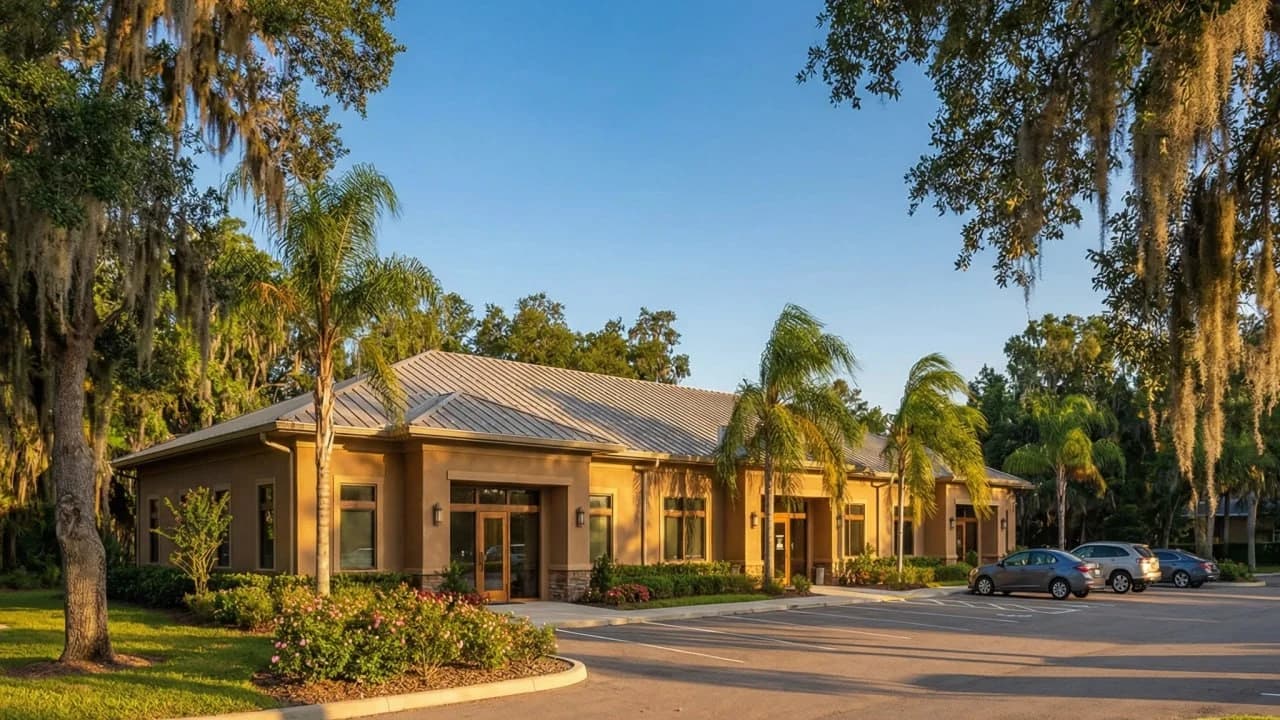
Commercial Property Insurance Lake City FL
Compare commercial property insurance for Lake City businesses, including building, contents, business income, wind, flood, deductibles, and price.

Joe Greene
Licensed Insurance Agent
Your building, equipment, inventory, and income all deserve a quote built for the actual business. Commercial property insurance can package those needs around the location, values, wind, flood, deductible, and operations.
Here's what Lake City and Columbia County business owners should compare before choosing coverage and price.
Commercial Property Coverage to Compare
Commercial property insurance can protect the physical assets a business would have to repair or replace after a covered loss. Compare these three areas on each quote:
Building Coverage
If you own your building, the policy may cover the insured structure — walls, roof, floors, built-in fixtures, and certain permanently installed equipment — after a covered loss, subject to the valuation method, limits, deductibles, and policy terms.
If you lease your space, ask how the quote handles tenant improvements such as new floors, custom shelving, or built-out offices. The lease, landlord's policy, ownership of the improvements, and tenant policy all affect the answer.
Business Personal Property (BPP)
Business personal property coverage may address property inside the building that is not permanently attached, subject to the form and limit:
- Furniture, fixtures, and equipment
- Computers, cash registers, tools, machinery
- Inventory and stock
- The contents of a leased space
Inventory Fluctuations Are Tricky
If your business carries seasonal inventory — a landscaping company stocking up in spring or a retailer ordering for the holidays — make sure the BPP limit reflects the peak value. A limit based only on average inventory may be too low at the busiest point of the year.
Business Interruption (Business Income) Coverage
Business income coverage may help with lost income and continuing expenses while operations are interrupted by a covered loss, subject to the limit, waiting period, and period of restoration.
If a covered fire closes the location during repairs, rent or mortgage payments, payroll, and other expenses may continue. Compare the business-income limit, extra-expense coverage, waiting period, and restoration period against the time the business could realistically be disrupted.
Want to compare commercial property coverage and price for your Lake City business?
Coverage to Compare With Commercial Property Insurance
Understanding the exclusions is just as important as understanding what's covered. In North Florida, these gaps matter.
Flood Usually Requires Separate Coverage
Standard commercial property forms generally exclude flood. Review the policy definition and compare separate NFIP or private flood coverage for rising water, overflowing waterways, and surface-water exposure.
Columbia County includes properties near waterways and low-lying areas. Check FEMA's flood maps, review the lender requirement, and compare separate NFIP or private flood options for the address.
Earth Movement
Standard forms commonly limit or exclude earth movement. Ask what applies to the specific location and whether optional coverage is available.
Equipment Breakdown
A base property form may not cover a mechanical or electrical breakdown the same way it handles a covered fire or wind loss. If the business depends on compressors, HVAC systems, refrigeration, boilers, or production equipment, compare equipment-breakdown wording and limits on the quote.
Wear and Tear
Property forms commonly limit or exclude wear, deterioration, and maintenance problems. Read the specific causes-of-loss form and any endorsements before assuming how rot, mold, leakage, or equipment failure will be handled.
Compare Cyber Coverage Separately
Property policies are not a substitute for cyber insurance. If the business stores customer information, takes online payments, or depends on networked systems, compare cyber liability, data-restoration, business-interruption, and fraud options.
BOP vs. Standalone Commercial Property: Which One Do You Need?
Many eligible small businesses can compare a Business Owner's Policy (BOP) — a packaged policy that combines commercial property and general liability.
A BOP makes sense if:
- You're a small to mid-size business with straightforward property needs
- Your building value, contents, and operations fit the carrier's BOP eligibility and limit structure
- You don't have highly specialized equipment or inventory
You may need a standalone commercial property policy if:
- Your building or contents values exceed BOP limits
- You have specialized equipment (commercial kitchen equipment, medical devices, manufacturing machinery)
- You carry high-value inventory
- Your business type is excluded from standard BOPs (some contractors, manufacturers, auto dealers)
A Lake City Restaurant: BOP vs. Standalone
Greene's Grill — a Lake City restaurant with a leased space, commercial kitchen equipment, food and supplies, and a custom dining room build-out.
BOP: May package building improvements, kitchen equipment, inventory, and general liability when the restaurant qualifies and the limits meet its needs.
If they added a second location and purchased the building: A standalone commercial property policy may offer the limits, valuation, lender wording, business income, and wind or flood options the larger operation needs.
The useful comparison is the actual BOP and standalone quote: limits, valuation, deductibles, endorsements, business income, and total price.
Ready to compare BOP vs. standalone for your business?
North Florida's Unique Commercial Property Risks
Running a business in Lake City and Columbia County comes with some specific exposures that affect how you should structure your commercial property coverage.
Hurricane and Wind
North Florida doesn't face the same coastal profile as South Florida, but we're not immune. Tropical storms, hurricane remnants, severe thunderstorms, and wind events can still damage roofs, signage, windows, HVAC units, and exterior property in Columbia County.
Florida property policies may use percentage wind or named-storm deductibles based on the insured building value. Compare the percentage and dollar amount alongside the premium.
Flooding and Water Intrusion
As noted above, standard commercial property forms generally exclude flood. Other water losses may be handled differently depending on the cause, form, and endorsements, so compare the policy language instead of treating every water claim the same.
The Suwannee River basin and low-lying parts of Columbia County can have flood exposure. Check the address on FEMA's flood maps, then compare any lender requirement with NFIP and private flood options.
Theft and Vandalism
Commercial property may cover theft of business property at the insured location, subject to the form and limits. Tools, cargo, or equipment in transit may need inland marine, cargo, or another policy.
Aging Commercial Buildings
Older commercial buildings can raise valuation, roof, electrical, plumbing, and code-upgrade questions. Ask how ordinance or law coverage applies if a covered repair must meet current building codes.
Pro Tip
Ask your agent about actual cash value (ACV) and replacement cost. ACV generally accounts for depreciation, while replacement-cost coverage is designed around repair or replacement cost up to the applicable limits and terms. Compare both the premium and the possible claim settlement.
What Shapes a Commercial Property Quote
Several property and business details shape the available coverage and price.
Building characteristics:
- Construction type and fire-resistance features
- Age and condition of roof (insurers care a lot about this in Florida)
- Square footage and replacement cost value
- Protective devices (sprinklers, alarms, security cameras)
Business type:
- Operations such as cooking, vehicle repair, manufacturing, or high-value inventory
- Occupancy, tenant mix, protective safeguards, and hours of operation
Location:
- Fire-protection class and access to fire services
- Flood zone and surrounding flood exposure
- Local wind, theft, and catastrophe modeling used by the carrier
Claims history:
- Carriers review prior losses, dates, causes, amounts, and corrective work
- Current loss runs help us compare quotes on accurate information
Key Takeaway
Compare the building and contents limits, valuation method, deductibles, business income, wind terms, flood decision, and key endorsements together. That gives you a clearer view of both price and protection before you choose.
Want to compare your current commercial property policy with today's available options? Send the declarations, building details, roof information, and loss runs.
Lake City Commercial Property Insurance FAQ
What does commercial property insurance cover in Florida?
Commercial property insurance can cover a business building, equipment, inventory, furniture, and business income for covered losses. Standard forms generally exclude flood, so compare separate NFIP or private flood options when the location has exposure.
Does my BOP include commercial property coverage?
A Business Owner's Policy can package commercial property and general liability for eligible businesses. Larger locations, specialized property, or higher values may need a standalone commercial property policy or additional endorsements.
Is flood covered under commercial property insurance in Lake City?
Standard commercial property policies generally exclude flood. Lake City businesses can compare separate NFIP and private flood options using the address, building values, contents, business income needs, and lender requirements.
How much does commercial property insurance cost for a Lake City small business?
Costs vary based on building value, contents value, construction type, business type, roof details, wind eligibility, flood exposure, deductible structure, and claims history. A Lake City storefront, restaurant, warehouse, medical office, and landlord-owned building can price very differently, so the quote needs the actual property details.
Where can I get commercial property insurance in Lake City, FL?
Greene & Associates at 417 SW Baya Dr has served Lake City and Columbia County businesses since 1995. We use the building details, contents, business income needs, deductible choices, and operations to compare commercial property coverage and prices from top insurers. Call 1-800-252-6885 or request a quote online.
Protect Your Lake City Business Property
Greene & Associates has served Lake City and Columbia County businesses since 1995. We compare available commercial-property options for local storefronts, offices, restaurants, warehouses, landlords, and other business properties.
Send the address and property details. We'll compare available coverage, deductibles, valuation terms, and price for the business.
Learn more about commercial property coverage, Business Owner's Policies, and business insurance in Lake City.

Commercial Insurance Team Leader
Joe Greene began his Florida insurance career in 2004 and holds an active Florida 2-20 General Lines license. He leads commercial insurance work at Greene & Associates, with depth in commercial property, fleets, contractors, workers compensation, general liability, habitational risks, and contract requirements. FL License #P005559.
joe@greeneinsurance.comReady to Get Covered?
Our licensed agents compare carrier options, coverage, and price, then help you choose.