
Lake City Box Truck & Delivery Van Insurance: I-75 / I-10 Route Questions
Lake City box truck and delivery van insurance questions for I-75/I-10 routes, vehicle schedules, drivers, GVWR, cargo, HNOA, contracts, and filings.
Al Greene
Licensed Insurance Agent
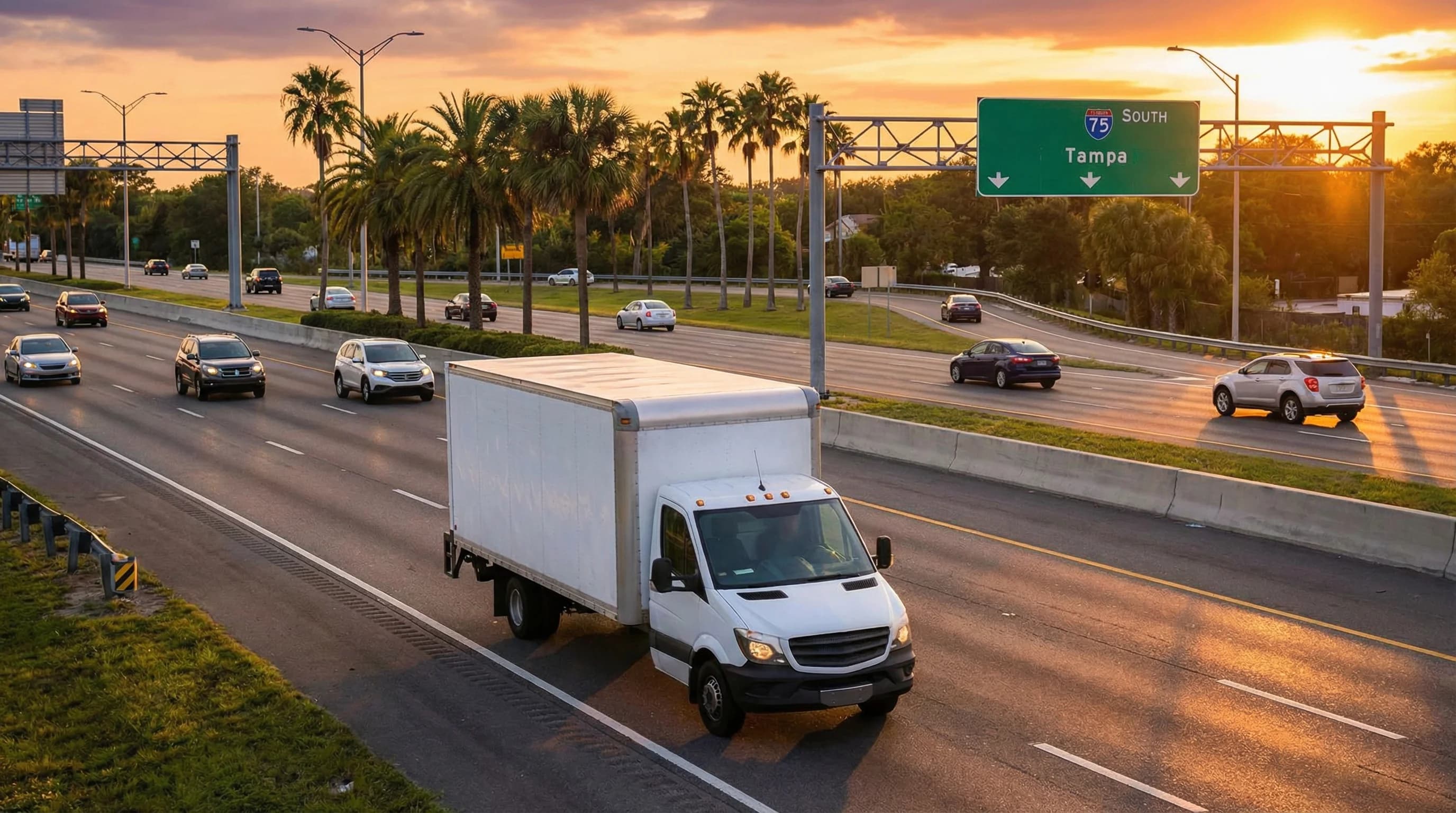
Lake City sits at the crossroads of I-75 and I-10, two of Florida's biggest freight corridors. Box trucks and delivery vans run these highways and local routes every day. A useful quote should match the trucks, drivers, routes, cargo, filings, limits, and price to the way the business actually operates.
For statewide coverage and quote preparation, start with Florida box truck and delivery van insurance. This article focuses on the Lake City and North Florida driving questions that come up around I-75, I-10, Columbia County, local delivery, and regional box-truck operations.
Personal and commercial auto policies handle business-use vehicles differently. A box truck or delivery van quote should reflect the title, ownership, route, drivers, cargo, weight, garaging, and contract requirements.
Key Takeaway
- Box trucks and delivery vans used for business should be compared under commercial auto using their ownership and actual use
- Florida baseline limits can be different from what contracts, lenders, brokers, or customers actually require
- Interstate, for-hire, cargo, passenger, weight, and authority details can trigger DOT/FMCSA or filing questions
- Hired and non-owned auto is worth comparing if you rent vans or use contractor vehicles
- Lake City's I-75/I-10 location means your vehicles face real commercial highway exposure every day
Why Box Truck Insurance Is Different From Regular Commercial Auto
Box truck and delivery van insurance in North Florida can price very differently from a pickup or small service van. Truck size, value, GVWR, cargo, route, filings, driver history, garaging, and radius can all change the quote. Your policy needs to be built for what the vehicle actually does, not just the road it drives on.
Box trucks can introduce different weight, cargo, route, filing, and authority questions than a pickup or small service van.
Vehicle Weight Changes the Quote and Requirements
Under 10,001 lbs (Light Delivery Vans)
Some delivery vans fall below 10,001 pounds gross vehicle weight rating (GVWR), but configurations vary. Confirm the rating on the vehicle and build the policy around its use, contracts, and available carrier terms.
10,001–26,000 lbs (Medium Box Trucks)
Standard box trucks in the 16–24 foot range often fall here. This is where FMCSA questions can start for certain interstate or regulated operations, especially when for-hire transportation, cargo, or authority details are involved. Do not assume a basic business auto setup answers the whole question.
Over 26,001 lbs (Heavy Box Trucks)
At this weight class, registration, CDL, filing, limit, cargo, and contract questions can become more serious. Some operations may need federal or state financial-responsibility review. These trucks need a commercial auto review built around the operation, not just a generic vehicle quote.
Use the Vehicle's Actual Weight Rating
Confirm the GVWR on the vehicle's door placard and list the correct weight class, use, radius, and cargo for every vehicle on the quote.
Commercial Auto Coverage to Compare
A commercial auto quote for box trucks and delivery vans may include:
- Liability — may address covered bodily injury and property damage claims arising from use of a covered auto
- Collision — may address covered collision damage to a scheduled vehicle, subject to the deductible
- Comprehensive — may address covered theft, fire, weather, and other non-collision losses
- Medical payments / PIP — may pay covered medical expenses according to the policy terms and selected limits
- Uninsured/underinsured motorist — may help eligible insureds after a covered loss involving an uninsured or underinsured driver, depending on the selections and policy terms
Cargo Insurance — It's Not Included
Your commercial auto policy is mainly built around the vehicle and auto liability. Cargo, customer property, tools, installation materials, or goods inside the truck may need motor truck cargo, inland marine, or another coverage review. Ask before assuming the auto policy covers the load.
Want to compare box truck coverage and price? Upload the vehicle schedule, driver list, current policy, route notes, and cargo details.
What Delivery and Box Truck Insurance Costs in North Florida
Box truck and delivery van prices in North Florida vary with vehicle size, value, GVWR, cargo, routes, filings, drivers, garaging, and radius.
Factors That Set Your Premium
Driver History
Motor Vehicle Records (MVRs) are commonly reviewed at quote and renewal. Serious violations and at-fault accidents may change eligibility and price, but the result varies by driver, carrier, and account.
Vehicle Age and Value
Newer trucks cost more to insure for comprehensive and collision — they're worth more. But older trucks sometimes have fewer safety features, which can increase liability exposure. There's no universal answer; your agent should run both scenarios.
Annual Mileage and Route
Mileage and operating radius can change the quote. Local Columbia County deliveries, regular I-75 runs, and trips into another state should be described accurately because interstate operations may trigger federal or state authority questions.
Deductible Level
Higher deductibles can lower premium. Compare the options against the business's cash flow and replacement-vehicle plan, then choose the deductible that fits both the budget and the fleet.
Business Type and Cargo
A bakery making local deliveries is a different risk than a furniture store hauling appliances. Hazardous materials, high-value cargo, or time-sensitive deliveries (like pharmacy or medical supply) all affect rates.
Quote Prep for a Two-Truck Distribution Company
A small Lake City distribution company operates two 24-foot box trucks with clean driving records and annual mileage of about 60,000 miles each. Cargo: non-hazardous consumer goods. Routes: primarily North Florida, with authority and filing requirements confirmed for the operation.
Send the vehicle schedule, driver list, cargo value, current policy, garaging, radius, and loss history. Our office can then compare local delivery, broader fleet, or regulated transportation options and pricing.
DOT, FMCSA, and Filing Questions to Review
Federal and state motor-carrier requirements depend on vehicle weight and rating, interstate commerce, cargo or passenger use, for-hire status, operating authority, and any applicable exemptions. Do not decide which rules apply from vehicle weight or a single trip alone. Confirm the operation against current FMCSA and Florida guidance, and use qualified compliance or legal counsel when the answer is unclear.
If FMCSA rules apply to your operation, the review may include:
- USDOT or MC authority details
- Federal or state financial-responsibility limits
- MCS-90 or BMC filing questions where they apply
- Hours-of-service questions for certain operations
- Drug and alcohol testing or driver qualification questions where required
Interstate and Intrastate Rules Differ
Florida may adopt or enforce safety requirements for intrastate operations, while federal requirements apply to qualifying interstate operations. Confirm the jurisdiction, vehicle, cargo, and exact operation before choosing filings or limits.
Send the vehicle schedule, GVWR, cargo details, routes, operating authority, and current filings with the quote request. That gives our office the information needed to compare coverage and identify questions that may need a compliance review.
Hired and Non-Owned Auto for Rented and Employee-Owned Vehicles
Commercial auto policies handle owned, hired, and non-owned vehicles according to the covered-auto symbols, endorsements, and policy terms. Ask how the quote treats each of these situations:
- You rent a van from Enterprise or Penske for a big delivery
- A driver uses their personal truck to haul materials for your business
- You send a contracted driver in their own vehicle to make a client delivery
Hired Auto Coverage
Hired auto liability may address covered rented or leased vehicles used for business. Physical damage is separate, and the rental agreement or counter options may address risks the business policy does not. Compare both before accepting or declining rental coverage.
Non-Owned Auto Coverage
Non-owned auto may address the business's liability arising from covered use of employee-owned or contractor-owned vehicles. It does not replace the driver's personal auto insurance, and the policy terms, covered drivers, contracts, and claim facts control how coverage applies.
Hired and Non-Owned Auto Is Worth a Fast Check
Hired and non-owned auto cost and availability vary by carrier, limits, and operation. The important part is confirming whether rented vans, leased trucks, employee-owned vehicles, and contractor vehicles are handled before the business-use claim happens.
Want to know exactly what your box trucks or delivery vans cost to insure? We'll run quotes from multiple carriers and have real numbers for your specific operation.
Compare the Coverage Your Fleet Needs
A properly structured commercial auto program for a Lake City delivery or distribution operation usually includes:
- Commercial auto policy — liability, collision, comprehensive, UM/UIM for all owned vehicles
- Hired and non-owned auto — coverage for rented or employee-owned vehicles used in the business
- Motor truck cargo — if you're hauling client goods or valuable merchandise
- Commercial umbrella — adds $1–5 million over your auto liability limit; especially important for larger trucks
- General liability — for premises and operations exposure (loading dock accidents, delivery damage)
Many businesses also carry workers comp, which may provide statutory benefits for compensable work injuries. Florida requirements depend on construction versus non-construction status, employee count, officer exemptions, and other facts, so review it alongside the auto quote.
For an operation with multiple vehicles, compare a fleet structure with separately scheduled commercial auto options. Pricing and administration depend on the vehicle count, drivers, use, radius, limits, losses, and carrier rules.
Pro Tip
Tell your agent about seasonal, temporary, and occasional drivers before they begin driving for the business. The carrier can confirm how each driver must be listed, whether approval is required, and how the change affects coverage and price.
More Box Truck Insurance Resources
If you're exploring commercial coverage for your Lake City operation, these resources on our site will help:
- Florida Box Truck and Delivery Van Insurance — statewide coverage for box trucks, cargo vans, couriers, local delivery, cargo, drivers, HNOA, and quote preparation
- Commercial Auto Insurance — overview of business vehicle coverage options
- Florida Commercial Insurance for Lake City Businesses — our home market overview
- Workers Comp Insurance for Florida Businesses — review employee injury coverage separately from auto
- Business Owner's Policy vs. Standalone Policies — how to bundle intelligently
Key Takeaway
- Commercial auto for box trucks in Florida depends on weight, value, driver history, garaging, mileage, cargo, contracts, and loss history
- Personal and commercial auto policies handle delivery, hauling, and business routes differently
- DOT/FMCSA questions depend on interstate, for-hire, cargo, passenger, weight, and authority facts
- Hired and non-owned auto may address business liability involving rented and employee-owned vehicles, subject to the policy terms
- An umbrella or excess policy may add limits over specified underlying coverage when the operation needs them
Frequently Asked Questions About Box Truck Insurance in Lake City FL
How much does commercial auto insurance cost for a box truck in Florida?
Box truck insurance in Florida varies widely by truck size, value, GVWR, cargo, route, drivers, garaging, annual mileage, limits, filings, and loss history. Send the vehicle schedule, driver list, current policy, and cargo or route notes so our office can compare available prices.
Does personal auto insurance cover a box truck used for business in Florida?
Personal and commercial auto policies handle business-use vehicles differently. Coverage depends on policy language, title, ownership, use, and carrier rules, so compare a box truck used for deliveries, hauling, or routes under commercial auto.
Do I need a DOT number for my delivery van in Florida?
USDOT and other authority requirements depend on vehicle weight, interstate or intrastate operation, cargo, passenger exposure, for-hire status, and route. Confirm the operation against current FMCSA and Florida requirements before assuming a delivery van is exempt.
What coverage limits do I need for a commercial box truck in Florida?
The right limit depends on vehicle weight, use, cargo, for-hire or private-carriage status, interstate travel, contracts, leases, lenders, and any federal or state financial-responsibility rules that apply. Many customers and lenders ask for limits higher than the legal baseline, so the contract and operation should be reviewed together.
Does my commercial auto policy cover hired or rented delivery vans in Lake City?
Coverage depends on the policy's covered-auto symbols, endorsements, and terms. If you rent vans or use contractor-owned vehicles, ask how hired and non-owned auto applies and whether physical damage for a rented vehicle is included.
Questions about your box truck or delivery fleet coverage? Our licensed agents in Lake City work with North Florida businesses every day. Let us review your current coverage and find any gaps.
Get Commercial Auto Insurance for Your Box Trucks in Lake City
Greene & Associates Insurance has been headquartered in Lake City for over 30 years. We know the roads your drivers run, the cargo they haul, and the real exposure that comes with operating box trucks and delivery vans out of North Florida's biggest freight crossroads.
As an independent agency, we compare commercial auto options for the way your vehicles are actually used. Whether you run one delivery van or a fleet of box trucks, we can help you shop the coverage and price.
Call us or start your commercial auto quote online. If you already have a schedule, declarations page, or driver list, send it and we can use those details to compare pricing.
Al Greene
Founder
Al Greene founded Greene & Associates in 1995 and has been a licensed Florida 2-20 General Lines Insurance Agent since 1983 — over 40 years in the industry. A U.S. Military Veteran and longtime FAIA member, he's seen the Florida market through every storm season and rate cycle since Hurricane Andrew. FL License #A103686.
al@greeneinsurance.comReady to Get Covered?
Our licensed agents compare carrier options, coverage, and price, then help you choose.